
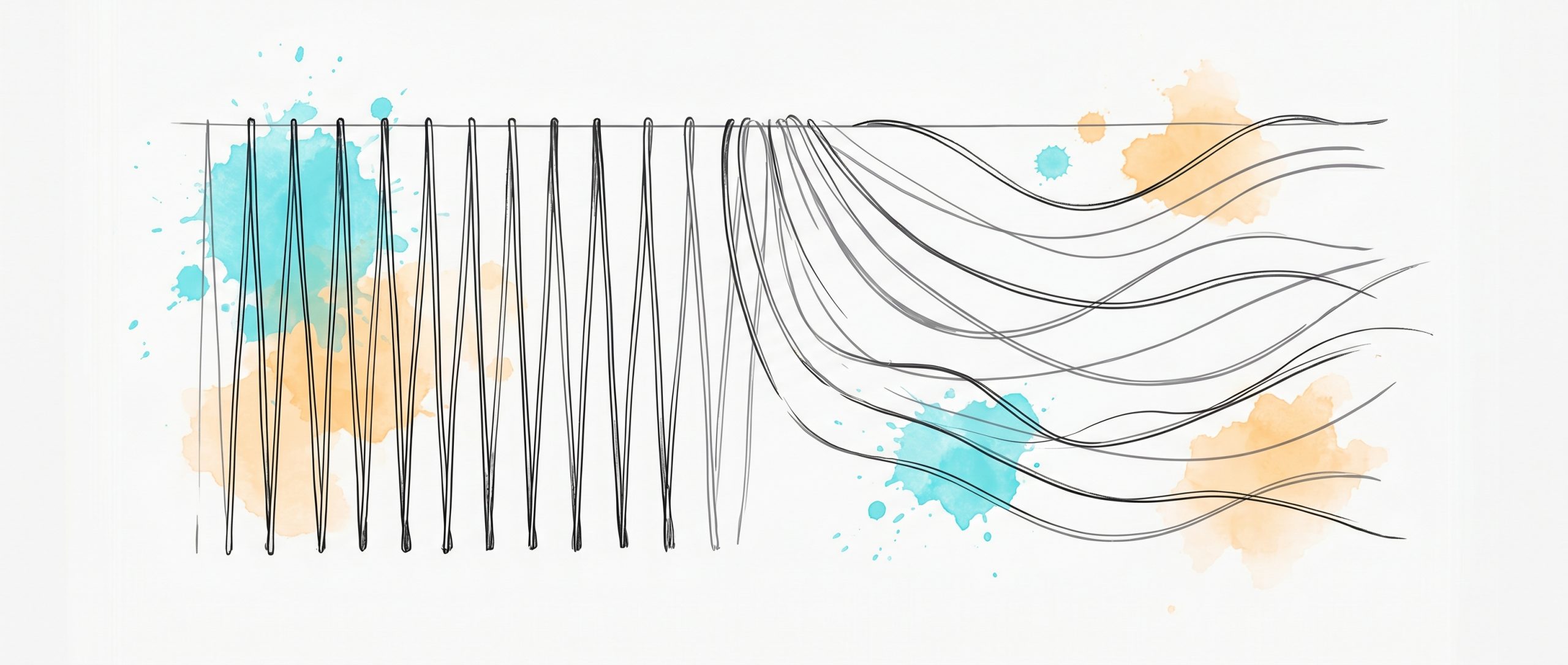
Progressive muscle relaxation (PMR) is a simple, well-studied technique for releasing physical tension: you deliberately tense one muscle group for a few seconds, let it go, and pay attention to the contrast as it softens. Working through the body group by group, most people feel their shoulders drop, their breathing slow, and their mind quiet a little. It needs no equipment, takes ten to twenty minutes, and can be done in a chair, on a bed, or on the floor.
What makes PMR worth learning rather than just another wellness tip is that it has nearly a century of evidence behind it. It was developed by an American physician in the 1920s, and decades of trials since have measured what it does for anxiety, sleep, and stress. Below is how it works, the honest state of the research, and a step-by-step way to practise it tonight.
What is progressive muscle relaxation?
PMR was created by Edmund Jacobson, a physician and physiologist at the University of Chicago, and first described in his book Progressive Relaxation in 1929 (expanded in a 1938 edition). Using some of the earliest equipment capable of measuring the faint electrical activity of muscles, Jacobson observed something that still anchors the technique today: anxious, effortful thinking is accompanied by measurable muscle tension, and when the muscles genuinely let go, that mental tension tends to ease with them. His premise was that deep muscular relaxation and a state of anxiety cannot fully coexist — so if you can learn to release the body, you give the mind somewhere calmer to land.
The version most people learn now is a shortened form. The 16-muscle-group protocol used throughout modern clinical research was standardised by psychologists Douglas Bernstein and Thomas Borkovec in their 1973 manual Progressive Relaxation Training, and it is the basis for the guided scripts hospitals and clinicians still hand out.
The mechanism is straightforward. Tensing then releasing a muscle makes the “released” state easier to notice and to deepen — you are training your attention to find tension you usually carry without realising it. The repeated release nudges the body from a “fight-or-flight” state, run by the sympathetic nervous system, toward a calmer “rest-and-digest” state run by the parasympathetic system.
What the research actually shows
PMR is genuinely well-evidenced for some things and only promising for others. It is worth being precise, because the internet tends to round every relaxation technique up to a cure-all.
Anxiety and stress. This is the strongest area. A 2008 systematic review and meta-analysis of 27 studies found that relaxation training — the family of methods that includes PMR — produced a medium-to-large reduction in anxiety (between-group Cohen’s d of about 0.51), with progressive relaxation specifically performing well among them.[1] A 2024 systematic review pulled together 46 studies of PMR in adults across 16 countries and found consistent support for it in reducing stress and anxiety, while noting that effect sizes varied widely between studies and that PMR often works best alongside other interventions rather than alone.[2]
Sleep. A 2026 systematic review and meta-analysis of 31 randomised controlled trials (2,277 participants) found that PMR improved sleep quality and reduced anxiety, with a large pooled effect on sleep.[3] The honest caveat: the trials varied a great deal in design and results (statistical heterogeneity was very high), so the precise size of the benefit is uncertain even though the direction is consistent. If racing thoughts and a tense body are what keep you awake, PMR is a reasonable, low-risk thing to try as part of a wind-down routine. If the worry is about sleep itself, our guide to sleep anxiety explains that loop and how CBT for insomnia breaks it.
Depression. A Cochrane review — one of the most rigorous kinds of evidence summary — looked at relaxation for depression and found it more effective than no treatment, but less effective than psychological therapy such as cognitive behavioural therapy (CBT).[4] The takeaway is the right way to think about PMR in general: a useful self-regulation skill that complements proper treatment, not a substitute for it.
As an adjunct in illness. A 2022 meta-analysis of 12 trials in cancer patients found PMR reduced anxiety and improved quality of life as an add-on to standard care, though the authors rated the overall certainty of the evidence as moderate to low.[5] You will also see PMR offered in cardiac rehab, pain clinics, and headache care, where relaxation training has long-standing support.
Where the evidence is genuinely thin, it is worth saying so. Claims that PMR lowers blood pressure by a specific amount rest on small trials, often combined with breathing exercises, and shouldn’t be taken as an established figure. Treat PMR as a reliable way to feel calmer and sleep a little better — not as a medical treatment in its own right.
How to do PMR: a step-by-step guide
Set aside about ten to twenty minutes. Find somewhere quiet, silence your phone, and wear loose clothing. Sit in a supportive chair with your feet flat on the floor, or lie on your back with your arms resting at your sides. Take a few slow breaths before you start.
The core move is the same for every muscle group:
- Tense the muscle group for about 5 seconds — firmly enough to clearly feel the tension, but never so hard that it hurts. Moderate tension, not maximum.
- Release it suddenly and completely.
- Notice the contrast for 10 to 20 seconds — the warmth, the heaviness, the difference between “tight” and “let go” — before moving on.
Then work through the body in a consistent order. A common sequence, adapted from the protocol used in the US Department of Veterans Affairs’ relaxation guide, moves like this:[6]
| Area | How to tense it |
|---|---|
| Hands & forearms | Make a tight fist with each hand |
| Upper arms & shoulders | Bend your elbows and draw your shoulders up toward your ears |
| Face & jaw | Scrunch your eyes shut and clench your jaw gently |
| Neck & throat | Press the back of your head lightly down, then ease off |
| Chest & stomach | Take a breath and tighten your stomach muscles |
| Buttocks & hips | Squeeze the muscles together |
| Thighs | Tighten the large muscles in your upper legs |
| Calves & feet | Point your toes gently, or curl them — briefly, to avoid cramp |
A few things that make it work better. Let your breathing stay slow and even; many people find it natural to breathe in as they tense and out as they release, but don’t hold your breath for long stretches. When your mind wanders to tomorrow’s to-do list — and it will — just guide your attention back to how the muscle feels. That gentle returning is itself the practice.
Don’t expect to feel transformed the first time. The real skill PMR builds is awareness: learning the difference between a tense body and a relaxed one, so that later, in a stressful moment, you can catch the tension early and release it on purpose. Like most skills, it rewards regular, unglamorous repetition more than intensity.
When to use it — and a few cautions
PMR is most useful as a daily wind-down, a reset between demanding tasks, or a way to settle a tense body before sleep or a nerve-wracking event. Because the benefit comes from familiarity, practising when you’re already fairly calm makes it easier to reach for when you’re not.
A few sensible cautions, drawn from clinical guidance:[6]
- Skip, or go very gently on, any area with a recent injury, surgery, or pain — don’t tense what hurts.
- If you have high blood pressure, avoid holding your breath while you tense.
- If a muscle starts to cramp (the feet and calves are the usual culprits), ease off and tense it less.
How PMR compares to other relaxation techniques
PMR is one of several evidence-based ways to down-regulate stress, and they pair well. Deep, slow breathing calms arousal through the breath alone and is often combined with PMR. Autogenic training uses passive self-suggestion of warmth and heaviness rather than active tensing. Guided imagery uses a vividly imagined calm scene. What distinguishes PMR is that it works through the body directly — useful precisely for people who notice their stress as a clenched jaw, tight shoulders, or a knotted stomach. If you’d like a breath-based option to start with, our guide to breathing exercises for acute anxiety is a good companion, and our broader guide to managing stress at work covers where techniques like these fit into a full day.
One honest note on practising solo: it can be hard to keep your focus and your timing while also remembering the sequence. That’s why guided audio helps — and it’s one of the things aidx.ai, an AI coaching and therapy service you can talk or type with, powered by a proprietary system (Adaptive Therapeutic Intelligence, or ATI), can walk you through, alongside related techniques from CBT and ACT. It isn’t a clinician and isn’t a substitute for professional care; it’s a calm, practical companion for building the habit.
For more on the body–mind side of all this, our guide to coping skills for anxiety in the moment and how mindfulness supports focus both build on the same idea: small, repeatable acts of attention that steady you over time.
The bottom line
Progressive muscle relaxation is one of the oldest and best-studied self-help techniques there is, and it earns its place: solid evidence for easing anxiety and stress, good support for better sleep, and a near-zero downside. It won’t fix a clinical condition on its own, and it works best as a regular practice rather than an emergency fix. But ten quiet minutes of tensing and releasing, done most days, is a genuinely effective way to teach a stressed body how to let go — and to give a busy mind somewhere calmer to rest.
Last reviewed: June 2026.
References
- Manzoni GM, Pagnini F, Castelnuovo G, Molinari E. (2008). Relaxation training for anxiety: a ten-years systematic review with meta-analysis. BMC Psychiatry, 8:41. PMC2427027
- Muhammad Khir S, Wan Mohd Yunus WMA, Mahmud N, et al. (2024). Efficacy of Progressive Muscle Relaxation in Adults for Stress, Anxiety, and Depression: A Systematic Review. Psychology Research and Behavior Management, 17:345–365. PMC10844009
- Ogasawara Donato K, et al. (2026). Progressive muscle relaxation technique improves sleep quality and mental health: a systematic review and meta-analysis of randomized controlled trials. Journal of Psychosomatic Research, 203:112563. PubMed 41633054
- Jorm AF, Morgan AJ, Hetrick SE. (2008). Relaxation for depression. Cochrane Database of Systematic Reviews, CD007142. Cochrane CD007142
- Tan Y, et al. (2022). Effects of progressive muscle relaxation on health-related outcomes in cancer patients: a systematic review and meta-analysis of randomized controlled trials. Complementary Therapies in Clinical Practice. PubMed 36332326
- US Department of Veterans Affairs, Whole Health Library. Progressive Muscle Relaxation. va.gov (PDF)
- Bernstein DA, Borkovec TD. (1973). Progressive Relaxation Training: A Manual for the Helping Professions. Research Press.
This article is general information about a relaxation technique, not medical advice. Progressive muscle relaxation is a self-help skill, not a treatment for any clinical condition on its own — if you’re dealing with persistent anxiety, depression, insomnia, or chronic pain, speak with a qualified healthcare professional. If you are in crisis or thinking about harming yourself, contact emergency services or a crisis line right away — in the US, call or text 988 (the Suicide and Crisis Lifeline).