

Productive procrastination is the practice of putting off one task by doing another genuinely useful one — so that the time you’d otherwise lose to avoidance still moves something forward. Done with intent, it’s not a clever excuse for slacking. It’s a way of working with the part of you that resists, instead of waging a losing war against it.
The idea has a serious pedigree and, it turns out, real science behind it. Here’s what productive procrastination actually is, why it works, and how to use it without quietly sliding back into ordinary, guilt-laced delay.
What is productive procrastination?
The clearest articulation comes from the Stanford philosopher John Perry, who named the approach “structured procrastination” in a 1996 essay and later won an Ig Nobel Prize for it. His observation was disarmingly honest: procrastinators rarely do nothing. They avoid the one looming task by busying themselves with almost anything else. Perry’s move was to make that “anything else” count.
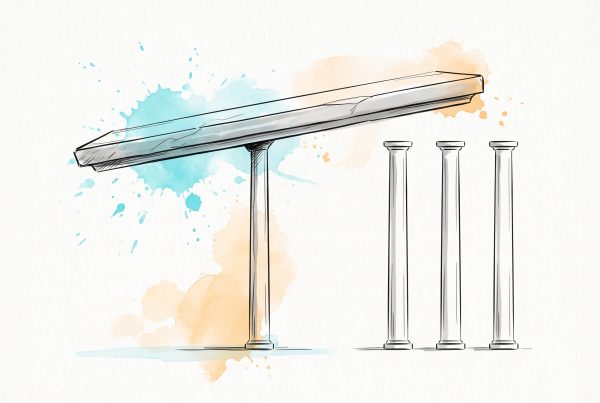
“The procrastinator can be motivated to do difficult, timely and important tasks,” he wrote, “as long as these tasks are a way of not doing something more important.” Put the genuinely scary project at the top of your list, and the slightly-less-scary-but-still-valuable tasks below it suddenly become attractive — because doing them is a way of not doing the big one. You end up clearing real work, all in the service of avoidance. (You can read Perry’s original essay in full; it’s short and funny.)
So productive procrastination isn’t “procrastinating productively” in the sense of feeling busy. It’s a deliberate redirection: when the urge to avoid arrives — and it will — you channel it toward work that genuinely matters rather than toward your phone.
Why we procrastinate in the first place
To use procrastination well, it helps to understand what it really is. The most useful finding from psychology is that procrastination is not a time-management problem or a character flaw. It’s an emotion-regulation problem.
Researchers Fuschia Sirois and Timothy Pychyl describe procrastination as the prioritising of short-term mood repair over long-term goals — we delay a task to escape the unpleasant feelings it stirs up: boredom, anxiety, frustration, self-doubt. The trouble is that relief is borrowed against your future self, who inherits both the unfinished task and the added stress.
Piers Steel’s landmark meta-analysis, drawing on hundreds of studies, points the same way: the strongest predictors of procrastination are how aversive a task feels, how distant its reward, and how impulsive we are in the moment — not laziness or a lack of willpower. By some estimates around one in five adults identify as chronic procrastinators, so if this is you, you have a great deal of company.
This reframe matters because it tells you where the leverage is. If procrastination is about escaping a feeling, the fix isn’t to grit your teeth harder — it’s to lower the emotional cost of starting, and to make your avoidance go somewhere useful. That’s exactly what productive procrastination does.
Does productive procrastination actually work?
For some of it, yes — and we can be specific about which part.
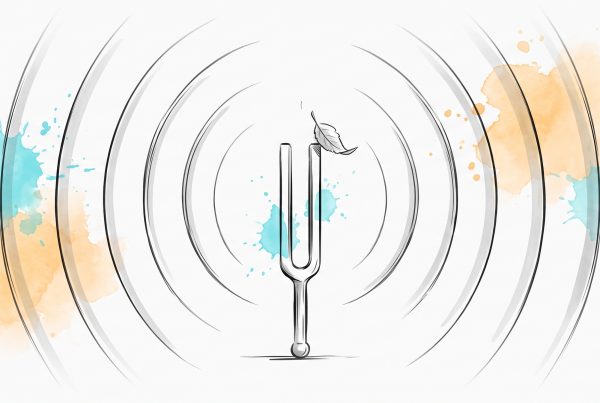
The most robust evidence concerns creative incubation: the well-known experience of an answer arriving in the shower, on a walk, or while doing the dishes — anywhere but at your desk. A meta-analysis by Ut Na Sio and Thomas Ormerod, pooling 117 studies, found a reliable incubation effect: stepping away from a stuck problem improves your later solutions.
The detail that makes this practical is striking. The benefit was greater when, during the break, people did an undemanding task rather than nothing at all or something mentally taxing. In other words, the best way to let an idea cook is to wander off and do something light and useful — which is a near-perfect description of productive procrastination. Tidying your desk while a hard chapter quietly reorganises itself in the back of your mind isn’t avoidance going to waste; it may be your most efficient way through.
The honest caveat: incubation helps you solve problems, not start things you simply don’t want to do. Productive procrastination won’t file your taxes for you. What it does well is keep you in motion, harness your avoidance, and give your mind room to work — which is often enough to break the stall.
Productive procrastination vs. just procrastinating
The line between the two is thinner than it looks, and it’s worth marking clearly.
| Productive procrastination | Ordinary procrastination |
|---|---|
| You shift to a real, valuable task | You shift to a numbing one (endless scrolling) |
| You’re moving something forward | Nothing advances; the pile grows |
| You feel restored or unstuck afterward | You feel worse — guilt on top of the original dread |
| You chose the detour on purpose | The detour chose you |
The simplest test: after the detour, are you in a better position than before — a clearer desk, a fresher mind, a smaller list? If yes, it was productive. If you’ve only added guilt to the original task, it was plain avoidance wearing a disguise.
How to make procrastination work for you
A handful of practical moves turn the theory into a daily habit.
Stack your list so the scary task sits on top. This is Perry’s core trick. The looming, high-stakes project goes at number one; several genuinely useful but less daunting tasks go beneath it. You’ll find yourself happily doing items two through five precisely because they let you avoid item one. The work gets done either way.
Choose your distraction in advance. Decide now what your avoidance will reach for later — answering a backlog of emails, outlining next week’s work, a fifteen-minute tidy — so that when the urge hits, there’s a useful default already in place. Without one, your brain reaches for the lowest-effort hit available, which is almost always the phone.
Use a break to incubate, not to escape. When you’re truly stuck on something creative or complex, step away on purpose and do something light and physical: a walk, a chore, a different small task. You’re not quitting — you’re giving the problem to the part of your mind that does its best work when you stop staring at it.
Lower the cost of starting the big one. Because procrastination is about avoiding a feeling, shrink the feeling. Commit to just the first two minutes — open the document, write one bad sentence, make the first call. Starting is the expensive part; momentum is cheaper than it looks, and it tends to carry you past the point where you meant to stop.
Be kind about it. Self-criticism reliably makes procrastination worse, because it adds exactly the kind of negative feeling you were trying to escape. Treating a stalled afternoon as information rather than a moral failing keeps you in a state where you can actually start again.
If you’d like a thinking partner for this — something to help you notice which tasks you keep avoiding, why they feel aversive, and how to design a list that works with your patterns rather than against them — that’s the kind of reflective, practical work an AI coach like aidx.ai is built for.
Where the limits are
Productive procrastination is a working style, not a cure. If your delaying has tipped into something heavier — missed deadlines that are damaging your work, persistent low mood, or anxiety that makes starting almost anything feel impossible — those are signs worth taking seriously, and a doctor or therapist is the right place to take them. For everyday avoidance, though, the reframe holds: you don’t have to defeat your procrastination to get things done. You can put it to work.
The takeaway
Procrastination isn’t going anywhere — it’s how a busy mind handles tasks it would rather not face. The insight worth keeping is that the energy you spend avoiding one thing is real energy, and it can be pointed somewhere good. Stack the hard task on top so the useful ones become your escape. Let breaks do their quiet work on the problems you’re stuck on. And go easy on yourself, because shame only feeds the loop. Managed with a little intent, delay stops being the enemy of getting things done and becomes one of the stranger tools for doing it.
If procrastination keeps tangling up with overthinking or a stubborn sense of being stuck, it can help to read alongside this: how to stop overthinking, how to get unstuck, and how to build self-discipline — the productivity problem is rarely just about the to-do list.
Last reviewed: June 2026. This article is general information about productivity and motivation, not psychological or medical advice. If procrastination is seriously affecting your work, mood, or daily functioning, consider speaking with a qualified professional.