
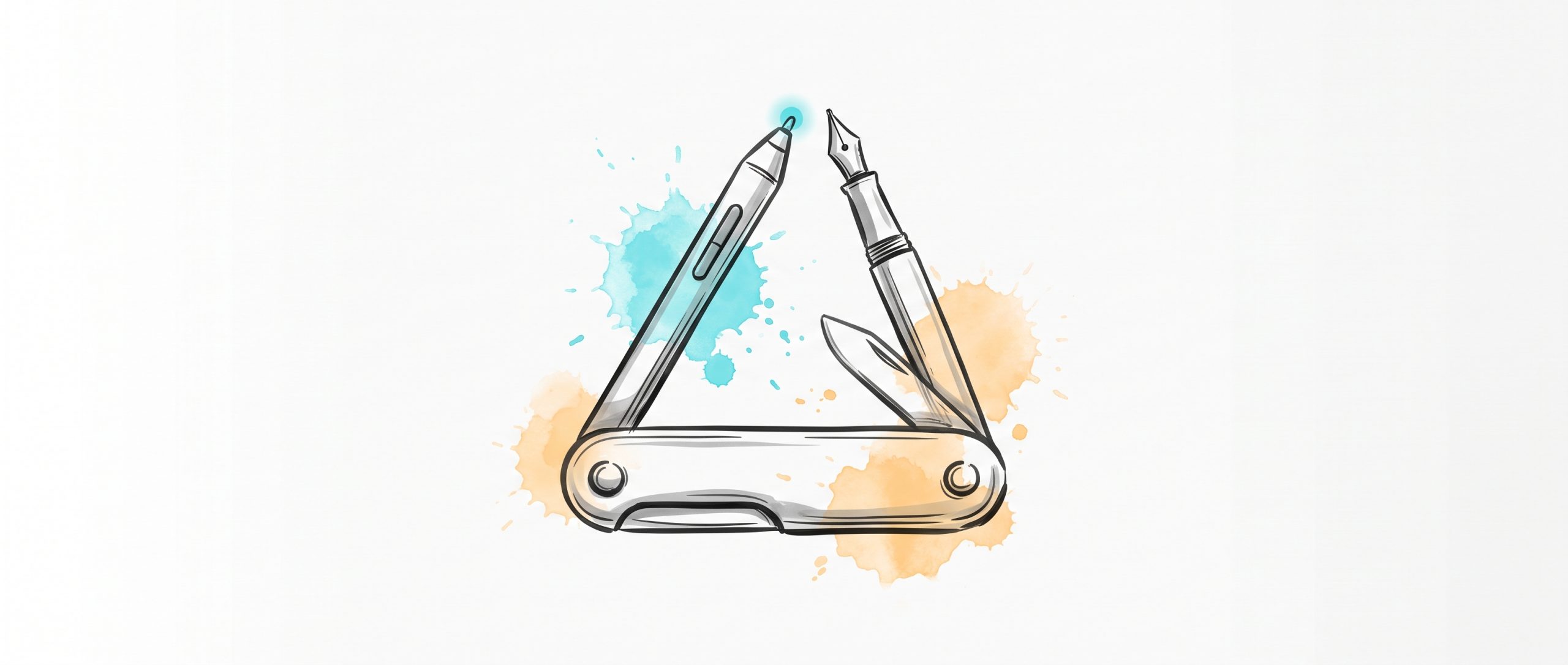
If you’re weighing AI career coaching against a traditional human coach, the honest answer is that they’re good at different things. AI coaching is cheap, available the moment you need it, and surprisingly good at the structured part of the work — clarifying goals, breaking them down, and checking in. A skilled human coach costs far more and books out in advance, but reads the room, holds difficult emotional moments, and adapts in ways software still can’t. This is a comparison, not a contest. Below is what the research actually shows, what each approach costs, where each one shines, and how to decide.
AI vs. traditional career coaching: the quick comparison
Here’s the short version before we get into the detail.
| Factor | AI career coaching | Traditional (human) coaching |
|---|---|---|
| Cost | Low monthly subscription | ~$244 per one-hour session on average |
| Availability | Instant, around the clock | Scheduled, within the coach’s hours |
| Best at | Goal-setting, structure, frequent check-ins | Emotional nuance, high-stakes decisions, accountability with a person |
| Consistency | Never tired, never off; same quality every time | Highly skilled but variable session to session |
| Limits | Can’t truly read body language or lived context | Cost and access put it out of reach for many |
The figure of $244 isn’t a guess — it’s the global average fee for a one-hour session in the 2023 ICF Global Coaching Study, the largest survey of the profession. Fees run higher in some regions (around $277 in Western Europe, $272 in North America) and lower in others. Either way, a course of weekly human coaching is a meaningful investment, which is exactly why the AI option exists.
Does career coaching actually work — and does AI?
Before comparing the two, it’s worth asking whether either delivers. The evidence for human coaching is genuinely good. A 2025 meta-analysis of 35 studies in the Journal of Employment Counseling found individual career counseling produced a weighted effect size of g = 0.82 on career outcomes and g = 0.68 on mental-health outcomes — both large by social-science standards. The components that did the heavy lifting were unglamorous: educating people about how decisions get made, helping them challenge unhelpful thinking, written exercises, individual feedback, and working through obstacles. That matters here, because those are precisely the things software can do well.
What about AI? The most relevant evidence comes from Nicky Terblanche and colleagues, who ran the first proper trials of an AI coaching chatbot. In a study published in PLOS ONE (2022), an AI coach helped people make progress on their goals at a level statistically comparable to a human coach — and both clearly beat doing nothing. People who used the AI coach more often made more progress. A follow-up randomized comparison of 114 coachees (2026) reached a similar conclusion: for reaching defined goals, the AI coach held its own against accredited human coaches, while the humans remained more flexible and adaptive — and more variable from session to session.
The honest takeaway: for the structured, goal-driven core of career coaching, AI is now a credible tool, not a gimmick. For the parts that depend on a deep human read, it isn’t a substitute. Hold both of those ideas at once.
Where AI career coaching wins
Cost and access. The single biggest barrier to traditional coaching is price. With roughly 109,200 professional coaches worldwide and a market estimated at $4.564 billion in 2022 (again, ICF data), coaching is growing fast — but it remains a premium service most people only reach through an employer. A subscription tool puts a structured coaching conversation within reach of almost anyone — and it increasingly runs the other way too, with smaller employers who could never fund one-to-one coaching now able to give coaching and therapy support to their whole team.
It’s there at 11pm on a Sunday. Career anxiety rarely keeps office hours. The moment you’re rewriting your résumé, rehearsing a resignation, or spiralling before a Monday review is the moment you most want to think it through with something. AI is available then; a human coach, reasonably, is not.
Frequency and consistency. Most people see a human coach occasionally. With AI you can check in daily — a two-minute “here’s what I’m stuck on” rather than a saved-up monthly session. The Terblanche trials found that more frequent use tracked with better outcomes, and consistency is something software is structurally good at: it never has an off day and never forgets to follow up.
A lower bar to honesty. Some people open up more readily to a tool that isn’t a person — there’s no fear of being judged, and no relationship to protect. That can make it easier to admit the unflattering truth (“I don’t actually want this promotion”) that real progress depends on.
Where a human coach is still better
None of the above means AI replaces a good human coach. There are situations where a person is clearly the right call.
- Emotionally charged turning points. Redundancy, a career you’ve outgrown, burnout, a values clash with your employer — these aren’t goal-tracking problems. A skilled coach sits with the discomfort, notices what you’re avoiding, and adjusts in real time. The career-counseling research above is built on exactly this kind of human-led work.
- Reading what isn’t said. A human picks up hesitation, a change in tone, the thing you talk around. AI works with the words you give it, and only those.
- High-stakes, complex strategy. Negotiating a senior offer, navigating office politics, or weighing a move that reshapes your whole life benefits from lived experience and genuine back-and-forth.
- Accountability that’s personal. For some people, knowing a real person will ask how it went is the thing that makes them act. That social pull is hard to manufacture with software.
And a boundary worth stating plainly: coaching of either kind is not therapy or crisis support. If a career struggle is tipping into persistent depression, anxiety that won’t lift, or thoughts of self-harm, that’s the moment for a qualified mental-health professional — not a coaching tool and not a coaching session. A good coach will tell you the same.
Which one should you choose?
It’s less “AI or human” and more “which one fits this part of the work.”
| If you mainly need… | Lean toward… |
|---|---|
| Affordable, everyday support and structure | AI coaching |
| Frequent check-ins and momentum between bigger sessions | AI coaching |
| To talk through a hard, emotional decision | A human coach |
| Deep strategy on a high-stakes move | A human coach |
| Both — most people, honestly | A blend |
The blended approach is increasingly how the profession itself works: use an AI coach for the daily, structural work — clarifying goals, planning the week, talking yourself through a wobble — and reserve human coaching (when you can access it) for the few conversations that genuinely need a person. The research is clear that the structured component drives a lot of the benefit, and that’s the part AI handles well and cheaply.
This is roughly the philosophy behind aidx.ai, which offers AI coaching and therapy grounded in established methods like CBT and ACT, available whenever you need it. It’s honest about being AI rather than a human clinician — and that’s the point: the goal isn’t to imitate a coach in the room, but to give you a structured, judgment-free place to think between the moments when a person is right.
If you want the full picture of how the AI side works — modes, methods, what to expect — see our Ultimate Guide to AI Career Coaching. And if you’re standing at an actual crossroads rather than comparing tools, finding purpose in a career transition goes deeper on the human side of that decision.
AI career coaching has earned its place: it’s affordable, always there, and effective at the structured work that drives real progress. A skilled human coach remains the better choice for the emotionally complex, high-stakes moments. Choose by the task in front of you — and for most people, the smartest answer is some of both.
Last reviewed: June 2026. This article is general information about career coaching, not professional, medical, or financial advice. If career stress is affecting your mental health, consider speaking with a qualified professional.
Sources
- International Coaching Federation. 2023 ICF Global Coaching Study (average session fee; ~109,200 coaches; $4.564B market, 2022 estimate).
- Milot-Lapointe, F. & Arifoulline, N. (2025). A Meta-Analysis of the Effectiveness of Individual Career Counseling on Career and Mental Health Outcomes. Journal of Employment Counseling (35 samples; g = 0.82 career, g = 0.68 mental-health outcomes).
- Terblanche, N., Molyn, J., de Haan, E. & Nieuwerburgh, C. (2022). Comparing artificial intelligence and human coaching goal attainment efficacy. PLOS ONE.
- de Haan, E., Terblanche, N. & Nowack, K. (2026). A randomised controlled comparison of the effectiveness of human and AI chatbot coaching. Human Resource Development International.