
If you’ve ever set a new habit with the best of intentions and watched it quietly evaporate by Wednesday, the problem usually isn’t you. It’s the method. Most of us try to install habits using willpower — deciding, each time, to do the thing — when the more reliable tool is habit stacking: tying the new behaviour to something you already do without thinking.
The short answer: for anything you want to do regularly, habit stacking beats willpower. Willpower is real and occasionally indispensable, but it’s effortful and unreliable in exactly the moments — tired, stressed, distracted — when you most need a habit to hold. Habit stacking sidesteps that by letting an existing routine pull the new behaviour along behind it. Below is what habit stacking actually is, why it works, where willpower still earns its keep, and how to build a stack that sticks.
What is habit stacking?
Habit stacking is the practice of attaching a new, small behaviour to an established one, using a simple template:
“After I [current habit], I will [new habit].”
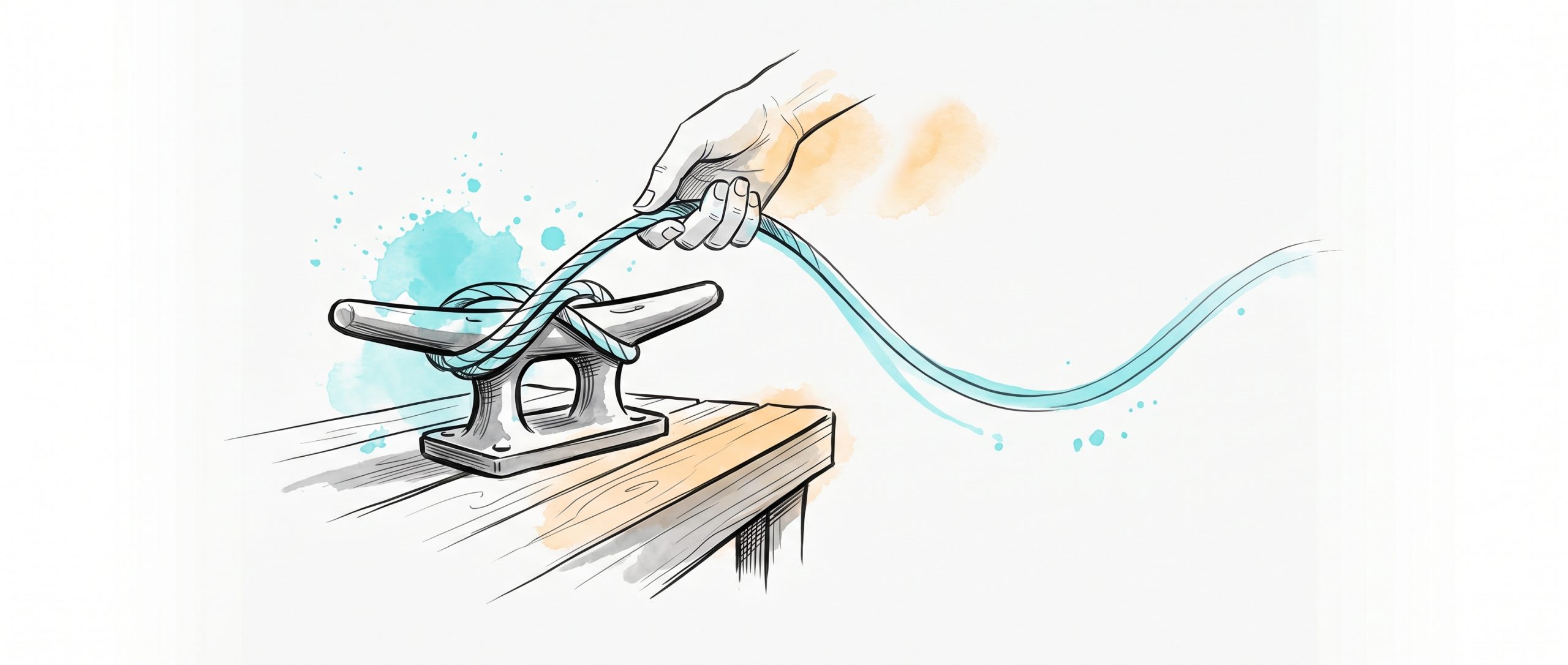
The term was popularised by James Clear in Atomic Habits, who frames the existing habit as a built-in cue for the new one — “After I pour my cup of coffee each morning, I will meditate for one minute” rather than a vague resolution to “meditate more.” Clear credits the underlying mechanism to Stanford behaviour scientist BJ Fogg, whose Tiny Habits method calls the existing routine an anchor — the thing that holds the new habit in place.
Fogg’s version adds two details worth keeping. First, the new behaviour should start tiny — not “do 30 push-ups” but “do one push-up” — so it’s almost impossible to skip. Second, he recommends a small moment of celebration right after (a quiet “nice”, a fist-pump), because the positive feeling helps the behaviour take root. His underlying model, B = MAP, says a behaviour happens when Motivation, Ability, and a Prompt arrive together: the anchor supplies the prompt, keeping it tiny supplies the ability, so you no longer have to rely on motivation showing up on cue.
Why habit stacking works (and what’s really happening in your brain)
The everyday case for habit stacking is simple: a large share of what we do is already running on autopilot. In a set of diary studies, psychologist Wendy Wood and colleagues found that roughly 45% of people’s daily behaviours were repeated in the same place, at about the same time, almost every day (Wood, Quinn & Kashy, 2002, Journal of Personality and Social Psychology). Habit stacking simply borrows that existing momentum — instead of carving out a brand-new slot in your day, you hitch a ride on a routine that’s already automatic.
There’s a neurological reason an established routine makes such a good anchor. As a behaviour becomes habitual, the brain shifts control of it away from the deliberate, effortful planning regions and toward the basal ganglia — a set of deep structures that run automatic, well-learned actions with very little conscious effort (Wood & Rünger, 2016, Annual Review of Psychology; Graybiel, 2008). When you anchor a new habit to an old one, you’re attaching it to a behaviour your brain already runs on this low-effort autopilot — which is why a good stack feels easy in a way that “just remember to do it” never does.
Habit stacking is also a close cousin of a well-studied technique called an implementation intention — an “if–then” plan that decides in advance when and where you’ll act (“If it’s 8am and I’ve finished breakfast, then I’ll take a 10-minute walk”). A meta-analysis of 94 separate tests found these simple plans had a medium-to-large effect on actually following through (Gollwitzer & Sheeran, 2006). Habit stacking is essentially a special case: instead of pairing the new habit with a clock time, you pair it with an existing habit, which tends to be an even more dependable cue than the time of day.
What about willpower?
Willpower — the deliberate effort to do the harder thing instead of the easier one — isn’t useless. It’s just the wrong tool for the job of repetition.
The intuitive picture of willpower as a fuel tank that drains over the day (the “ego depletion” idea) turns out to be shakier than it once seemed: a large, pre-registered study across 23 labs failed to find the depletion effect (Hagger et al., 2016, Perspectives on Psychological Science). So the honest framing isn’t “you literally run out of a willpower substance.” It’s something more practical: relying on conscious self-control to do the same thing every day is fragile, because it depends on you being motivated, rested, and undistracted at the exact moment the behaviour is due. Some days you are. Many days you aren’t — and that’s precisely when habits fall apart.
Where willpower genuinely shines is the one-off and the new: resisting an unexpected temptation, pushing through a deadline, or getting a routine off the ground in the first few weeks before it becomes automatic. Think of it as a starter motor, not the engine. You use it to get a habit running; you don’t want to be holding the key turned for the rest of your life.
Habit stacking vs. willpower at a glance
| Willpower | Habit stacking | |
|---|---|---|
| Effort each time | High — a fresh decision every time | Low — the anchor triggers it for you |
| Reliability under stress | Drops just when you need it | Holds, because it’s near-automatic |
| Best for | One-offs, deadlines, getting started | Daily, repeated behaviours |
| How it fails | You’re tired, stressed, or forget | The anchor is too weak or vague |
In practice the two work together: willpower to begin, a habit stack to carry it. This is also where habit stacking sits alongside its close relatives — if you’re trying to break an unwanted habit, the same cue-and-routine machinery is what you’re working with, just in reverse; and the broader skill of building self-discipline is largely about designing your life so you need willpower less often, not gritting your teeth more.
How to build a habit stack that actually sticks
The method is simple, but a few details decide whether it holds.
1. Pick a rock-solid anchor. The best anchor is something you already do every single day without fail, with a clear beginning and end — brewing coffee, brushing your teeth, sitting down at your desk, putting your bag down when you get home. Avoid vague anchors like “in the morning” or “at lunch.” “After I close my laptop at the end of the workday” is a far stronger trigger than “in the evening,” because it points to a specific, recurring moment.
2. Make the new habit small enough to feel almost trivial. The point of starting tiny isn’t the immediate result — it’s making the behaviour so easy that it survives your worst, busiest, most unmotivated days. One page, one minute, one stretch. You can grow it later; first you’re building the link.
3. Write it as one specific sentence. “After I pour my morning coffee, I will write down the three things I want to get done today.” The specificity is the active ingredient — it’s what turns a wish into a cue your brain can respond to without deliberation.
4. Give it time, and expect it to be uneven. The popular “it takes 21 days” line is a myth. In the most-cited real study, the median time for a new behaviour to feel automatic was about 66 days — but with enormous individual variation, ranging from roughly 18 days to well over 200, depending on the behaviour and the person (Lally et al., 2010, European Journal of Social Psychology). The practical takeaway: don’t judge a habit by week two, and don’t panic at the occasional missed day — the same study found that a single slip didn’t meaningfully derail the formation process.
5. When a stack breaks, shrink it — don’t abandon it. Stress and disruption are the usual culprits, not laziness. On a hard week, the move is to scale the habit down rather than drop it: one push-up instead of ten, a single sentence instead of a journal entry. Keeping the link alive, even in miniature, is far easier than rebuilding it from nothing once it’s gone cold.
Where a coach (or AI coaching) fits
The mechanics of habit stacking are easy to understand and genuinely hard to do alone — not because the steps are complex, but because the useful work is in the specifics: choosing the right anchor for your day, keeping the new habit small enough to survive a bad week, noticing when stress is quietly eroding a routine before it collapses, and adjusting rather than quitting.
That’s the kind of thinking a good coach helps with, and it’s part of what aidx.ai — an AI coaching and therapy service, with AI performance coaching built around consistency — is designed to do: turn a broad goal into a concrete habit stack tied to your actual routines, and help you adapt it when life gets in the way. It won’t supply willpower you don’t have, and it isn’t a substitute for a human professional if you’re genuinely struggling. What it can do is help you design systems that need less willpower in the first place — which, in the end, is the whole point.
The short version
- Habit stacking — “After I [current habit], I will [new habit]” — beats willpower for anything you want to do regularly, because it runs on an existing routine instead of fresh effort.
- Willpower is still the right tool for one-offs and for getting a habit started — a starter motor, not the engine.
- Anchor well, start tiny, write it specifically, and give it weeks (a median of ~66 days, but highly variable), not days.
- When a stack breaks under stress, shrink it rather than scrap it.
Last reviewed: June 2026. This article is for general information and isn’t a substitute for personalised advice from a qualified professional. If you’re struggling with your mental health, please reach out to a doctor or a local support service.
References
- Clear, J. (2018). Atomic Habits. Avery. — Habit stacking.
- Fogg, B. J. (2020). Tiny Habits: The Small Changes That Change Everything. Houghton Mifflin Harcourt. — Fogg Behavior Model (B=MAP).
- Wood, W., Quinn, J. M., & Kashy, D. A. (2002). Habits in everyday life: Thought, emotion, and action. Journal of Personality and Social Psychology, 83(6), 1281–1297. PubMed.
- Wood, W., & Rünger, D. (2016). Psychology of habit. Annual Review of Psychology, 67, 289–314. Annual Reviews.
- Graybiel, A. M. (2008). Habits, rituals, and the evaluative brain. Annual Review of Neuroscience, 31, 359–387.
- Gollwitzer, P. M., & Sheeran, P. (2006). Implementation intentions and goal achievement: A meta-analysis of effects and processes. Advances in Experimental Social Psychology, 38, 69–119. PDF.
- Lally, P., van Jaarsveld, C. H. M., Potts, H. W. W., & Wardle, J. (2010). How are habits formed: Modelling habit formation in the real world. European Journal of Social Psychology, 40(6), 998–1009. Wiley.
- Hagger, M. S., et al. (2016). A multilab preregistered replication of the ego-depletion effect. Perspectives on Psychological Science, 11(4), 546–573. SAGE.
Related reading: Habit Coaching: How an AI Habit Coach Builds Lasting Habits