
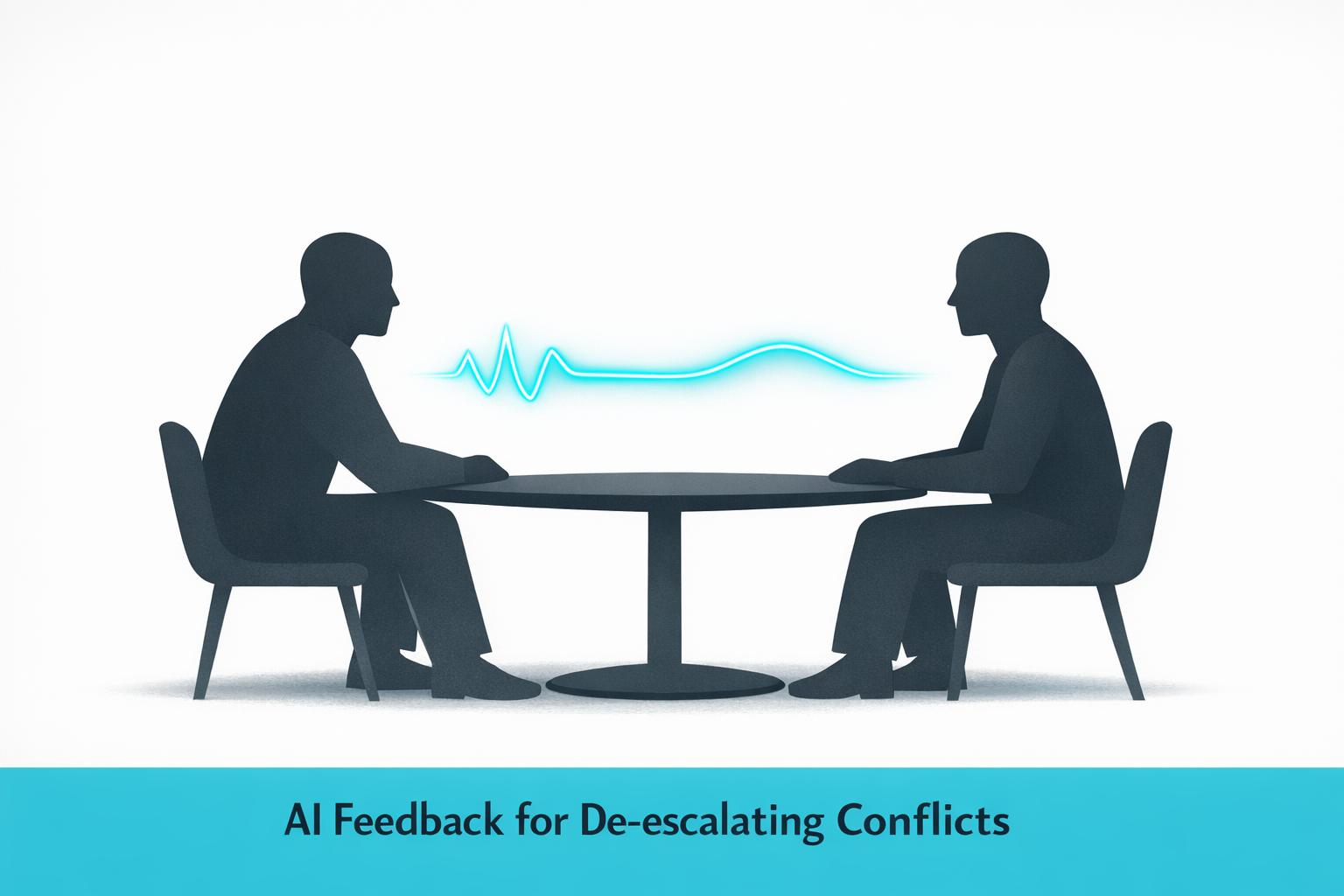
Conflicts are unavoidable, but how we handle them makes all the difference. AI tools like Aidx.ai are stepping in as "third listeners", offering real-time feedback to prevent conversations from spiraling into arguments. By analyzing tone, pace, interruptions, and language, these systems provide instant, unbiased advice to improve communication. Unlike delayed methods like therapy or mediation, AI tools work in the moment, helping people shift from reactive to constructive dialogue.
Key Takeaways:
- Why conflicts escalate: Emotional reactions and communication breakdowns lead to repetitive argument cycles.
- AI’s role: Tracks emotional cues (e.g., tone shifts, accusatory language) and suggests strategies like "I" statements or mirroring.
- Cost-effective and accessible: Offers real-time support without the expense or delay of therapy.
- Personalized feedback: Tools like Aidx.ai learn your communication style over time for tailored advice.
AI-powered solutions are reshaping how we resolve conflicts – whether at home or in the workplace – by providing real-time, practical insights to manage tense situations effectively.
Why Conflicts Escalate and What They Cost
Emotional Reactions and Communication Breakdowns
When emotions run high, people often slip into reactive patterns – anger, frustration, or defensiveness – that derail meaningful communication. These emotional responses tend to block real understanding. While the words being said might register, the emotions behind them often go unnoticed. This disconnect creates what experts call an "argument loop", where individuals – whether partners or colleagues – keep repeating the same harmful behaviors because they’re too caught up in the moment to see the bigger picture.
Interestingly, research highlights a way out: couples who use active listening techniques report a 40% boost in feeling understood and supported by their partner [1]. Active listening helps break the cycle by encouraging people to focus on understanding rather than reacting. Without this, though, many become preoccupied with crafting their next response instead of genuinely listening, leading to deeper misunderstandings and emotional distance.
These emotional traps explain why conventional approaches often fail to resolve conflicts effectively as they unfold.
Where Traditional De-escalation Falls Short
The speed at which emotions escalate makes traditional conflict resolution methods less effective. Standard therapy or mediation often involves reviewing past conflicts during scheduled sessions, which means they miss the chance to intervene when tensions are at their peak. Technology journalist Erika Balla points out the potential gap here:
"Instead of waiting for a weekly session to review a past fight, AI offers the potential for intervention in the moment" [1].
There’s also the challenge of human ego and personal bias, which can make resolution even more difficult. On top of that, therapy isn’t accessible to everyone. With costs ranging from $100 to $200 per session, many people simply can’t afford professional help. This leaves millions without a reliable way to address conflicts as they arise, though personalized AI therapy and coaching are becoming more accessible. The result? Delayed intervention often leads to strained relationships, reduced productivity, and a toll on mental health.
sbb-itb-d5e73b4
How AI Feedback Reduces Conflicts
Detecting Emotional Signals in Real Time
AI tools act as an impartial "third listener", analyzing conversations for tone, pace, interruptions, and word choices – all in real-time. These systems, trained on extensive therapy research, are designed to identify markers of healthy versus unhealthy communication. They monitor a variety of cues, such as changes in tone, shifts in speaking pace, frequent interruptions, or specific phrases that might indicate rising tension.
For instance, when interruptions increase or affirming phrases like "I hear you" or "I understand" disappear, the AI recognizes a breakdown in active listening. Similarly, if accusatory language – such as "you always" or "you never" – or raised voices emerge, the system flags these as signs of escalating conflict. By identifying these patterns, the AI can intervene early, suggesting adjustments to prevent the situation from worsening. These insights are rooted in its ability to notice subtle gaps in communication that might otherwise go unnoticed. [1]
This capability sets the stage for effective strategies to de-escalate conflicts as they unfold.
Practical Feedback for Conflict Resolution
Once emotional signals are detected, the AI provides straightforward, research-backed strategies to address the tension. For example, if conflict starts to intensify, the system might prompt users with advice like: "Conflict pattern detected. Try using an ‘I’ statement to share your feelings without assigning blame." This encourages a shift from reactive accusations to a more constructive and empathetic approach.
Rather than offering generic advice, the AI pinpoints specific communication issues and provides actionable solutions. Erika Balla highlights this benefit:
"By labeling emotions and highlighting disconnections in real-time, the AI helps partners understand each other’s emotional contexts, reducing reactive behavior and increasing compassion." [1]
The system also teaches structured techniques, such as mirroring – repeating back what was said to ensure understanding – and turn-taking, which helps curb interruptions. Acting as a "co-pilot" in conversations, the AI offers a supportive role that’s especially helpful for individuals who may not have immediate access to therapy or who need reinforcement between sessions. [1]
I Built an AI Conflict Coach – Here’s What Happened
Aidx.ai: AI-Powered Conflict Resolution with Adaptive Therapeutic Intelligence
Plenty of AI tools can recognize conflict patterns, but Aidx.ai takes it a step further by adapting to your unique communication style. Its proprietary ATI System™ doesn’t just analyze conversations – it learns about your emotional triggers, communication habits, and conflict tendencies over time. This means the feedback you receive evolves to align with your personal approach, making real-time interventions more effective and relatable.
The platform keeps an eye on acoustic and linguistic markers during conversations, such as tone shifts, interruptions, and specific language cues. If it picks up on raised voices or escalating language, the system jumps in with immediate suggestions – like encouraging the use of "I" statements or recommending a pause for reflection.[1] Think of it as a "co-pilot" guiding you through tense moments.[1]
Personalized Strategies for Different Communication Styles
The ATI System™ relies on insights from thousands of hours of therapy sessions and psychological studies to distinguish between productive and unhelpful communication patterns.[1] Over time, as you engage with Aidx.ai, it identifies your unique behaviors – whether that’s interrupting when stressed, avoiding tough conversations, or escalating when feeling unheard. Based on these patterns, the system tailors its recommendations to suit your specific needs.[2]
For instance, if you tend to interrupt 12 times during a stressful exchange, the AI provides objective feedback to highlight this habit.[1] By removing judgment, the platform helps you identify and address blind spots. It also tracks whether you’re using affirming phrases like "I hear you" or engaging with your partner’s emotions, adjusting its coaching to fill in any gaps.[1] These personalized insights are designed to offer practical, in-the-moment strategies for diffusing tension and improving communication.
Tools for Real-Time and Ongoing Conflict Management
Aidx.ai doesn’t stop at tailored feedback – it also offers tools for ongoing conflict management. The voice-enabled interface ensures you can access support hands-free, whether during or immediately after a disagreement. Additionally, its Insights feature monitors stress levels, burnout risks, and emotional wellbeing over time, sending proactive alerts when it detects rising tension. These check-ins help address potential issues before they escalate into full-blown conflicts.
The platform also includes Roadmap and Planner tools to help you set specific goals, like reducing interruptions or practicing active listening. You can track your progress with visual feedback, and weekly accountability reports shared with trusted contacts provide extra motivation to stick with new habits. Research backs this up: couples who practice active listening report a 40% increase in feeling understood and supported, while structured dialogue techniques improve conflict resolution skills for over 50% of participants.[1] Aidx.ai incorporates these proven methods into your daily interactions, offering constant support whenever you need it.
Traditional Methods vs. AI-Powered Feedback
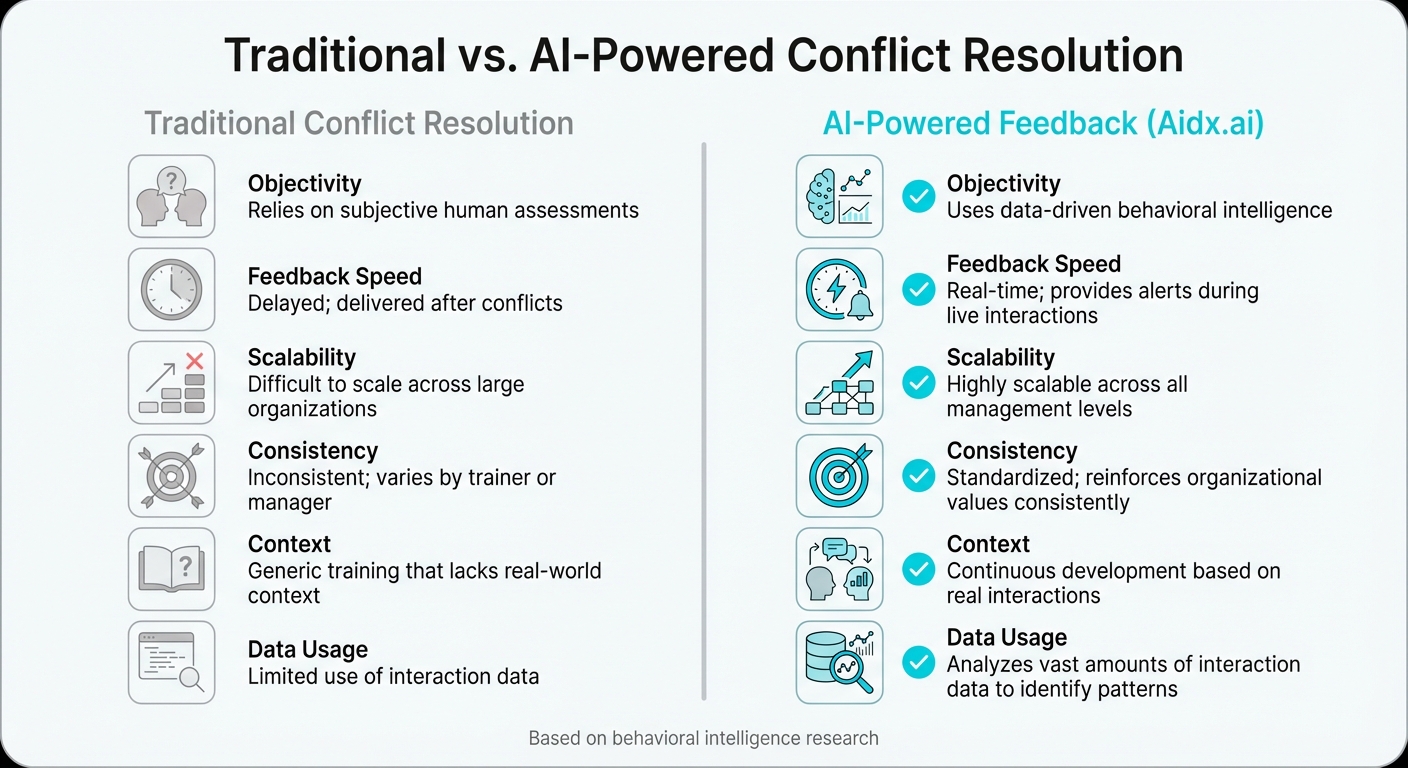
Traditional vs AI-Powered Conflict Resolution Methods Comparison
Traditional conflict resolution methods often rely on scheduled workshops and periodic reviews. While these approaches can be helpful, they come with notable challenges, especially when conflicts arise unexpectedly. For instance, a manager might complete training on active listening, but when faced with a heated disagreement weeks later, applying that training in the moment can be tough.
AI-powered feedback, on the other hand, steps in with real-time alerts and actionable insights during live interactions. When tensions start to rise, the system offers immediate suggestions to help manage the situation effectively. This real-time capability is crucial, as addressing conflicts promptly can prevent them from escalating further.
Another standout advantage of AI-based solutions is scalability. Traditional methods require significant time and resources to train individuals across an organization. In contrast, AI coaching can be rolled out simultaneously to all employees, providing consistent, objective guidance. This approach has shown measurable results in improving workplace dynamics within months [2].
Consistency in communication is also a major factor. Traditional approaches often vary depending on who conducts the training, which can lead to uneven practices across teams. AI platforms eliminate this inconsistency by delivering standardized, data-driven feedback, ensuring everyone follows the same principles and communication norms [2].
The table below highlights the key differences between these two approaches:
Comparison Table: Traditional vs. AI-Powered Conflict Resolution
| Feature | Traditional Conflict Resolution | AI-Powered Feedback (Aidx.ai) |
|---|---|---|
| Objectivity | Relies on subjective human assessments [2] | Uses data-driven behavioral intelligence [2] |
| Feedback Speed | Delayed; delivered after conflicts [2] | Real-time; provides alerts during live interactions [2] |
| Scalability | Difficult to scale across large organizations [2] | Highly scalable across all management levels [2] |
| Consistency | Inconsistent; varies by trainer or manager [2] | Standardized; reinforces organizational values consistently [2] |
| Context | Generic training that lacks real-world context [2] | Continuous development based on real interactions [2] |
| Data Usage | Limited use of interaction data [2] | Analyzes vast amounts of interaction data to identify patterns [2] |
How to Use Aidx.ai for Conflict Management
Steps for Individuals and Teams
Aidx.ai’s real-time conflict detection tools can be a game-changer for managing difficult interactions, whether you’re on your own or working within a team.
Start by activating the AI listener during conversations that feel tense or high-stakes. The platform keeps an eye (or ear) on the discussion, flagging signs of conflict, like accusatory tones or frequent interruptions, so you can address them as they happen [1].
When tensions rise, Aidx.ai steps in with helpful advice, such as using constructive language or applying mirroring techniques to defuse the situation. To track your progress, you can review the weekly Insights feature, which provides data on patterns like how often interruptions occur or shifts in conversational tone. For private practice, Incognito Mode lets you rehearse difficult conversations in a safe, judgment-free space [2].
Using Aidx.ai in Organizations
While individuals can benefit from immediate feedback, organizations have the opportunity to amplify these results by integrating Aidx.ai into their workflow on a larger scale.
A structured rollout is key. Begin by connecting Aidx.ai with tools your team already uses, such as Zoom or Slack, over a 3–6 month period. Start with a pilot program for key managers to refine the process before expanding. Use the Corporate Dashboard to monitor progress, tracking metrics like conflict resolution rates and overall communication improvements [2].
The same real-time feedback and insights that help individuals can foster a stronger, more resilient workplace culture. Many organizations report noticeable improvements in conflict resolution within just a few months, with broader cultural shifts often taking shape within a year. However, success depends on clear communication from the start – especially around ethics and data privacy policies – to ensure transparency and trust [2].
Conclusion
This article has explored how AI-driven behavioral intelligence is reshaping conflict resolution. At its core, conflict often escalates when emotional cues are overlooked, and communication breaks down. Traditional methods of de-escalation rely on delayed and subjective feedback, often missing the critical moments when timely intervention could make a difference. AI-powered tools like Aidx.ai address this gap by detecting emotional signals in real time, offering a groundbreaking approach to managing conflicts.
The move from one-size-fits-all training to behavioral intelligence marks a major shift in conflict resolution strategies. AI provides continuous feedback, replacing short-term workshops with an ongoing learning process that tracks emotional patterns and refines coaching in real time. Organizations implementing this approach typically report measurable progress within 3 to 6 months, with broader transformation often realized within a year [2]. This shift highlights the value of objective, data-backed methods over subjective evaluations.
What drives the success of this approach is its reliance on data-driven insights. Unlike traditional methods that depend on personal interpretations, AI evaluates actual conversation data to pinpoint behaviors that either strengthen trust or escalate tension. As Bella Williams aptly states:
"Success comes not from ‘implementing AI coaching technology,’ but from transforming organizational leadership through systematic behavioral intelligence and evidence-based conflict resolution development" [2].
The benefits extend far beyond individual conversations. By integrating AI feedback into everyday tools – whether for private practice in Incognito Mode or organization-wide insights through Corporate Dashboards – users develop practical skills that stick. Instead of receiving delayed critiques, the system provides real-time adjustments that encourage growth in the moment.
For those navigating challenging conversations, AI-driven feedback offers consistent, adaptable support tailored to your unique communication style. It’s a powerful tool for building trust and resolving conflicts effectively.
FAQs
Is AI feedback during a live argument actually accurate?
AI feedback has the ability to assess emotional cues and communication patterns in real time, offering insights to pinpoint problems and propose solutions. That said, its accuracy relies heavily on the quality of the data it processes and the algorithms driving its analysis.
How does Aidx.ai ensure privacy and secure conversations?
Aidx.ai prioritizes privacy and safeguards conversations through full encryption, adherence to GDPR standards, and the absence of human oversight unless mandated by law. For added confidentiality, users can enable an optional incognito mode, ensuring complete privacy.
Will real-time AI coaching work for workplace conflicts too?
Real-time AI coaching has the potential to handle workplace conflicts effectively. These tools can analyze conversations, pick up on emotional cues, and offer personalized feedback to defuse tense situations. They also provide suggestions for mediation techniques, communication improvements, and trust-building approaches, helping to create a more harmonious work environment. By delivering immediate guidance, AI coaching strengthens interpersonal skills and encourages better teamwork in professional spaces.