
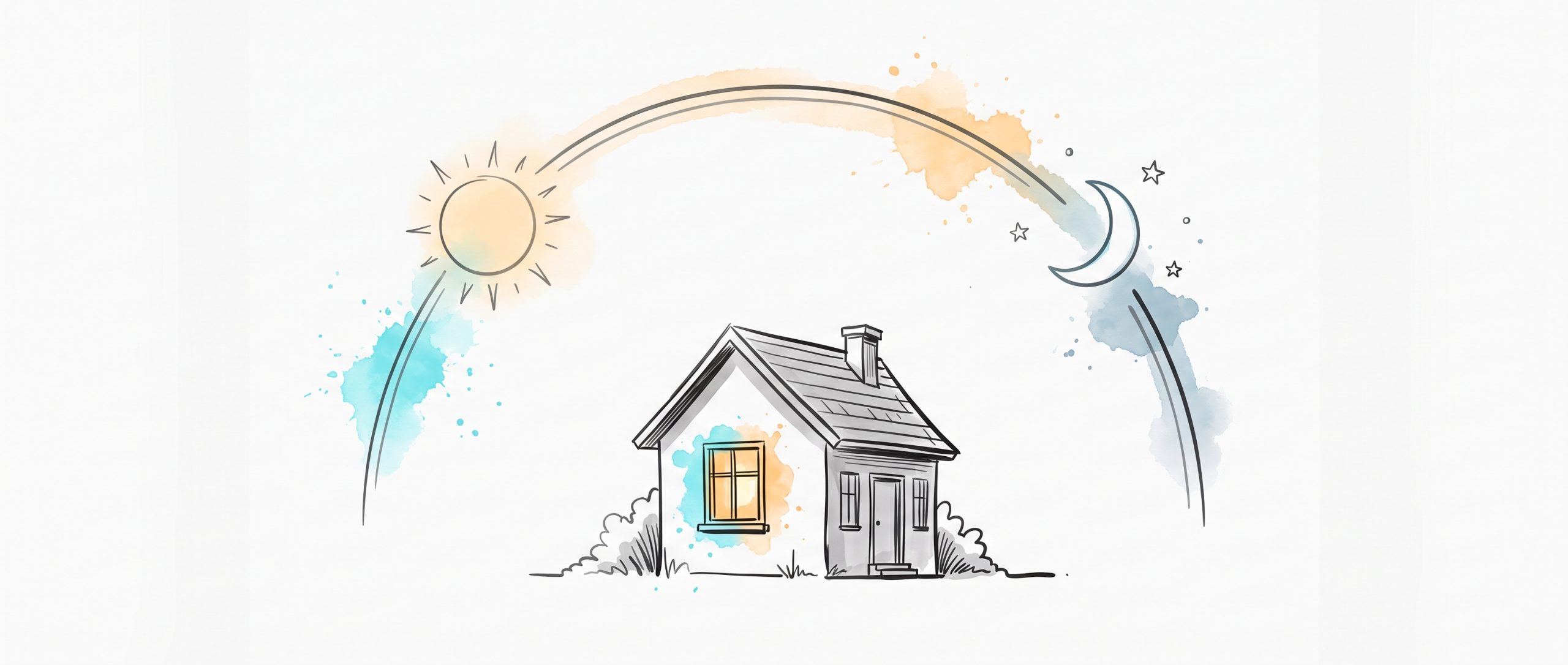
Distress rarely keeps office hours. Anxiety that surfaces at 2am, a wave of grief on a Sunday, the spiral that hits long after your therapist has gone home for the day — these are the moments when support is hardest to find and often matters most. That gap between when help is needed and when it’s available is the whole case for 24/7 mental health support: care, tools, and a steadying presence that don’t clock off.
It’s a real need. The World Health Organization estimates that more than a billion people live with a mental health condition, yet even in high-income countries only about one in three people with depression receive treatment. In the United States, the National Institute of Mental Health reports that of the 59.3 million adults with any mental illness in 2022, only about half received treatment that year. Cost, long waits, provider shortages, and stigma all keep people from the help they need — and none of those barriers respect a 9-to-5 schedule.
This piece looks honestly at what round-the-clock support can and can’t do: where always-available help genuinely changes things, what the evidence says about digital tools, and the firm line where you need a human professional or emergency care — not an app.
Why “always available” matters
The strongest argument for 24/7 support isn’t a clever feature. It’s timing. When a difficult feeling can be met as it arises — named, talked through, gently reframed — it’s less likely to compound overnight or over a long weekend into something heavier. You don’t have to carry it alone until your next appointment.
Availability also chips away at the access problem. A large share of people who want help simply can’t get to it: waitlists run for weeks or months, qualified providers are scarce, and good care is expensive. Something you can reach the moment you need it — for a five-minute reset or a longer talk — lowers the threshold to reaching out at all. For many people, the hardest step is the first one, and a barrier-free door makes that step smaller.
None of this replaces ongoing professional care. It sits alongside it — a way to stay steady between sessions, or a first, low-stakes place to start when you’re not yet sure what you need.
What 24/7 support actually looks like
“Always available” covers a wide range, and the options serve different needs. A quick comparison:
| Type of support | Best for | What to know |
|---|---|---|
| Crisis lines & text services | Acute distress, thoughts of self-harm, emergencies | Free, confidential, staffed by trained responders; the right call when risk is high |
| Self-help & coping tools | Everyday stress, low mood, building skills | Exercises, journaling, guided techniques you can use any time |
| AI coaching & therapy chat | In-the-moment talking-through, reflection, practising skills | Available instantly; a complement to professional care, not a replacement |
| Peer & community support | Feeling less alone, shared experience | Valuable connection; not a clinical service |
| Professional teletherapy | Ongoing treatment for diagnosed conditions | Human clinicians; usually scheduled, sometimes with crisis lines attached |
Most people end up using a mix. The skill is matching the tool to the moment — and knowing which moments call for a real human, fast.
Does digital support actually help?
It’s worth being straight about the evidence rather than overselling it. The research on mental health apps and chat-based tools is encouraging but modest, and the honest picture is more useful than a glossy one.
A 2024 meta-analysis in World Psychiatry pooling 176 randomised controlled trials found that mental health apps have a small but genuine effect on depression and anxiety symptoms (a standardised effect size of roughly 0.26–0.28). Tools built on established methods like cognitive behavioural therapy (CBT) — a structured, evidence-based approach to changing unhelpful thought and behaviour patterns — and those with conversational features tended to do better than generic ones. A 2025 analysis in The Lancet Digital Health similarly found larger effects for CBT-based apps than for others.
One finding matters more than any single effect size: support that involves some human guidance consistently outperforms purely going it alone. A 2023 meta-analysis found guided digital interventions produced roughly double the effect of unguided self-help. The takeaway isn’t “skip the app” — it’s that these tools work best as a complement to human connection and care, not a substitute for it. That’s the spirit good 24/7 support should be built in.
The limits — and where a human is non-negotiable
The same honesty applies to what these tools can’t do. In late 2025 the American Psychological Association issued a health advisory on AI chatbots and wellness apps, stating plainly that they “should not be used as a replacement for a qualified mental health care provider,” and that “the ability of these tools to consistently and safely manage a user in crisis is limited and unpredictable. Relying solely on an app during a mental health emergency can be dangerous.”
That’s the line, and it’s worth holding firmly. On-demand digital support is well suited to everyday strain — stress, low mood, overwhelm, working through a hard day, practising a coping skill. It is not the right tool for acute clinical risk: active thoughts of suicide or self-harm, severe depression, trauma, eating disorders, or any situation where someone’s safety is at stake. Those moments need a trained human, and they need them now.
If you’re in crisis, reach a person directly. In the US, call or text the 988 Suicide & Crisis Lifeline, or text HOME to 741741 for the Crisis Text Line. In the UK and Ireland, call Samaritans on 116 123, free, any hour. If life is in immediate danger, call your local emergency number. These services are genuinely 24/7 and staffed by people trained for exactly these moments.
Where a tool like aidx.ai fits
This is the niche an honest 24/7 service should aim for: the space between crisis lines and scheduled therapy — the ordinary, in-between moments when you’d benefit from talking something through but don’t have anyone to talk to right then.
aidx.ai is award-winning AI coaching and therapy — chat and voice — available worldwide, any time of day. It draws on established, evidence-based approaches including CBT, ACT (acceptance and commitment therapy), DBT, and NLP, and adapts to what you’re working through. You can use it for a quick reset or a longer conversation; it remembers context across sessions so support builds over time rather than starting from zero each time. For anyone who wants a moment of privacy, an incognito toggle keeps a conversation out of stored history — held only briefly in memory and then forgotten.
It’s built on the principle the evidence points to: to complement professional care, not pretend to replace it. When something needs a human clinician or emergency help, the honest answer is to say so — and to point you there. Used that way, always-available support does what it’s genuinely good at: meeting you in the moment, helping you steady yourself, and giving you skills you can carry into the rest of your life.
The takeaway
Mental health doesn’t wait for business hours, and increasingly, support doesn’t have to either. The real value of 24/7 mental health support is access at the moment of need — lowering the barrier to reaching out, helping you process difficulty before it compounds, and building skills you can use any time. The evidence says these tools help modestly and help most when they sit alongside human connection rather than replacing it. Hold the line on crisis care, match the tool to the moment, and round-the-clock support becomes a steady, useful part of looking after yourself.
This article is for general information and is not medical advice or a substitute for professional care. If you’re struggling with your mental health, consider speaking with a qualified professional. If you’re in crisis or thinking about harming yourself, contact a 24/7 crisis service — in the US call or text 988, in the UK and Ireland call Samaritans on 116 123 — or your local emergency number right away.