
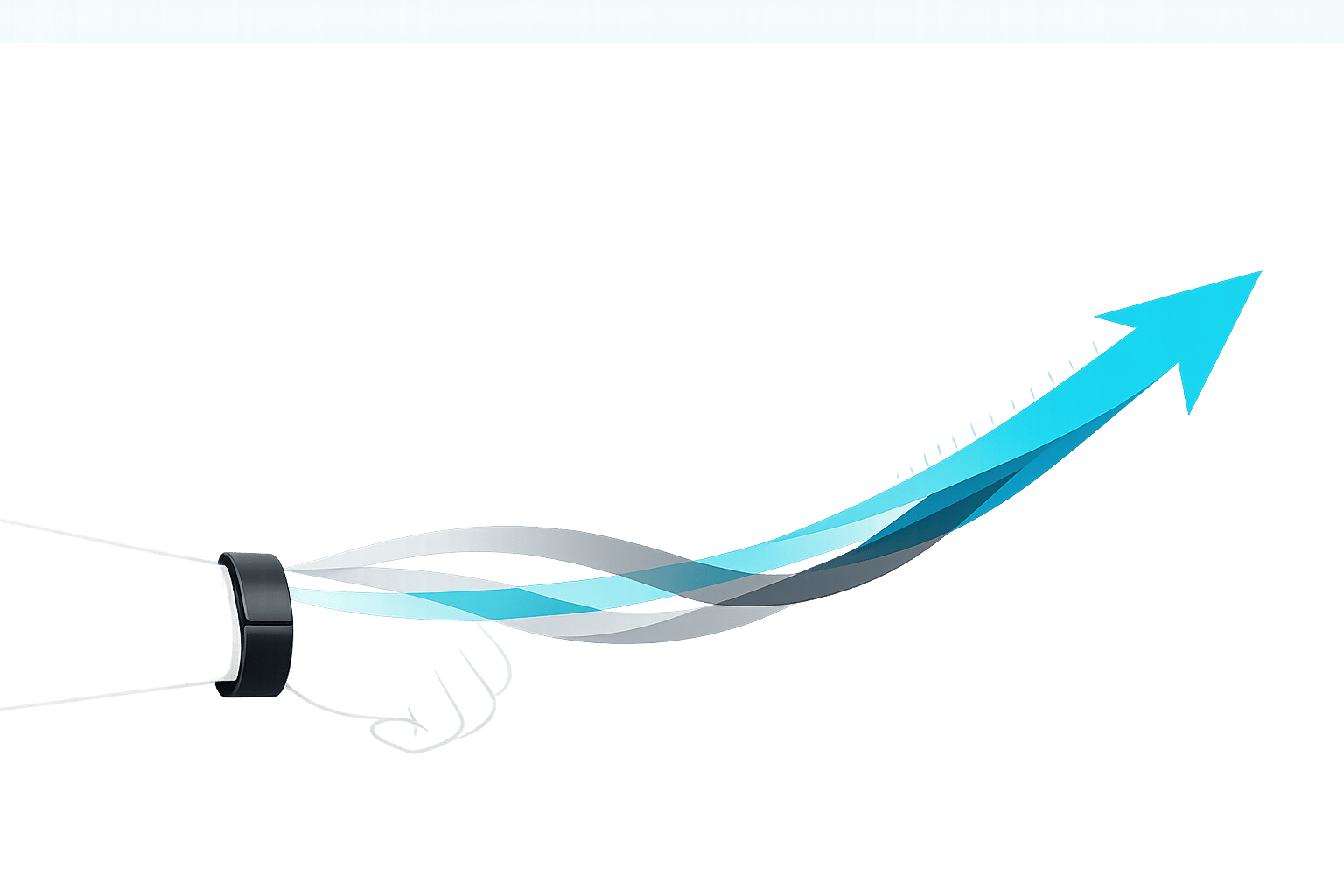
Stress affects your ability to think clearly and make sound decisions, especially in high-pressure situations. Real-time stress monitoring can help by providing immediate insights into your mental state, using data from wearables like heart rate variability and breathing patterns. Tools like Aidx.ai analyze this data and offer actionable guidance, such as prompts to pause or techniques like CBT, to prevent stress from clouding your judgment.
Key takeaways:
- Stress impairs decision-making by overwhelming the brain’s logical thinking.
- Real-time data helps you catch stress early, reducing errors and improving clarity.
- AI-powered platforms turn stress data into actionable steps, guiding you toward better decisions and long-term well-being.
This approach not only helps you make sharper decisions but also protects your mental health over time.
How to Control Stress in Real-Time | Huberman Lab Quantal Clip
sbb-itb-d5e73b4
How Stress Damages Decision-Making
When stress takes over, the brain’s ability to function properly takes a hit. The prefrontal cortex, which handles logical thinking and decision-making, often becomes overwhelmed. This can result in cognitive struggles like decision fatigue or mental bottlenecks, where processing information effectively becomes almost impossible [2][4].
Chronic stress puts a heavy strain on the nervous system. It can lead to "analysis paralysis", making it much harder to weigh options carefully [2]. Instead of approaching problems strategically, the brain defaults to reactive thinking, prioritizing immediate responses over long-term planning. Dr. Lisa Turner, Spiritual Technologist and Systems Engineer at CETfreedom, captures this shift perfectly:
"Stress is not a sign of strength, but a signal that something smarter is possible" [2].
This mental strain leaves individuals vulnerable to further overload, particularly in high-pressure environments.
Mental Overload in High-Pressure Situations
High-pressure scenarios often bring an "invisible load" – the emotional weight of staying composed under stress [2][4]. Balancing team dynamics, maintaining a professional demeanor, and making critical decisions simultaneously can drain the mental energy needed for clear, rational thought.
Internal challenges like perfectionism, imposter syndrome, and the urge to please others can further cloud judgment [2][4]. Entrepreneur Lyssanoel Frater explains this well:
"Stress isn’t always about external factors. Sometimes it’s the internal patterns, perfectionism, people-pleasing, over-identifying with results, that need to shift" [4].
This mental fog hampers access to the strategic thinking and intuition required for sound decisions. In today’s fast-paced world, where rapid data analysis is crucial for businesses [1], the pressure to make quick decisions while mentally overloaded is greater than ever.
This overload doesn’t just affect clarity – it often leads to choices with long-term consequences.
What Poor Stress-Driven Decisions Cost You
Decisions made under stress can lead to financial losses, missed opportunities, and operational setbacks [1][4]. Relying on gut feelings instead of data – a tendency of over 50% of Americans, even when evidence suggests otherwise [5] – can result in costly mistakes.
Take Starbucks as an example. In 2008, the company faced significant losses after relying on intuition to choose store locations. It wasn’t until they shifted to a data-driven approach that they were able to correct course [5].
Using Real-Time Stress Data to Make Better Decisions
Real-time stress monitoring takes the subtle signals your body sends and turns them into actionable insights. This technology helps you recognize stress as it happens, preventing cognitive overload and enabling better decision-making. By converting physiological feedback into real-time data, it bridges the gap between feeling stressed and understanding its impact.
When 63% of surveyed enterprises report that data must be processed within minutes to stay relevant for decision-making [1], the same urgency applies to managing personal stress levels.
How Stress Data Gets Measured
Your body constantly sends signals that reflect your stress levels. Here’s how these signals are tracked:
- Heart rate variability (HRV): This measures the time between heartbeats. When you’re stressed, HRV tends to drop as your nervous system shifts into fight-or-flight mode.
- Galvanic skin response (GSR): This tracks changes in skin conductivity caused by sweat gland activity during emotional arousal.
- Breathing rate: Stress often causes breathing to become shallow and rapid.
Wearable devices collect data on HRV, GSR, and breathing rate, feeding it into systems designed to monitor stress in real time [6]. These systems analyze the data to detect significant changes, making it possible to track stress responses as they occur. Over time, this continuous monitoring can uncover patterns – like how certain situations, such as specific meetings, consistently trigger stress.
AI Analysis for Stress Management
AI takes stress monitoring to the next level by analyzing these physiological signals to identify risks tied to stress-driven decisions. Dr. Lisa Turner, Creator of CETfreedom, highlights this role:
"AI isn’t just a task manager; it has incredible potential to increase emotional resilience, confidence by acting as a mindset partner and emotional mirror" [2].
Platforms like Aidx.ai integrate stress tracking with therapeutic tools, going beyond simple alerts. Acting as a mental coach, these platforms identify hidden stress patterns and guide you toward clearer judgment [2][4]. For example, when your stress markers rise, Aidx might prompt you to pause and use techniques like CBT (Cognitive Behavioral Therapy) or ACT (Acceptance and Commitment Therapy) to regulate your response. It also encourages you to assess whether you’re in the right frame of mind to make a critical decision.
This approach turns stress data into more than just a passive metric. It becomes an active tool for intervention, helping you address stress before it clouds your judgment [2][4].
What You Gain from Real-Time Stress Monitoring
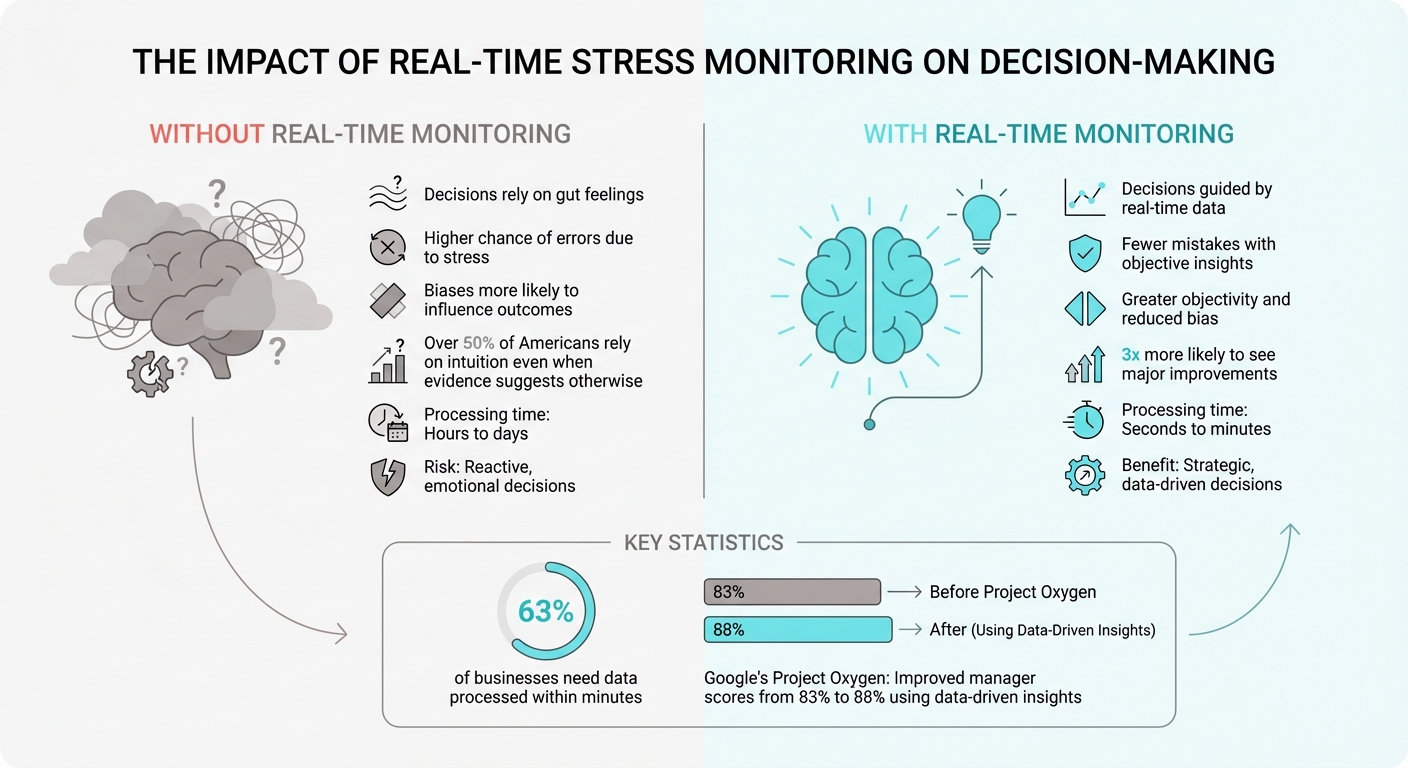
Decision-Making With vs Without Real-Time Stress Monitoring
Real-time stress monitoring can be a game-changer, helping you tackle stress before it spirals into costly mistakes or burnout. By catching stress signals as they happen, you can stay ahead of potential issues, make better decisions, and maintain your energy levels. This proactive approach shifts the focus from fixing problems after the fact to addressing them in the moment, leading to fewer errors, faster decision-making, and improved well-being.
More Accurate Decisions with Fewer Mistakes
Stress has a way of clouding judgment. Dr. Lisa Turner describes this as "mental cloudiness", where stress pushes you into reactive, emotional decisions instead of thoughtful, strategic ones. Real-time monitoring can cut through this fog by alerting you when stress levels spike, giving you a chance to pause, reassess, and make more informed choices.
This isn’t just theory – data backs it up. Organizations using real-time data for decision-making are three times more likely to see major improvements compared to those relying on intuition alone [5]. A great example is Google’s Project Oxygen, which used data-driven insights to improve managers’ median favorability scores from 83% to 88% by identifying behaviors that drive success [5].
| Without Real-Time Monitoring | With Real-Time Monitoring |
|---|---|
| Decisions rely on gut feelings | Decisions are guided by real-time data |
| Higher chance of errors due to stress | Fewer mistakes with objective insights |
| Biases more likely to influence outcomes | Greater objectivity and reduced bias |
Tools like Aidx.ai take this a step further. When stress levels rise, platforms like this can prompt you to create decision matrices, helping you weigh options and avoid analysis paralysis. This not only reduces the risk of errors but also speeds up the decision-making process, as discussed in the next section.
Quicker Decisions When Under Pressure
In high-pressure situations, speed can make all the difference. Sixty-three percent of businesses report needing data processed within minutes to stay competitive [1]. Real-time monitoring delivers insights in seconds, while traditional methods often take hours or even days [3]. When time is tight, even a small delay can mean losing an opportunity.
"AI isn’t just about doing more, faster. It’s about doing less, better and leading from a place of calm, clarity, and coherence."
- Dr. Lisa Turner, Creator of CETfreedom [2]
By reducing mental clutter, real-time stress monitoring frees up the mental space needed for quick, strategic decisions. This is especially critical in fields like healthcare, finance, and aviation, where managing stress effectively can directly impact safety and performance [7]. Beyond just speed, this capability also helps prevent burnout, as explored below.
Preventing Burnout Over Time
Burnout doesn’t happen overnight – it builds up gradually, often unnoticed. Real-time stress monitoring acts like a daily check-up for your emotional health, highlighting stress patterns and habits, such as overcommitment or perfectionism, before they lead to exhaustion. By catching these early warning signs, you can step in and make adjustments before things get out of hand.
This proactive approach can be life-changing. Without monitoring, stress often goes unchecked until it results in a breakdown or major mistake. With real-time insights, you can spot and address stress in its early stages, maintaining consistent performance and staying calm under pressure.
Platforms like Aidx.ai support this by continuously tracking stress levels, burnout risks, and overall emotional health. They provide evidence-based techniques like CBT, ACT, and DBT to help you manage stress before it compounds. By integrating these tools into your routine, you can improve your decision-making and maintain clarity, even in the most challenging situations.
How to Start Using Real-Time Stress Monitoring
Incorporating real-time stress monitoring into your daily life can be surprisingly straightforward. The trick lies in using tools that work quietly in the background, only stepping in when your stress levels rise or patterns emerge that might affect your choices. With the right system in place, you can spot stress early, take action, and stay focused – even in high-pressure situations. Here’s how you can make stress monitoring a seamless part of your routine.
Adding Stress Tracking to Your Daily Routine
Wearable devices are a game-changer for stress tracking. They continuously monitor markers like heart rate variability, skin temperature, and movement, notifying you the moment your stress levels cross a critical threshold [1][3]. This constant stream of data ensures you’re alerted in real time, helping you respond before stress takes over.
Platforms like Aidx.ai streamline this process by integrating stress tracking into your daily workflow. Instead of juggling multiple apps or devices, you can monitor your stress levels while working. When stress spikes, you’ll get prompts to pause, reflect, and refocus. For example, Aidx.ai can create a decision matrix to simplify your choices, cutting through the mental fog that stress often brings [4][2].
To avoid unnecessary interruptions, opt for systems that only notify you when it’s essential. These tools use fast, low-latency channels like WebSockets, ensuring alerts reach you in milliseconds rather than minutes [3]. This is especially important given that 63% of businesses rely on data being processed within minutes to stay effective [1].
Once you’ve set up tracking, the next step is to define your personal stress limits.
Setting Stress Limits and Taking Action Early
Establishing your own stress thresholds is a critical part of staying ahead of stress. These thresholds act as early warning signs, helping you take action before stress impacts your decision-making. Start by identifying your common stress triggers – whether it’s taking on too much, striving for perfection, or feeling like you have to handle everything alone. AI tools can help uncover recurring patterns and triggers, giving you valuable insights [4][2].
Once your limits are set, connect them to specific actions. For instance, if your stress levels exceed a certain point, you could use a reflection prompt to challenge unhelpful beliefs and focus on decisions that align with your core values, like clarity and honesty [4].
"AI tools can form part of your emotional hygiene routine, clearing cognitive fog before it escalates to full-blown burnout."
- Dr. Lisa Turner, Creator of CETfreedom [2]
Platforms like Aidx.ai offer proven techniques from methods like CBT, ACT, and DBT to help you manage stress and reframe negative thoughts. These tools can also handle repetitive tasks like sorting emails or scheduling, freeing up your mental energy for more important work [2].
Monitoring Your Progress Over Time
Tracking stress over time provides insights that single data points can’t. You might notice that certain days are consistently more stressful or that specific types of decisions increase anxiety. By using live dashboards or charts, you can spot these patterns and make adjustments before stress becomes a long-term issue [5]. Regular tracking reinforces early interventions and builds on the real-time insights you’re already using.
Platforms like Aidx.ai continuously monitor factors like stress, burnout risk, and emotional wellbeing. They flag potential issues before they escalate, shifting the focus from reacting to crises to preventing them entirely. This approach helps you maintain steady performance and avoid the breakdowns that unchecked stress can cause.
As Randy Bean, CEO of NewVantage Partners, puts it:
"The ability to make informed decisions based on the very latest up-to-the-moment information is rapidly becoming the mainstream norm" [5].
Conclusion
Stress doesn’t just make life harder – it actively interferes with your ability to think clearly, evaluate choices, and make sound decisions. When you’re under pressure, mental roadblocks and decision fatigue can lead to poor choices, missed opportunities, and even strained relationships. Over time, this can snowball into burnout.
Real-time stress monitoring changes the game by giving you immediate insight into your stress levels before they spiral out of control. Instead of reacting after the damage is done, you can spot the early warning signs and take action. Tools like Aidx.ai make this possible by tracking stress patterns, uncovering hidden triggers like perfectionism, and offering proven techniques from CBT, ACT, and DBT to help you regain focus. Think of it as a partner that cuts through mental fog, helps you prioritize when you’re overwhelmed, and ensures your decisions align with what truly matters to you.
This proactive approach to stress management isn’t just about feeling better – it’s about making sharper decisions, minimizing errors, and staying resilient under pressure. As Dr. Lisa Turner wisely says: "Stress is not a sign of strength, but a signal that something smarter is possible" [2].
If you’re serious about improving your decision-making and maintaining peak performance, AI-powered tools offer a practical solution. They don’t replace your instincts – they enhance them by clearing the mental clutter caused by stress. The most effective leaders aren’t those who ignore stress but those who use tools like Aidx.ai to stay composed, focused, and effective when it matters most.
FAQs
Which wearable signals best reflect stress in real time?
Wearable devices can track stress in real time by monitoring physiological signals such as heart rate variability, skin conductance, and cortisol levels. Smartwatches and biosensors are commonly used for this purpose. By keeping an eye on these metrics, users can gain a clearer picture of how their stress levels change throughout the day.
How can I set a personal stress threshold to trigger action?
Using a real-time stress monitoring tool can help you keep tabs on your stress levels throughout the day. These tools track key indicators, such as heart rate variability or self-reported stress levels, to give you a clearer picture of your patterns. By analyzing this data, you can pinpoint a stress level that signals when you’re feeling overwhelmed.
Once you’ve identified your threshold, you can configure the system to notify you whenever it’s crossed. These alerts can serve as gentle reminders to take action – whether it’s practicing breathing exercises, stepping away for a quick break, or engaging in calming activities to regain balance.
How can Aidx.ai turn stress spikes into better decisions?
Aidx.ai turns moments of stress into opportunities for better decision-making with its Adaptive Therapeutic Intelligence (ATI) System™. This system adapts to your personal emotional patterns, offering real-time, personalized support. Using proven methods like Cognitive Behavioral Therapy (CBT), Acceptance and Commitment Therapy (ACT), and Dialectical Behavior Therapy (DBT), it tailors stress management techniques to fit your needs – whether that’s guiding you through calming exercises or helping you reframe your thoughts.
By easing mental strain and promoting self-awareness, Aidx.ai helps you think more clearly and make rational choices, even in high-pressure situations.