
Body doubling means doing a task with another person present: in the same room, on a video call, or even in a recorded “work with me” video. The other person doesn’t help with the task. They are simply there, and for many people, especially people with ADHD, that is enough to get started and keep going. It is a real and widely used strategy. Most of the explanations you will read for why it works, though, are guesses. No controlled trial of body doubling has been published yet. The closest established science suggests it should work best for exactly the tasks people use it for most: dull, simple, keep-putting-it-off tasks.
This guide covers what body doubling is, what the research does and doesn’t show, the older psychology it borrows from, and how to use it well.
What is body doubling?
The clearest definition comes from the people who use it. In a survey of 220 people, most of them neurodivergent, researchers found that the community roughly defines body doubling as “using the presence of others to start, stay focused on, or accomplish a task” (Eagle, Baltaxe-Admony & Ringland, 2024).
The same survey shows how loose the idea is in practice. A body double can be:
- In the room or remote: a flatmate at the kitchen table, a friend on a video call, strangers in a café.
- Live or recorded: a real-time co-working session, or a YouTube “study with me” video.
- Someone you know or a stranger.
And the tasks aren’t only work. Participants described using it for studying and working, but also for washing up, cleaning and exercising. Their most common reasons were generating momentum and staying on task.
One detail from that research is telling: many people had been doing it for years before they heard the name. Once they read the description, they recognised something they already did. Body doubling is less a technique someone invented than a name for something people already did.
Body doubling and ADHD
The term spread through ADHD communities, and that is where it is most talked about. That makes sense. One of the most frustrating parts of ADHD is the gap between knowing what you need to do and being able to start it, the stuck feeling our guide to ADHD paralysis describes. A tool that helps with starting is valuable to anyone who lives with that gap.
But it is not an ADHD-only strategy. The researchers describe it as used across the neurodivergent community, and plenty of people with no diagnosis find it easier to work in a library than alone at home. Treat it as a general human tendency that some people rely on far more than others.
Does body doubling work? What the research says
Here is the honest picture. The research on body doubling itself is young, small and mostly descriptive. When the same research group first presented their survey in 2023, they noted that “no academic exploration exists on the topic” (Eagle, Baltaxe-Admony & Ringland, 2023). Since then, a handful of design studies have followed, mostly building apps, robots or virtual-reality versions of it (Tan, Hegemann & Gerken, 2026). None of it is a randomised trial asking whether body doubling helps people get more done.
The evidence that exists comes in three kinds:
| Evidence | What it shows | The limit |
|---|---|---|
| Survey of 220 people (Eagle et al., 2023/2024) | People use it widely, for many tasks, and say it helps them start and stay on task | Self-report from people who already use it; it shows practice, not effect |
| Small VR study (Ara et al., 2025) | 12 participants finished a task faster with a virtual body double than alone | Twelve people, one task, a preprint not yet peer-reviewed |
| ADHD lab studies (1986–1995) | Children with ADHD did better on attention tasks when the experimenter stayed in the room | Children, lab tasks, decades old, and the adult was a supervisor rather than a companion |
The last row deserves a closer look, because it is the oldest and most interesting evidence, and it is rarely mentioned. In 1986, researchers gave hyperactive children and a comparison group attention tasks with the experimenter either in the room or out of it. With the experimenter present, the two groups performed the same. When the experimenter left, the hyperactive children’s performance fell off more sharply (Draeger, Prior & Sanson, 1986). A 1995 study found something similar: children with ADHD slowed down and got worse over time, particularly when the experimenter was absent (van der Meere et al., 1995).
A 1994 study added a twist. Hyperactive boys improved when the experimenter was present, but not when their mother was (Gomez & Sanson, 1994). Not just anyone in the room had the effect. That fits what many adults report: some body doubles work for them and some don’t.
Put together, it is fair to say that the presence of another person can change how people with attention difficulties perform, and that body doubling is a sensible thing to try. It is not fair to say, as many pages do, that its benefits are proven or that its mechanism is known.
Why it might work: social facilitation
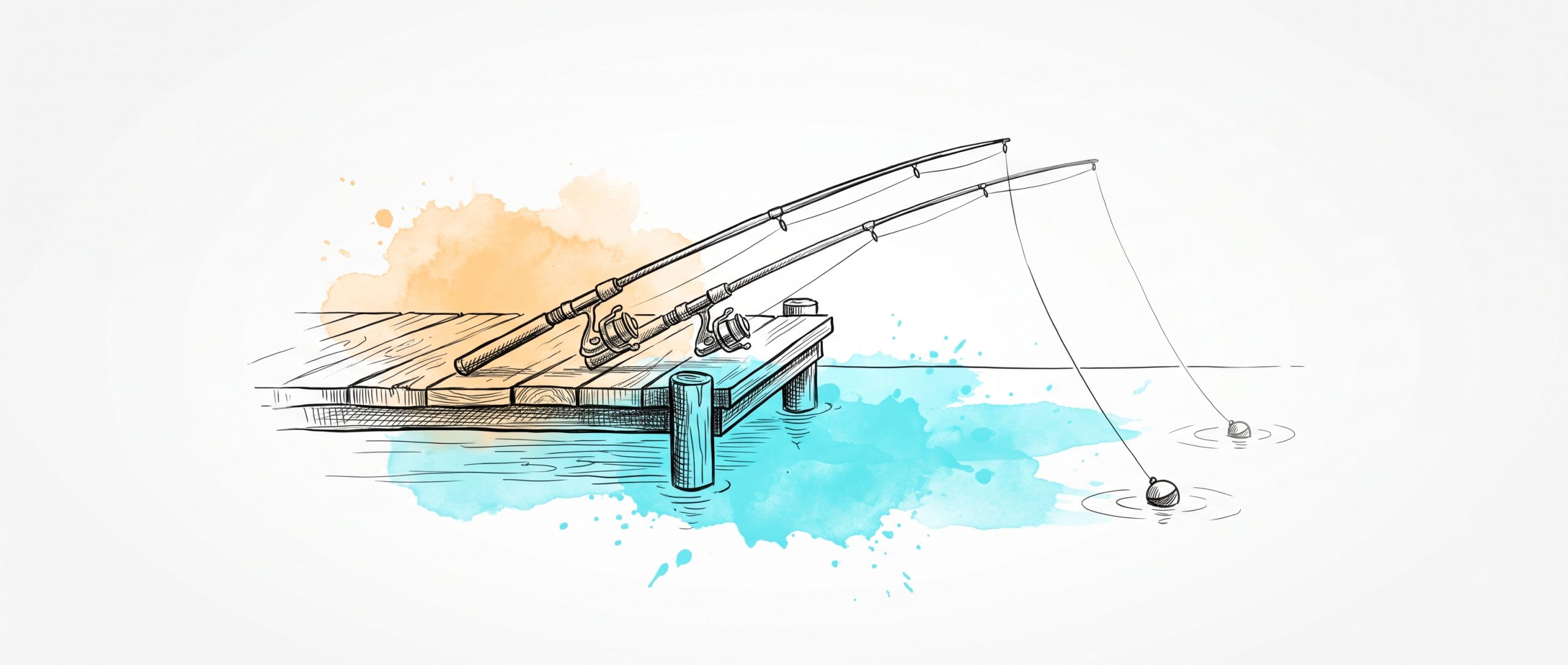
Body doubling has a much older scientific relative. More than a century ago, the psychologist Norman Triplett noticed that young people wound fishing reels faster when working in pairs than alone. Later researchers found the opposite in other settings: people learning nonsense syllables made more mistakes with a spectator watching. In 1965 Robert Zajonc took on these conflicting findings in a now-classic Science paper titled simply “Social facilitation”, the name the field still goes by (Zajonc, 1965).
The best summary of that research is a 1983 meta-analysis of 241 studies, involving nearly 24,000 people. It found that the presence of others:
- speeds up simple tasks and slows down complex ones;
- makes complex tasks less accurate, and makes simple tasks slightly more accurate (though the authors warn that this small gain could partly reflect unpublished null results);
- and has small effects overall, accounting for between 0.3% and 3% of the variation in performance in a typical experiment (Bond & Titus, 1983).
Two cautions. First, this is research on people working in front of others in general, not body doubling, and it was not designed around ADHD. Second, even the classic pattern is messier than textbooks suggest. When researchers repeated a famous 1969 version of the experiment (with cockroaches running a straight track or a maze), an audience slowed the insects down on both tasks. The impairment replicated; the speed-up on the easy task did not (Halfmann, Bredehöft & Häusser, 2020).
Beyond social facilitation, there are other plausible explanations. These are hypotheses, not established mechanisms:
- A start time. A session with someone has a beginning, which breaks the “I’ll start soon” loop.
- Light accountability. It is harder to drift to your phone when someone might notice.
- A cue that this is work time. Another person working sets the scene, the way a library does.
- Company. A dreaded task feels less lonely with someone nearby.
You will also see claims that body doubling works by “boosting dopamine”, through “mirror neurons” or by “co-regulating your nervous system”. None of these has been tested for body doubling. They are speculation dressed up as explanation.
When body doubling helps, and when it doesn’t
The social facilitation research gives you a useful rule of thumb. It is a reasonable inference, not a tested finding about body doubling:
- Use a body double for tasks you already know how to do but keep avoiding: email, admin, tidying, laundry, forms, expense reports, the first rough pass at something.
- Be more careful with tasks that need hard, new thinking: learning something difficult, solving a tricky problem, writing that needs real concentration. If you find that someone’s presence makes those harder, that matches the research.
That fits what users say they use it for. The survey’s examples were things like studying, dishes, cleaning and exercising, and the most common reason given was getting started.
A few other signs that it isn’t helping:
- You spend the session chatting rather than working. (Agree up front to stay quiet, then talk afterwards.)
- You feel watched or judged rather than accompanied. Researchers have noted that some neurodivergent people find social presence uncomfortable (Ara et al., 2025), and that is not a failure on your part.
- It works only with one specific person. That is normal; the 1994 study suggests who is present matters.
How to try body doubling
You don’t need special equipment or an app. Here is a simple way to test it:
- Pick one task you have been avoiding, ideally a simple, boring one, since that is where the research suggests the effect is strongest.
- Choose a format. In person (a friend at your table, a library, a café), a video call with the cameras on and microphones muted, or a recorded “work with me” video if no one is available.
- Set a fixed window, say 25 to 50 minutes, with a clear start time. Share in one sentence what you will each work on.
- Work, mostly in silence. The other person isn’t there to help or supervise, just to be there.
- Check in at the end. Say what you got done. That small moment of reporting back is part of the structure.
- Keep notes for a week or two. Did you start faster? Finish more? Did it work better for some tasks than others? That is your personal evidence, and it is worth more than any generic claim.
There are also online services that run virtual co-working sessions with strangers; some people find these useful when friends aren’t available.
Body doubling works well alongside other strategies for getting started. Our guide on how to stop procrastinating covers why tasks feel aversive and how to make the first step tiny, and our article on how to improve focus looks at the environment and break habits that help once you are underway.
If you want help working out which tasks to try it with, or reflecting afterwards on what helped, aidx.ai offers AI coaching and therapy you can use to plan a session and review how it went. It is AI, and it is not a body double: the research above concerns other people being present, and nothing here suggests software can stand in for that.
Frequently asked questions
Why does body doubling work for ADHD?
Nobody knows for certain, because it hasn’t been tested directly. The best-supported explanation is social facilitation: the presence of others tends to speed up simple, familiar tasks. Lab studies from the 1980s and 1990s also found that children with ADHD kept their attention better when an adult stayed in the room. A fixed start time, light accountability and company are other plausible reasons.
Is body doubling real?
Yes, as a practice. In the largest survey so far, 220 people described how they use it, and many said it helps. What isn’t established is how well it works and for whom, because no controlled trial has been published yet.
Is body doubling only for ADHD?
No. It is most discussed in ADHD communities, but researchers describe it as used across the neurodivergent community, and the underlying effect of working near others has been studied in the general population for over a century.
Does body doubling help with autism?
Body doubling is used across the neurodivergent community, but autism has not been studied separately, and some people find social presence draining rather than helpful. A recorded video or a camera-on, microphone-off call can be a gentler way to try it.
What is the difference between body doubling and parallel play?
Parallel play is a term from child development for young children playing side by side, each absorbed in their own activity. Body doubling is a similar idea applied to adults and tasks: working alongside someone without working together.
Does virtual body doubling work?
Many people who use body doubling do it remotely or with recorded videos, and say it helps. The one small experiment with a virtual body double, of just 12 people, found they finished a task faster than when working alone. That is encouraging but far from proof. Try it and see whether it works for you.
How do you find a body double?
Ask a friend, colleague or housemate to work alongside you for a set time; work somewhere other people are working, like a library or café; join a study group; or use a recorded “work with me” video when no one is free.
Last reviewed: October 2026
References
- Ara, Z., Rahim, I. B., Zhou, P., Yu, L., Esmaeili, B., Yu, L.-F., & Hong, S. R. (2025). You are not alone: Designing body doubling for ADHD in virtual reality. arXiv preprint 2509.12153 (not peer-reviewed).
- Bond, C. F., & Titus, L. J. (1983). Social facilitation: A meta-analysis of 241 studies. Psychological Bulletin, 94(2), 265–292.
- Draeger, S., Prior, M., & Sanson, A. (1986). Visual and auditory attention performance in hyperactive children: Competence or compliance. Journal of Abnormal Child Psychology, 14(3), 411–424.
- Eagle, T., Baltaxe-Admony, L. B., & Ringland, K. E. (2023). Proposing body doubling as a continuum of space/time and mutuality: An investigation with neurodivergent participants. ASSETS ’23.
- Eagle, T., Baltaxe-Admony, L. B., & Ringland, K. E. (2024). “It was something I naturally found worked and heard about later”: An investigation of body doubling with neurodivergent participants. ACM Transactions on Accessible Computing, 17(3).
- Gomez, R., & Sanson, A. V. (1994). Effects of experimenter and mother presence on the attentional performance and activity of hyperactive boys. Journal of Abnormal Child Psychology, 22(5), 517–529.
- Halfmann, E., Bredehöft, J., & Häusser, J. A. (2020). Replicating roaches: A preregistered direct replication of Zajonc, Heingartner, and Herman’s (1969) social-facilitation study. Psychological Science, 31(3), 332–337.
- Tan, V., Hegemann, K., & Gerken, J. (2026). A roadmap of mixed reality body doubling for adults with ADHD. arXiv preprint 2605.07851 (CHI ’26 workshop paper).
- van der Meere, J., Shalev, R., Börger, N., & Gross-Tsur, V. (1995). Sustained attention, activation and MPH in ADHD: A research note. Journal of Child Psychology and Psychiatry, 36(4), 697–703.
- Zajonc, R. B. (1965). Social facilitation. Science, 149(3681), 269–274.
This article is general information about a self-help strategy. It is not medical or psychological advice and cannot diagnose ADHD, autism or any other condition. If difficulty starting or finishing tasks is seriously affecting your work, studies or wellbeing, consider speaking with a doctor or a qualified professional about an assessment.