

Tracking mental health progress is easier with AI tools that transform emotional data into visual insights. These tools help individuals understand their mental health trends and assist professionals in fine-tuning treatment plans. Here’s a quick breakdown of the most popular AI options:
- Aidx.ai: Tracks stress, burnout, and emotional well-being with automatic insights, weekly progress reports, and privacy-focused features. Starts at $29.99/month.
- Wysa: Offers mood trend charts and emotional insights through conversational AI. Pricing varies based on plans.
- Mentalyc: Designed for therapists, it creates progress charts and automates session notes. Plans range from $19.99 to $119.99/month.
- Youper: Combines mood tracking with clinical assessments, offering customizable visual reports. Subscriptions start at $69.99/year.
- Woebot: Uses a chat-based interface for daily mood logging and pattern recognition. Available for $9.99–$19.99/month.
Each tool caters to different needs, whether you’re an individual seeking personal insights or a clinician looking to streamline documentation. Choose based on features, interaction style, and pricing that best align with your goals.
AI and the Future of Mental Health Care | StanfordMed Matters
sbb-itb-d5e73b4
Aidx.ai: Personalized Progress Tracking
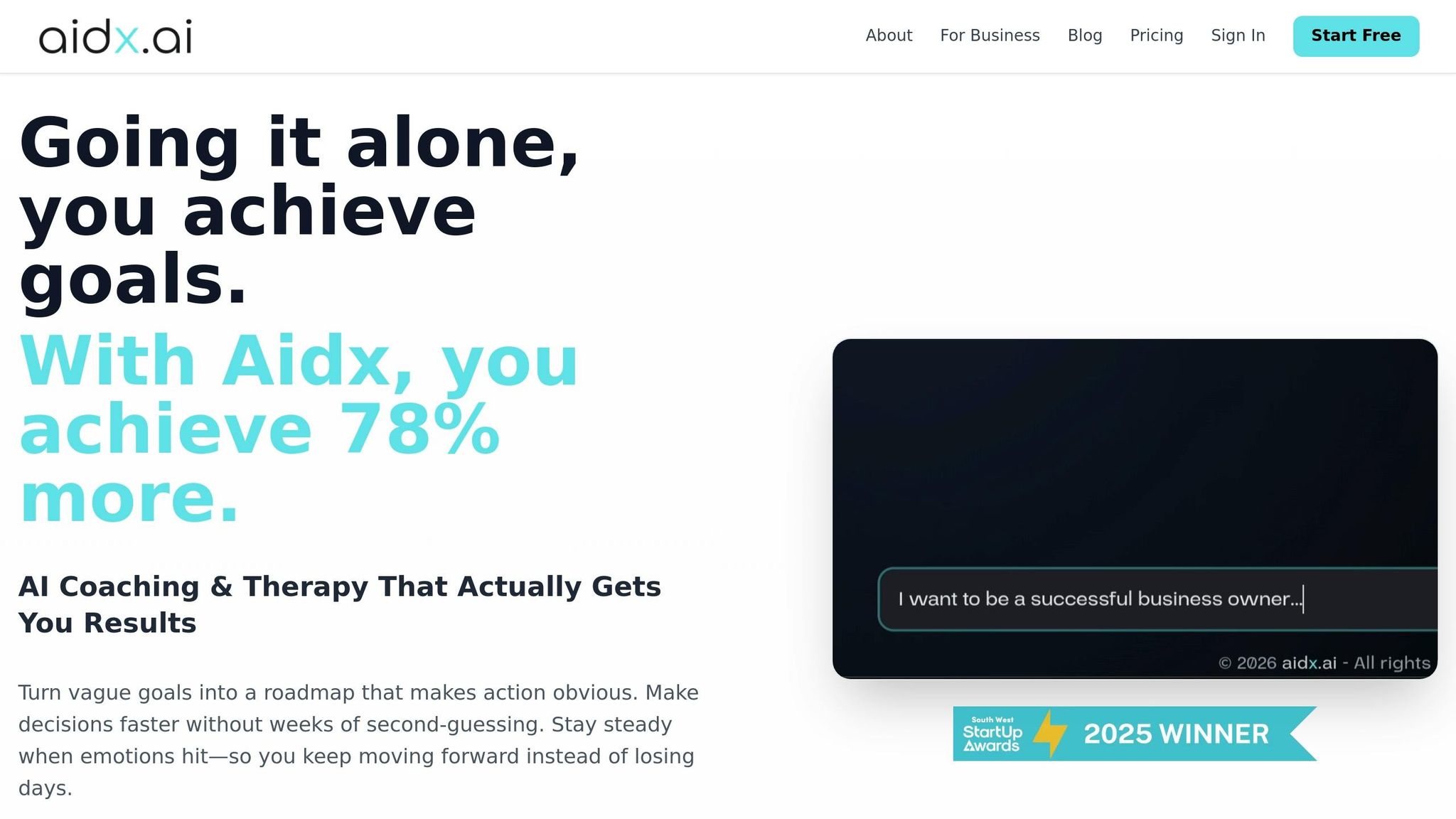
Aidx.ai offers a fresh approach to tracking mental health progress by seamlessly integrating goal tracking into its coaching system. Unlike traditional methods that require users to manually log moods or symptoms, the platform’s Adaptive Therapeutic Intelligence (ATI) System™ automatically monitors conversations. This system tracks stress levels, burnout risks, and overall emotional well-being without extra effort on your part. As Aidx.ai puts it:
Aidx watches your conversations over time. Tracks your stress, burnout risk, and emotional wellbeing – and flags the trends before you’d notice them yourself [6].
By identifying patterns early, Aidx.ai provides timely alerts about potential negative trends, creating a solid foundation for its visualization tools.
Visualization Features
The platform’s visualization tools are designed to turn abstract goals into actionable plans. Key features include:
- Roadmap: A tool that translates your intentions into a visual, goal-tracking framework.
- Insights Dashboard: Displays real-time trends in stress, emotional well-being, and burnout risk based on your interactions with the AI.
- Weekly Progress Reports: Sent every Monday, these reports summarize your emotional and performance data. They can also be shared via email without requiring the recipient to create an account.
Research supports the effectiveness of these tools. Writing down goals can increase achievement by 50%, and adding actionable steps with weekly accountability boosts success rates to 78%. Users of Aidx.ai have been shown to achieve 78% more of their goals compared to those working alone [6].
Real-Time Adaptation
The ATI System™ doesn’t stop at tracking – it evolves. Using techniques from CBT, DBT, and ACT, it learns from your communication and emotional patterns to refine its approach over time. As Aidx.ai explains:
Aidx doesn’t know you on day one. It learns your patterns, tests what works, adjusts as you go. Give it time. The more you use it, the sharper it gets [6].
Professional trader Sarid Harper shared his experience:
Aidx helped me build a framework from which to work that empowered me during times of difficulty [6].
This continuous learning ensures the platform becomes more effective the longer you use it.
Privacy and Security
Privacy is a core priority for Aidx.ai. The platform uses end-to-end encryption, ensuring no human ever reviews your data [6]. You retain full control, with the ability to delete everything whenever you choose. Aidx.ai is fully GDPR compliant and includes features like Incognito mode, which leaves no trace of your activity, and a lock screen to prevent unauthorized access. Co-founder Nicklas Wolff brings 20 years of cybersecurity expertise to these measures. As user Robert Hartley noted, these robust privacy protections are a critical component of the platform [6]. Importantly, your personal data is never sold or shared, keeping your mental health journey entirely confidential.
Wysa: Mood Tracking and Emotional Insights

Wysa uses a conversational AI approach to make mood tracking feel more natural and engaging. With its playful AI persona, the app guides users through conversations, turning these interactions into practical insights. Thanks to natural language processing, it simplifies the process, replacing manual tracking with dynamic and interactive feedback. This conversational style flows seamlessly into detailed reporting tools.
The app generates weekly and monthly reports that visually map out your emotional patterns. These reports help identify recurring cycles and stress triggers by linking mood logs to daily activities, giving you a clearer understanding of how your habits influence your emotional health. Wysa also incorporates standardized clinical assessments into its tracking, adding a professional layer to the insights derived from user data.
Mood Trend Charts
Wysa takes the data from these reports and transforms it into easy-to-read visual charts. These charts break down complex emotional information, presenting it in a way that helps you spot patterns and connect life events to changes in your mood. This visual approach makes understanding your emotional trends more intuitive and actionable.
Mentalyc: AI Progress Tracker for Therapy Goals
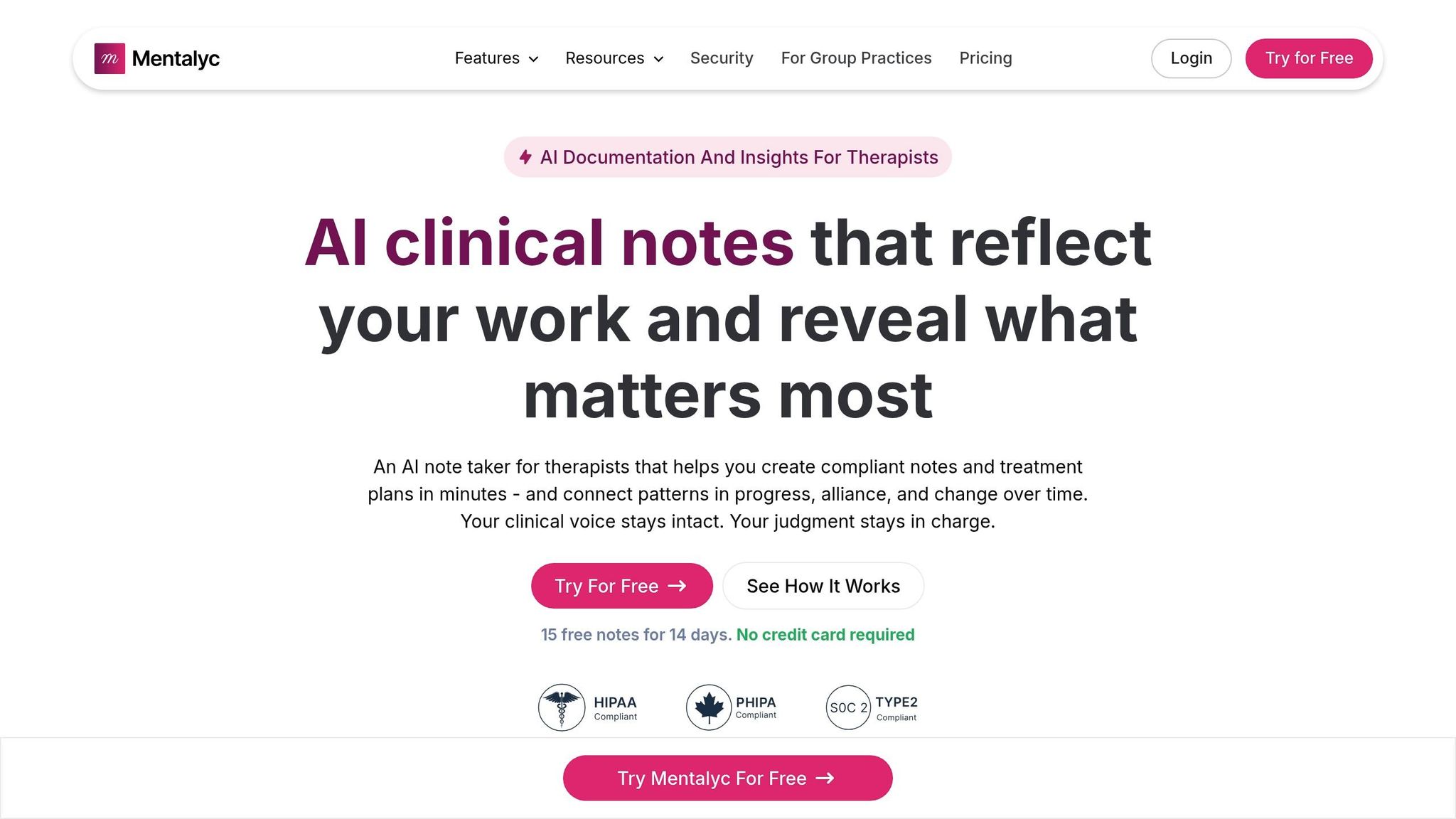
Mentalyc provides therapists with a progress tracker designed to fit seamlessly into their workflow. Instead of relying on clients to complete repetitive questionnaires like the PHQ-9 or GAD-7, Mentalyc uses AI to analyze therapy sessions – captured through audio, uploads, or dictation. This session-based analysis simplifies tracking by automatically identifying therapy-relevant signals, eliminating extra paperwork for clients and therapists alike [1].
The platform transforms session data into progress charts that track symptom trends over time. These visual charts allow therapists to quickly determine whether a client is improving, maintaining stability, or facing setbacks. This "visual story" of progress is especially helpful for managing complex or long-term cases. Therapist Stanley LeMelle shared:
I bring a sense of continuity from session to session because of the really good summary and progress notes that Mentalyc gives me [1].
With ratings of 4.6/5 and 4.5/5, and a user base of over 11,000 psychotherapy professionals, Mentalyc has become a trusted tool for AI-powered documentation [1][7].
Therapy Milestone Tracking
Mentalyc’s AI Treatment Planner helps therapists set SMART goals (Specific, Measurable, Achievable, Relevant, and Time-bound) and automatically detects session signals aligned with these objectives. For instance:
- For anxiety, it tracks work-related worry patterns and cognitive restructuring techniques.
- For ADHD, it monitors task initiation and focus strategies.
- For depression, it evaluates mood ratings and social engagement consistency [7].
The platform’s goal attainment tracking feature provides visual dashboards that display progress toward specific milestones, offering clarity at a glance. Karen Martin, LPC, highlighted its utility:
It helps align the note and the plan for moving forward with sessions … it’s been a really good aid in giving me direction [1].
These visual dashboards also double as audit-ready documentation for insurance purposes, offering clear evidence of clinical progress and medical necessity [1]. By converting raw session data into actionable insights, Mentalyc supports therapists in delivering more effective care.
Integration with Therapy Sessions
Mentalyc takes milestone tracking further by integrating session data through its AI Note Taker. The Alliance Genie™ feature provides therapists with deeper insights and objective perspectives, enhancing client conceptualization between sessions [1]. Therapist Robin M. Mathy shared:
It has cut my charting time by two-thirds, and in many ways – honestly – it does a better job than I did. I love the way it captures quotes from the session to demonstrate points [1].
The platform prioritizes security, being HIPAA, PHIPA, and SOC 2 compliant. It uses encrypted processing, does not store audio recordings, and avoids using data for model training [1]. With plans starting at $19.99/month, Mentalyc offers accessible and secure progress tracking for therapy practices, with annual billing options saving users up to $240/year [1].
Youper: Progress Tracking with Emotional Metrics
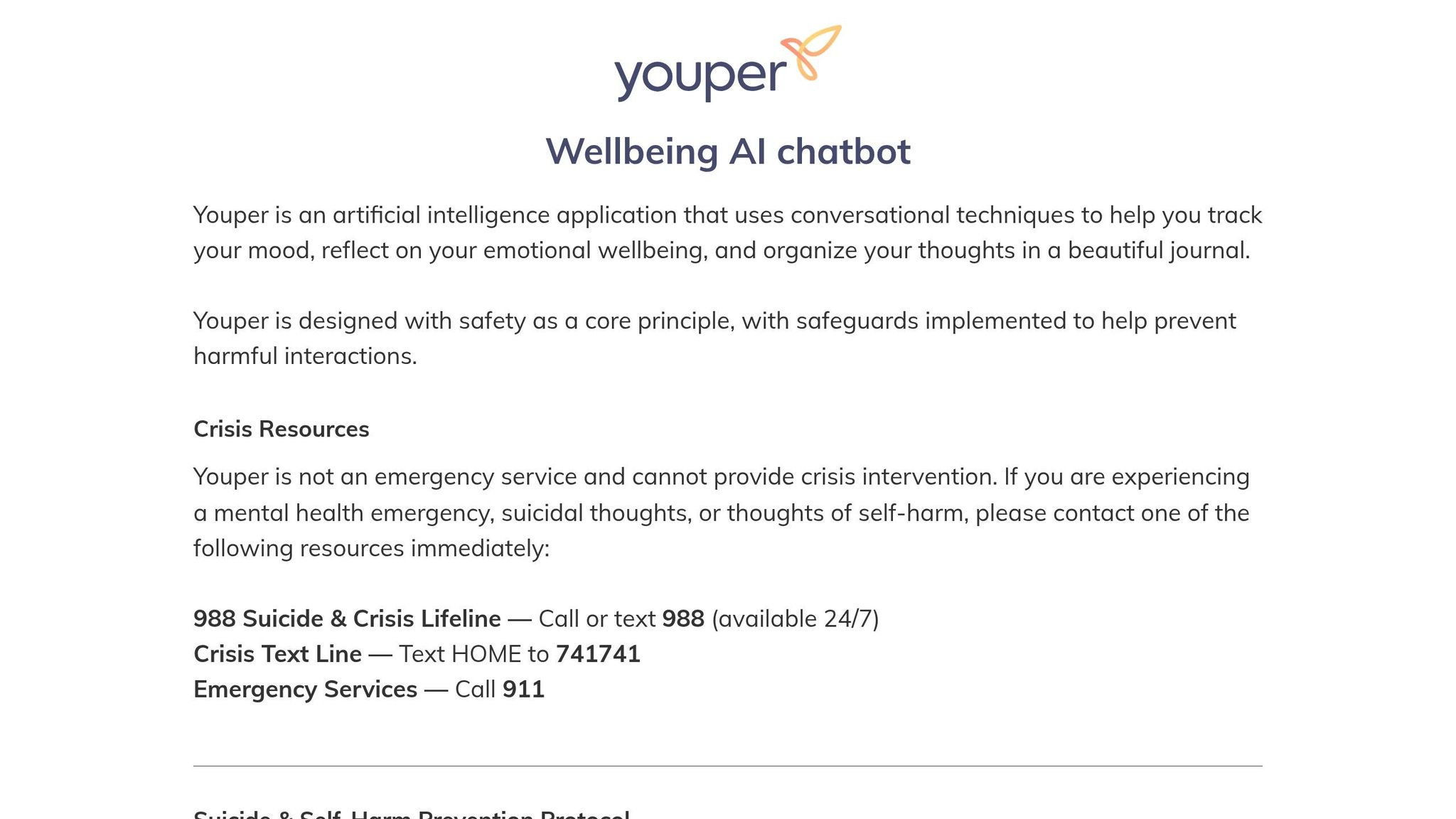
Youper combines conversational AI with clinical assessments to help users track their daily moods using standardized scales like GAD-7 and PHQ-9. By doing so, it uncovers emotional patterns over time, offering users a clearer understanding of their mental health journey [8]. With over 3,000,000 users and a stellar 4.8/5.0 rating based on 64,400 reviews, Youper has become a trusted tool for identifying emotional triggers and trends [8]. Its structured check-ins transform abstract emotional data into easy-to-understand visuals, making progress more tangible.
Stanford University researchers validated the app’s impact, showing that users experienced noticeable reductions in anxiety (effect size d=0.57) and depression (d=0.46) after just two weeks of use [11]. Unlike generic chatbots, Youper’s structured approach highlights emotional history and patterns, enabling users to track changes in their mental health over time [10].
Customizable Visual Reports
Youper creates visual reports by asking users to rate their emotions on a 0–100 scale before and after conversations [11]. This allows the app to measure "regulatory success" by comparing emotional states before and after interventions, offering immediate insights into the effectiveness of coping strategies. Users can also identify contributing factors – such as work, relationships, or health – and provide details about specific events [11].
The app includes medication tracking, helping users visualize how psychiatric medications influence their well-being alongside patterns in personality and behavior [11]. A study involving 4,517 users found that successful emotion regulation during sessions was linked to greater long-term symptom improvement [11]. Youper Plus, which includes these features, is available for $69.99 per year and offers a seven-day free trial for new users [8]. These visualizations integrate seamlessly with interactive sessions, enhancing users’ ability to manage their emotions.
Interactive AI Conversations
Youper goes beyond static reports by engaging users in interactive AI conversations that guide them through exercises rooted in CBT, ACT, and DBT [8]. These conversations encourage users to record real-time emotional data during moments of distress, helping them recognize patterns more accurately. The app’s retention rate of 42.66% by week four highlights its ability to keep users engaged [11].
In addition, Youper helps users identify "Thinking Traps", or cognitive distortions, using clinically validated methods [9]. These personalized conversations complement the app’s visual metrics, offering a dynamic and comprehensive view of emotional progress. While users need to manually save data for professional consultations, the app’s dashboard effectively communicates progress and insights [12].
Woebot: Mood Trend Visualizations
Woebot takes a unique approach to mood tracking, using a messenger-style interface that feels more like a supportive conversation than a clinical tool. During daily check-ins, users log their emotions with a simple scale, emojis, and optional notes for context. This relaxed, user-friendly setup – complete with playful GIFs and emojis – makes it easy to stick with the habit without feeling overwhelmed [15]. Backed by rigorous clinical testing, Woebot has earned its credibility as a mental health resource [14][15].
The app combines automated, clinically validated CBT (Cognitive Behavioral Therapy) responses with a calming design that minimizes mental effort [14][15]. Research from Stanford University even found that college students using Woebot for just two weeks showed significant reductions in depression symptoms compared to those in a control group [15]. While Woebot has shifted its focus toward healthcare enterprise partnerships as of late 2025, it still offers individual subscriptions priced between $9.99 and $19.99 per month [14][15].
Daily Mood Logging
Woebot’s chat-based system makes mood logging feel natural and approachable. Users rate their emotions on a simple scale and can add extra details if they wish. Over time, the app transforms this data into visual charts that track mood patterns and fluctuations, helping users identify emotional trends. The free version provides basic tools like mood tracking and daily check-ins, while premium plans unlock advanced analytics and in-depth trend reports [15]. Many users appreciate the app’s 24/7 availability, especially during moments of late-night anxiety when immediate support feels essential.
Behavioral Pattern Recognition
Woebot doesn’t stop at mood tracking – it goes a step further by identifying behavioral patterns. Using natural language processing (NLP), the app analyzes the text from mood logs and check-ins to detect cognitive distortions or "thinking traps" [15][16]. This allows Woebot to highlight recurring triggers and emotional trends, turning scattered data into clear, actionable insights that help users understand the "why" behind their feelings.
"Woebot prompts daily mood check-ins using a simple scale and optional contextual information. Over time, the app identifies patterns and triggers, providing visualizations and insights about your emotional trends." – AIToolbox360 [15]
While Woebot excels in many areas, some users have pointed out that its responses can occasionally feel scripted, and the AI may struggle to interpret more subtle emotional nuances [15]. Despite these limitations, the app holds a solid 4.0/5 rating on AIToolbox360 and earned a spot on Newsweek‘s inaugural list of the World’s Best Digital Health Companies [13][15]. With its focus on evidence-based techniques, Woebot is a strong choice for anyone seeking clinically validated mental health support.
Comparison Table: Visualization Features
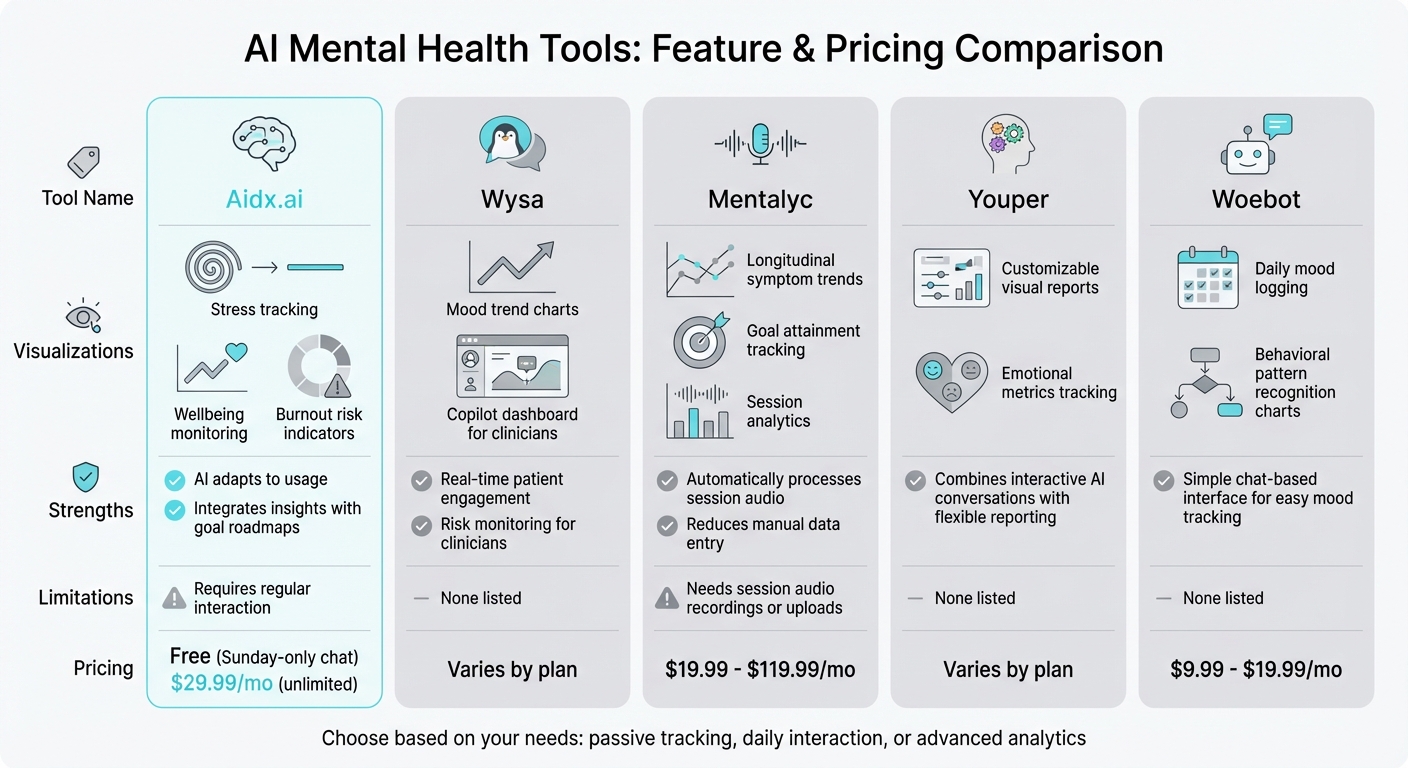
AI Mental Health Tools Comparison: Features, Pricing & Strengths
When it comes to mental health tools, their ability to visualize progress can make or break their effectiveness. Some tools focus on passive tracking in the background, while others encourage daily check-ins to create detailed and meaningful charts. The goal? To turn scattered data into clear, actionable insights. Here’s a breakdown of how different platforms approach visualization, their strengths, limitations, and pricing.
| Tool Name | Key Visualizations | Strengths | Limitations | Pricing |
|---|---|---|---|---|
| Aidx.ai | Stress tracking, wellbeing monitoring, burnout risk indicators | AI adapts to your usage and integrates insights with goal roadmaps | Requires regular interaction | Free (Sunday-only chat), $29.99/mo (unlimited) |
| Wysa | Mood trend charts, Copilot dashboard for clinicians | Real-time patient engagement and risk monitoring for clinicians | – | Varies by plan |
| Mentalyc | Longitudinal symptom trends, goal attainment tracking, session analytics | Automatically processes session audio to reduce manual data entry | Needs session audio recordings or uploads | $19.99 – $119.99/mo |
| Youper | Customizable visual reports, emotional metrics tracking | Combines interactive AI conversations with flexible reporting options | – | Varies by plan |
| Woebot | Daily mood logging, behavioral pattern recognition charts | A simple, chat-based interface for easy mood tracking | – | $9.99 – $19.99/mo |
Each tool has its own approach to visualization, catering to different user preferences and professional needs. For example, Mentalyc stands out by automating data extraction from session audio, which can save therapists significant time [1]. On the other hand, Aidx.ai seamlessly integrates stress and wellbeing tracking into its coaching system, aligning insights with actionable goal roadmaps.
For users who prefer a conversational and straightforward interface, Woebot offers mood logging and pattern recognition through a chat-based system. Meanwhile, Wysa provides a clinician-focused dashboard that tracks patient engagement in real time, making it a valuable option for professionals [17].
Choosing the right tool depends on what you value most – whether it’s passive tracking, daily interaction, or advanced analytics. If you’re looking for a platform that bridges insights with actionable steps, Aidx.ai might be your go-to. For therapists aiming to streamline their workflow, Mentalyc could be a time-saver with its audio-based data extraction. And if simplicity is key, Woebot keeps things approachable without overwhelming users. Pricing details for each tool are outlined in the table above.
How to Choose the Right Tool
Evaluating Features for Your Needs
When choosing an AI tool for mental health tracking, it’s essential to align its features with your specific goals – whether for personal use or clinical practice. Personal tools like Mind Jar and Sam Central focus on straightforward mood logging, habit formation, and self-reflection through daily check-ins. On the other hand, clinical tools such as Mentalyc and Upheal are tailored for healthcare professionals, offering features like HIPAA compliance, integration with EHR systems, and automated documentation that generates SOAP notes from therapy sessions [1][5].
Some platforms go beyond basic tracking, offering over 50 types of analytics charts. These can include tools to track long-term trends or explore correlations between lifestyle factors – like sleep, diet, or social interactions – and emotional well-being [3]. If you’re looking for a hands-off approach, consider tools with automated pattern recognition. These tools identify connections without requiring manual input [3][4]. For those who prefer a more involved experience, opt for platforms that integrate stress and well-being tracking directly into goal-setting frameworks, helping you turn insights into actionable steps instead of leaving you to interpret complex data on your own.
Time commitment is another factor to weigh. Some tools are designed for quick daily check-ins, taking less than five minutes, while others automate much of the process, cutting down on documentation time by as much as 90% [3][5]. Therapist Robin M. Mathy shared:
Mentalyc has cut my charting time by two-thirds, and in many ways – honestly – it does a better job than I did [1].
Additionally, look for tools that allow you to export data in structured formats like CSV for personal use or generate insurance-ready progress notes for healthcare providers [5]. After evaluating the features, don’t overlook the importance of robust privacy and security measures.
Privacy and Security Priorities
Protecting your data is just as important as the tool’s functionality. Mental health information is deeply personal, so any platform you choose should adhere to strict regulatory standards. Look for compliance with frameworks such as HIPAA (US), GDPR (Europe), PHIPA/PIPEDA (Canada), or SOC 2 Type II certifications [1][5][2]. For clinicians, ensure the provider offers a Business Associate Agreement (BAA) to confirm HIPAA compliance [1][5].
It’s also critical to understand how the platform handles your data. Verify that the company doesn’t use your sensitive information or transcripts to train its AI models [3]. As Sam Central emphasizes:
Privacy isn’t a setting. It’s the product [3].
Some tools, like Aidx.ai, take a privacy-first approach by offering on-device storage, ensuring your data stays on your device unless you opt for cloud syncing. Features such as GDPR-compliant encryption, an incognito mode that clears data after 30 minutes of inactivity, and a strict no-human-review policy are worth considering. Additionally, check for safeguards like data encryption during storage and transmission (using TLS protocols) and confirm whether raw data, such as audio recordings, is deleted immediately after processing [3][5]. Multi-factor authentication and audit logs for tracking data access are also essential features to look for [5].
Before committing to a platform, take advantage of free trials or free-forever tiers, usually available for 3 to 14 days. This allows you to test the tool and ensure it meets your needs. For example, Mind Tracker has received high ratings – 4.8/5 on Google Play and 4.9/5 on the App Store – based on feedback from over 100,000 active users and more than 2.5 million mood records logged [4].
Wrapping Up
Tracking your mental health journey is all about turning intangible emotions into clear, actionable patterns. Studies show that setting and monitoring goals can improve success rates by 42%. Additionally, 85% of individuals who use structured journaling and progress tracking report better mental health outcomes [18]. With the right AI tool, raw emotional data can be transformed into meaningful insights, helping you identify links between factors like sleep, stress, and mood that might otherwise go unnoticed.
Each platform offers its own strengths, but their shared goal is to convert abstract data into visual insights you can act on. Aidx.ai, for instance, shines with its Adaptive Therapeutic Intelligence (ATI) System™. This system adapts to your communication style over time, combining voice-first coaching, goal tracking, and real-time wellbeing metrics – all while prioritizing privacy with GDPR-compliant encryption and an incognito mode.
Choosing the best tool depends on your specific needs. Some might prioritize clinical-grade documentation, others might value voice-based interaction, or perhaps detailed analytics are your focus. Licensed professional counselor Daniel Helvetius highlights the value of one such platform:
Mentalyc has a unique ability to transcribe and summarize the therapeutic process. It helps me reflect and gain an objective perspective after a session. This way, I can create a stronger conceptualization of the client’s individualized path to wellness. [1]
Before making a decision, ensure the platform adheres to strict privacy and encryption standards. Many tools offer free trials ranging from 3 to 14 days, so you can explore their visualization features and confirm they align with your privacy needs.
FAQs
How does Aidx.ai visualize my mental health progress?
Aidx.ai creates visual progress charts to help track your mental health journey. These charts are built using key metrics from your coaching sessions, such as emotional states, stress levels, and overall wellbeing. By reviewing these visuals, you can spot patterns and trends over time, giving you a clearer picture of your progress.
Do I have to log my mood manually in Aidx.ai?
No need to manually track your mood anymore. Aidx.ai takes care of it for you by automatically detecting stress patterns and emotional states in real-time. It simplifies mood tracking, making it effortless and hassle-free.
How private is my data in Aidx.ai?
Your data is kept private and secure with Aidx.ai. The platform adheres to GDPR regulations, employs encryption to safeguard your information, and includes an incognito mode that automatically clears your session after 30 minutes of inactivity. Additionally, no human reviews your data unless it’s legally mandated. You can feel confident that protecting your privacy is a key focus.