

Workplace resilience training is the deliberate practice of helping employees adapt to pressure, recover from setbacks, and keep functioning well when work gets hard. Done well, it measurably lifts mental health and wellbeing. Done as a one-off lunchtime workshop, it mostly fades within months. The difference, the research is surprisingly clear about, comes down to how the training is delivered — and that is exactly where a new generation of AI tools is starting to matter.
This guide walks through what the evidence actually says about resilience training, the ingredients that make it work, and how today’s AI tools — including aidx.ai — compare for an HR or people team trying to support a whole workforce without blowing the budget.
What is workplace resilience training?
Resilience is the capacity to maintain or regain wellbeing in the face of stress and adversity. Resilience training is any structured programme designed to build that capacity — usually through a mix of skills like cognitive reframing, mindfulness, problem-solving, and emotion regulation.
The appeal for employers is obvious once you look at the numbers. According to the World Health Organization, an estimated 12 billion working days are lost every year to depression and anxiety, at a cost of around US$1 trillion in lost productivity [1]. Gallup’s most recent State of the Global Workplace puts the cost of low engagement at roughly $10 trillion, equal to 9% of global GDP, with global engagement sitting at just 20% [2]. And in the American Psychological Association’s 2024 Work in America survey of 2,027 U.S. employees, 67% reported at least one symptom associated with burnout in the past month, while 43% said they typically feel tense or stressed during the workday [3].
So the demand for resilience support is real. The harder question is whether the training actually does anything.
Does resilience training actually work?
Mostly yes — modestly, and with important caveats. Three pieces of research are worth knowing.
A 2018 systematic review and meta-analysis in BMJ Open pooled 11 randomised controlled trials and found a moderate positive effect on resilience (standardised mean difference 0.44) [4]. Crucially, it found that programmes combining cognitive behavioural therapy (CBT) with mindfulness produced the largest effect (SMD 0.51) — larger than mindfulness alone (0.46) or CBT alone (0.27).
A larger meta-analysis in the Journal of Occupational and Organizational Psychology (Vanhove and colleagues, 2016), covering 42 samples, found a smaller overall effect (Cohen’s d 0.21) and one finding that should change how every people team thinks about this: the benefits faded over time — strong in the near term (d 0.26) but largely washed out at follow-up (d 0.07) [5].
The same study answered a question that matters enormously for tool selection. It compared delivery formats and found that one-on-one delivery (such as coaching) was the most effective, followed by classroom-based group training. Train-the-trainer and — notably — computer- and online-based formats were the least effective [5].
That last point deserves honesty, because it cuts against the easy pitch for digital tools. Historically, generic self-serve software has been the weakest way to build resilience. The interesting question is not “is digital good or bad” but “can new AI tools deliver the individualised, ongoing experience that actually works — rather than the static e-learning module that doesn’t?”
What actually makes resilience training effective
Pulling the evidence together, four ingredients separate training that lasts from training that fades:
| Ingredient | Why it matters | Evidence |
|---|---|---|
| Individualised, coached delivery | One-on-one beats group; generic computer-based delivery is weakest | Vanhove 2016 |
| CBT + mindfulness content | The combination outperforms either approach alone | Joyce 2018 |
| Ongoing support, not one-off | Effects decay within months without reinforcement | Vanhove 2016 |
| Practice and repetition | Most effective programmes are multi-session and skills-based | Joyce 2018 |
Read that table back and a pattern jumps out: the ideal is personalised, evidence-based coaching that stays with someone over time. For decades that has been expensive and hard to scale — you can’t give every employee a personal coach on call. That constraint is precisely what AI tools are now built to loosen.
How AI tools fit into resilience training
AI coaching tools don’t replace the science; they change the delivery. A well-built AI tool can offer something a classroom workshop or a PDF can’t: a personalised, evidence-based conversation available the moment an employee actually needs it, at a fraction of the cost of one-on-one human coaching.
It’s worth being clear-eyed about the current evidence for AI specifically. An early randomised trial of the CBT chatbot Woebot found a moderate reduction in depressive symptoms over two weeks (Cohen’s d 0.44), but with a tiny sample and no follow-up [6]. A 2020 meta-analysis of mental-health chatbots found statistically significant but small effects on a low-quality evidence base, and the authors were careful to say definitive conclusions “could not be drawn” yet [7]. The honest summary: AI mental-health support is promising and improving fast, but it is best framed as a scalable layer of everyday support — not a clinical treatment, and not a replacement for human care when someone is in real crisis.
Where AI genuinely earns its place is the gap the evidence keeps pointing to: access. Roughly half of U.S. adults with a mental illness receive no treatment in a given year, with cost, stigma, and not knowing where to turn among the biggest barriers [8]. An always-available, judgment-free tool meets people in the moment they’d otherwise wait, or never reach out at all.
The best AI tools for workplace resilience training in 2026
A quick word on this list, because the workplace-wellbeing market has shifted under everyone’s feet in the last two years. Several tools that topped these roundups have quietly exited the space — so this is a current, honest snapshot rather than a recycled one.
1. aidx.ai
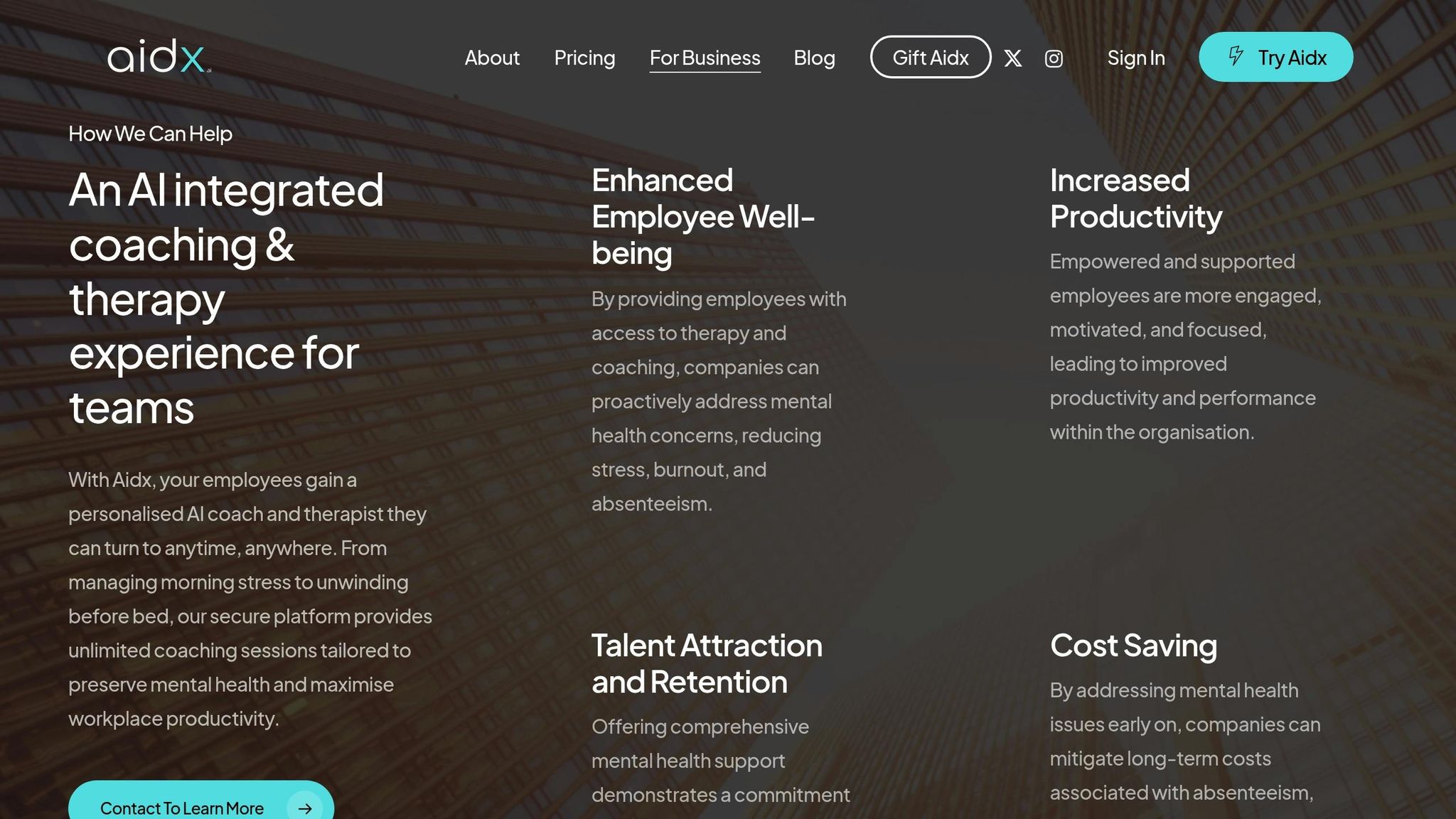
aidx.ai is an award-winning AI coaching and therapy service (chat and voice), built around the delivery model the resilience evidence actually favours: individualised, evidence-based, and continuously available. Its main coaching modes — Life, Business, and Performance — draw on established techniques from CBT, ACT, DBT, and NLP, the same CBT-and-mindfulness toolkit the meta-analyses single out as most effective.
What sets it apart for a resilience-training context:
- One-on-one by default. Every employee gets a personalised conversation that adapts to them over time — closer to the coaching format that outperforms group workshops than to the generic e-learning module that doesn’t.
- Always on. Available 24/7 via web and an installable app (PWA), with voice chat — directly addressing the access gap, and the decay problem, by being there for the small moments between any formal training.
- A privacy-preserving team view for HR. For companies, aidx.ai surfaces conversation-derived wellbeing signals — stress, burnout risk, work satisfaction, team belonging — in aggregate only, with a strict minimum cohort size so no individual is ever identifiable. Managers see a calm Calm / Watch / Act read on team wellbeing, not anyone’s private words.
- Honest about its limits. aidx.ai is AI coaching and therapy, not a human clinician or crisis service, and it’s designed to point people toward real professional help when that’s what’s needed.
Pricing is straightforward: a free Starter tier, with the full-featured Elevate plan at $29.99/month (or $288/year), and a 30-day money-back guarantee. aidx.ai was recognised as AI Startup of the Year by the UK Startup Awards and is a Great British Entrepreneur Awards finalist.
2. BetterUp
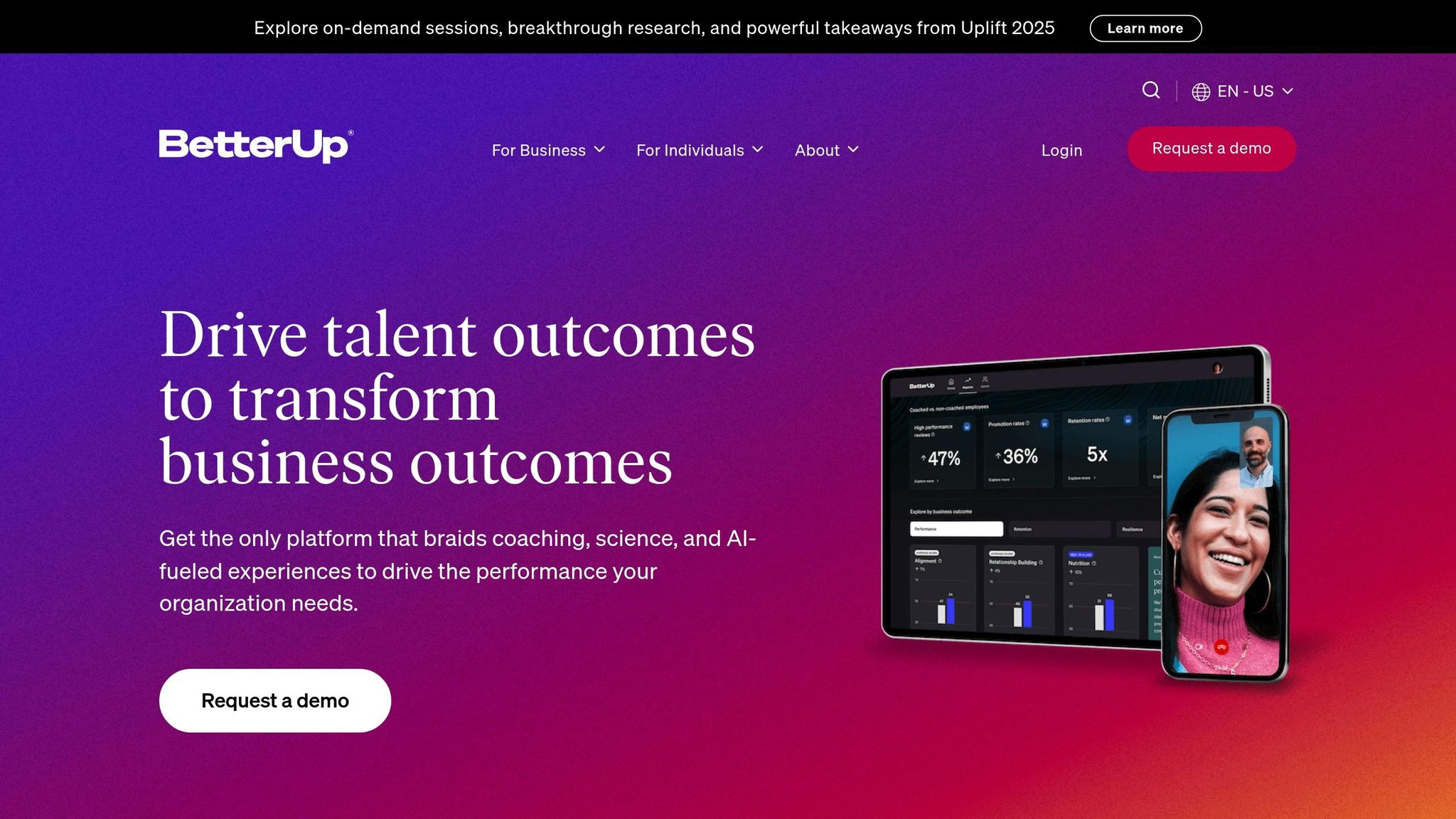
BetterUp built its name on a marketplace of human coaches matched to employees, with a strong emphasis on leadership development. In 2025 it added an AI coaching product (BetterUp AI / Grow) that integrates with workplace tools and offers AI roleplays for practising difficult conversations. It’s a credible, enterprise-grade option — typically a premium-priced one — and leans more toward performance and leadership coaching than mental-health support specifically.
3. Headspace for Work
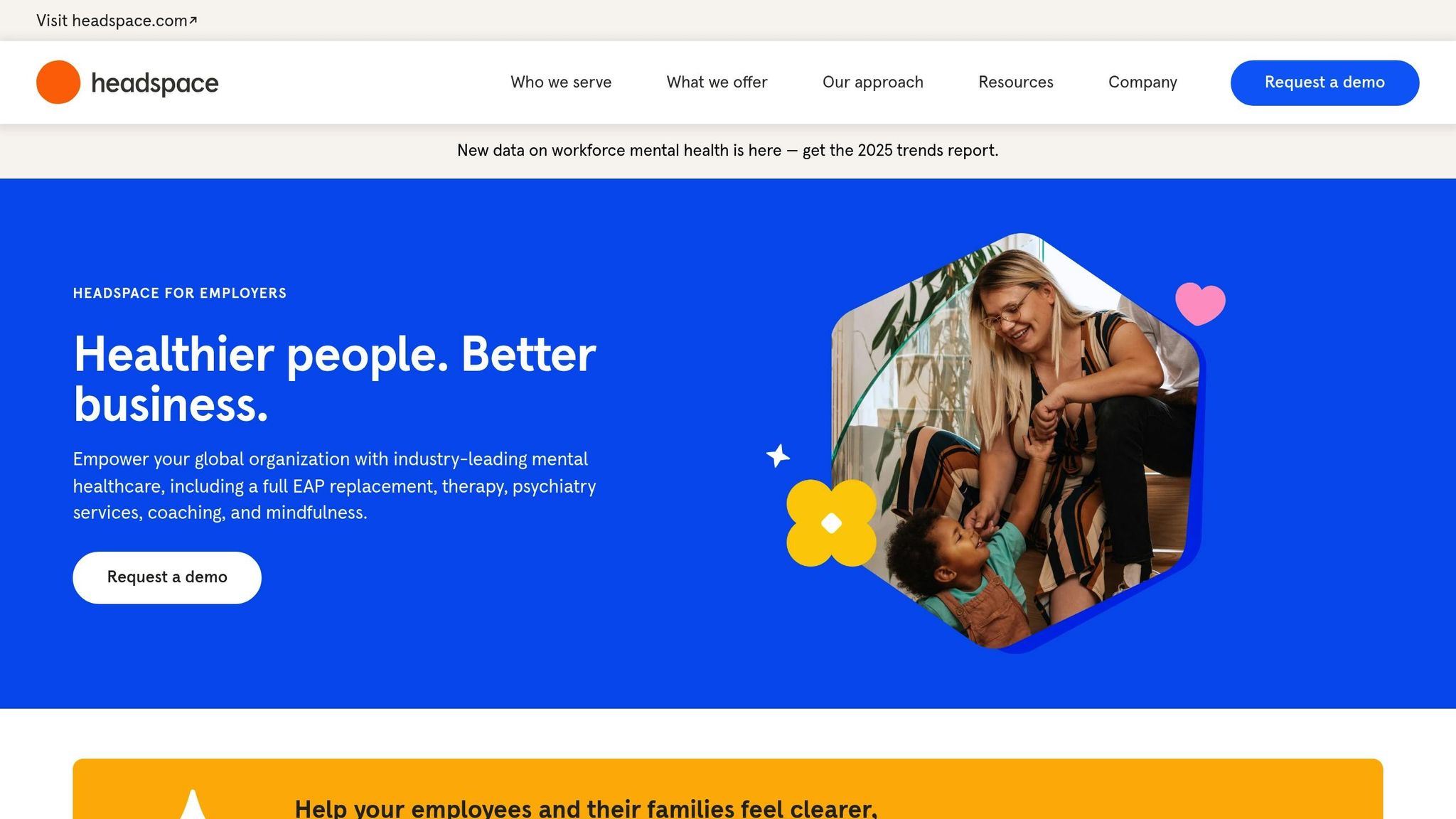
Headspace for Work grew out of the well-known meditation app. After Headspace merged with mental-health provider Ginger in 2021 [9], its employer offering now bundles mindfulness and meditation content with behavioural-health coaching, therapy, and psychiatry. It’s a strong fit for organisations that want mindfulness at the core, delivered mostly through guided content rather than open-ended coaching conversation.
4. Calm Business
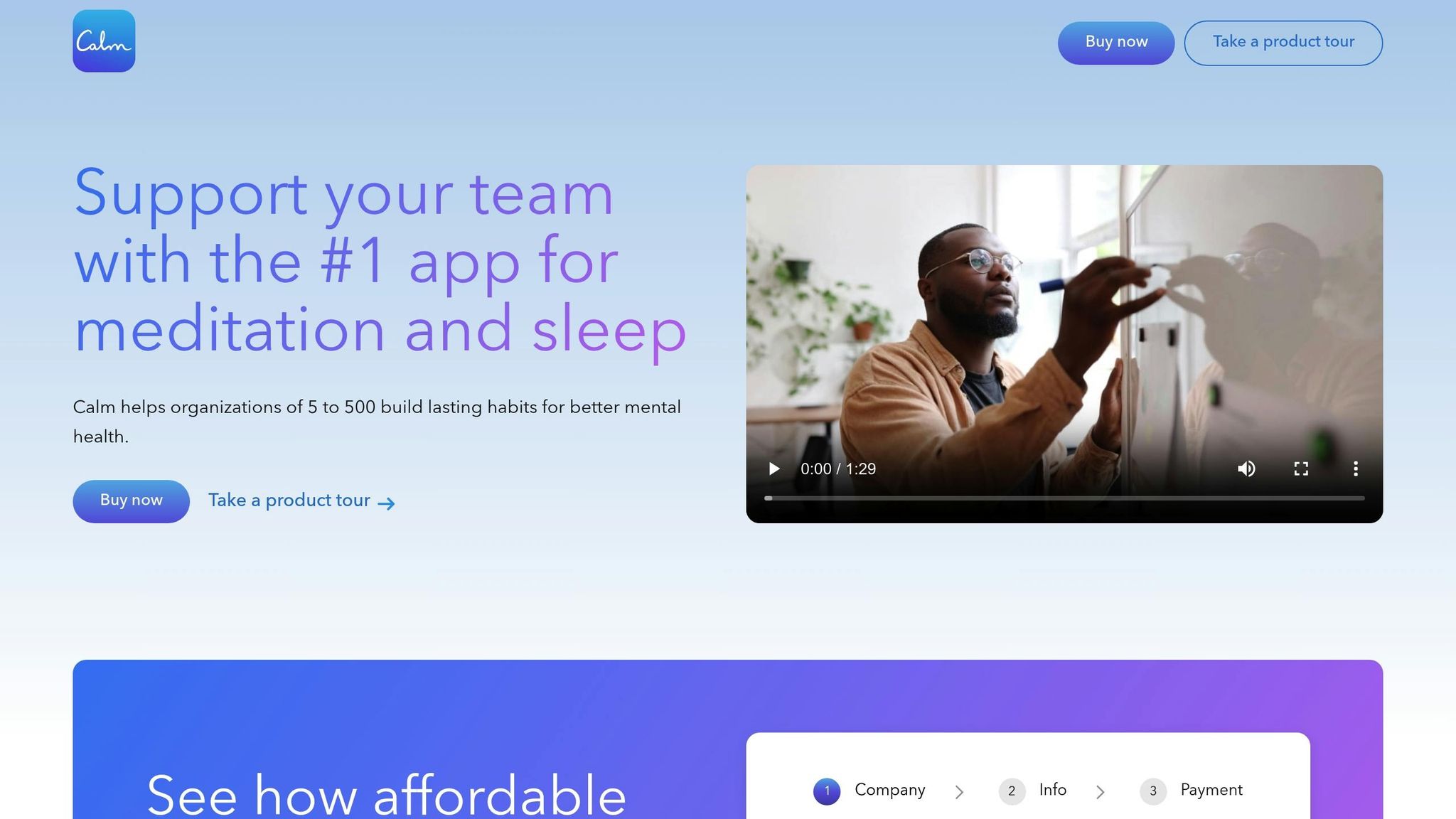
Calm Business is the employer arm of the Calm app, centred on meditation, sleep, and mindfulness content. Given the evidence that mindfulness is one effective ingredient of resilience, it’s a sensible wellbeing perk — though it’s content-library-led rather than a personalised, conversational coaching tool.
5. A note on Woebot and Happify Health
Both of these appear on older “best resilience tools” lists, so it’s worth flagging where they’ve gone. Woebot, the pioneering CBT chatbot, shut down its consumer app on 30 June 2025; its founder cited the difficulty of meeting regulatory requirements, and the company pivoted toward enterprise partnerships [10]. Happify Health rebranded to Twill in 2022 and was acquired by DarioHealth in February 2024 [11]; its products now sit within DarioHealth’s broader chronic-condition platform rather than as a standalone resilience tool. If a roundup still lists them as live, standalone options, it’s out of date.
How to choose a resilience tool for your team
Map your choice back to what the evidence rewards. A few questions to ask any vendor:
- Is the support individualised, or one-size-fits-all? Personalised, coached delivery outperforms generic content.
- Is it grounded in CBT and mindfulness? That combination has the strongest evidence base for building resilience.
- Is it available continuously, or just at training time? Effects fade without reinforcement, so everyday availability matters more than a single event.
- Does it protect employee privacy? People only open up if they trust their words stay private. Look for aggregate-only reporting and a minimum cohort size before any data is shown to managers.
- Is the vendor honest about limits? A tool that knows when to point someone to human or crisis care is safer than one that overclaims.
The bottom line
Workplace resilience training works — but the version that lasts is personalised, built on CBT and mindfulness, and available beyond a single workshop. That used to be the exclusive, expensive preserve of one-on-one human coaching. AI tools are starting to bring that model within reach of an entire workforce, honestly and affordably, while leaving the heaviest cases to the human professionals who should handle them.
If you’re building resilience support for your team, start from the ingredients the research rewards, and choose a tool that delivers them. You can see how aidx.ai supports teams, and for the individual side of the picture, our guides to building resilience, managing workplace stress, and career resilience go deeper.
Last reviewed: June 2026.
References
- World Health Organization. Mental health at work (fact sheet, 2024).
- Gallup. State of the Global Workplace.
- American Psychological Association. 2024 Work in America Survey.
- Joyce S, et al. Road to resilience: a systematic review and meta-analysis of resilience training programmes and interventions. BMJ Open, 2018.
- Vanhove AJ, et al. Can resilience be developed at work? A meta-analytic review of resilience-building programme effectiveness. Journal of Occupational and Organizational Psychology, 2016.
- Fitzpatrick KK, Darcy A, Vierhile M. Delivering CBT to young adults with symptoms of depression and anxiety using a conversational agent (Woebot): a randomized controlled trial. JMIR Mental Health, 2017.
- Abd-Alrazaq AA, et al. Effectiveness and safety of using chatbots to improve mental health: systematic review and meta-analysis. Journal of Medical Internet Research, 2020.
- National Institute of Mental Health. Mental Illness statistics (NSDUH data).
- Fierce Healthcare. Headspace and Ginger finalize $3B merger (2021).
- STAT News. Woebot’s therapy chatbot shuts down (2025).
- Healthcare Dive. DarioHealth acquires Twill (2024).