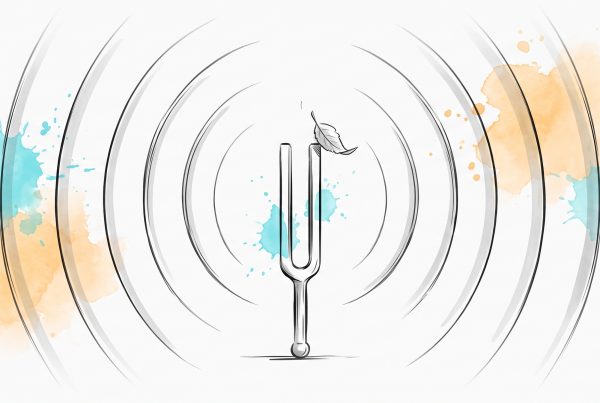

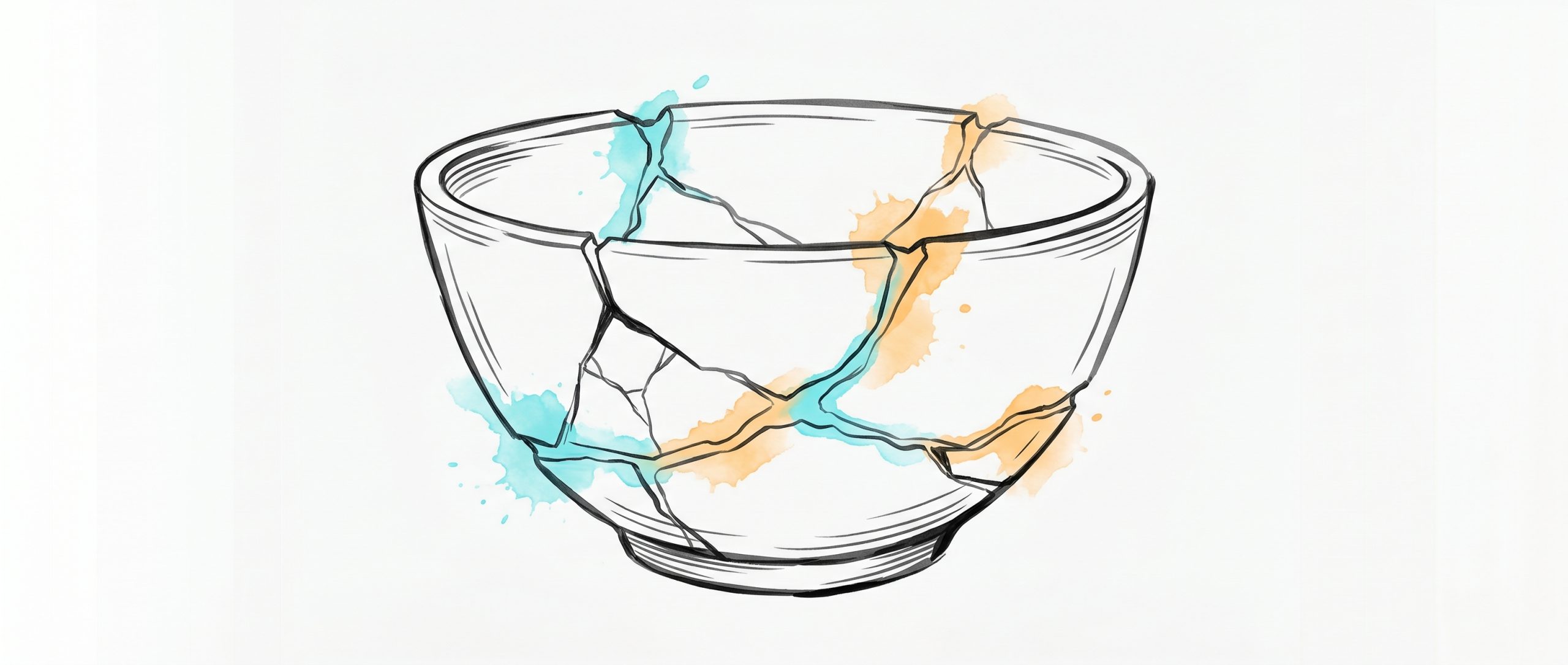
Reframing failure means changing the story you tell yourself about a setback — from “I’m not good enough” to “here’s what this taught me” — so the experience becomes usable instead of just painful. It isn’t forced positivity or pretending the disappointment doesn’t sting. It’s a deliberate skill: noticing the harsh, all-or-nothing thoughts a failure tends to trigger, questioning whether they’re actually true, and choosing a more accurate, more useful way to look at what happened.
That skill matters more than most of us realize, because failure doesn’t teach us as automatically as we assume. Below are the research-backed reasons setbacks are so hard to learn from, and a practical, step-by-step way to reframe them.
Why failure is so hard to learn from
There’s a comforting idea that failure is “the best teacher.” It can be — but only if you stay open to the lesson, and that turns out to be the hard part.
In a 2019 study published in Psychological Science, researchers Lauren Eskreis-Winkler and Ayelet Fishbach ran five experiments with 1,674 participants. People answered questions and received feedback that revealed the correct answer either way — but those who learned via failure (“you got it wrong; the right answer was X”) retained less than those who learned via success. Failure is ego-threatening, so people tuned out. They remembered fewer details, and that drop in attention explained the drop in learning. Strikingly, the same people learned perfectly well from watching others fail — it was the sting to their own ego that got in the way. (Eskreis-Winkler & Fishbach, 2019)
That’s the core problem reframing solves. When a setback feels like a verdict on who you are, your mind protects itself by looking away — exactly when you most need to look closely. Reframing lowers the threat enough that the lesson can actually land.
What reframing failure really is (and isn’t)
Reframing is a cognitive technique with deep roots in cognitive behavioral therapy (CBT). In the 1960s, psychiatrist Aaron Beck noticed that distressing emotions were often driven by distorted, automatic thoughts — and that learning to spot and revise those thoughts could change how a person felt and acted (Beck’s work, summarized by NCBI/StatPearls). Reframing applies that same move to setbacks.
It helps to be clear about what reframing is not:
- It isn’t toxic positivity. You’re not slapping “everything happens for a reason” over real disappointment. A good reframe stays honest about the loss.
- It isn’t denial. Reframing a failed project as “a costly but clarifying experiment” only works if you genuinely examine what went wrong.
- It isn’t a one-time mood fix. It’s a habit of catching unhelpful interpretations and replacing them with more accurate ones, again and again.
The aim isn’t to feel good about failing. It’s to think clearly about it — which, conveniently, tends to feel better too.
The distorted thoughts failure loves to trigger
Setbacks reliably pull up a handful of well-documented thinking patterns that CBT calls cognitive distortions. Naming them is half the work — once you can spot the pattern, it loses a lot of its grip. The most common ones after a failure (Psychology Tools):
| The distortion | What it sounds like after a setback | A more accurate reframe |
|---|---|---|
| Overgeneralization | “I always mess this up. I’ll never get it right.” | “This attempt didn’t work. That’s one data point, not a life sentence.” |
| Catastrophizing | “This is a disaster. My whole reputation is ruined.” | “This is a real setback. What’s the actual, likely impact — and what can I do about it?” |
| Labeling | “I’m a failure.” | “I failed at this specific thing. That describes the outcome, not my worth.” |
| All-or-nothing thinking | “If it’s not a success, it’s a total waste.” | “Most of this didn’t land — but these two parts did, and they’re worth keeping.” |
Notice the pattern in the right-hand column: each reframe shrinks a global, permanent, identity-level statement down to something specific, temporary, and behavioral — something you can actually work with.
How to reframe failure, step by step
Here’s a practical sequence you can run after any setback, big or small. It works on paper, in your head, or out loud with someone you trust.
1. Name what actually happened — just the facts
Before any interpretation, write down the event in plain, neutral terms. “I pitched the client and they chose another agency.” Not “I blew the biggest opportunity of my career.” Separating the event from the story about it is the foundation; everything else builds on it.
2. Catch the automatic story
Now notice the interpretation that rushed in. What did you immediately tell yourself the failure meant? Write that down too, in its raw form — “this proves I’m not cut out for this.” Getting it onto the page turns a vague, looming feeling into a specific claim you can examine.
3. Question the story like a fair-minded friend
Ask the kind of questions a wise, kind friend would ask, not a prosecutor. Is this thought actually true? What’s the evidence for and against it? Is there a more balanced way to see this? Would I judge someone I cared about this harshly for the same mistake? This is the heart of cognitive reframing, and our deeper walkthrough of the technique lives in our guide to cognitive reframing and changing unhelpful thoughts.
4. Extract the one real lesson
This is where reframing earns its keep — and where the research above warns us we tend to flinch. Push past the ego sting and ask a specific, forward-looking question: What would I do differently next time? Treat the setback the way you’d treat someone else’s — the study found we learn from others’ failures far more easily, so borrow that detachment for your own. Aim for one concrete, usable takeaway, not a sweeping indictment.
5. Choose the reframe — and the next small step
Finally, restate the experience in a way that’s both honest and useful: “That pitch didn’t land, and it stung. But I now know my proposal was too generic, and I have a clear way to tighten the next one.” Then pick one small action that moves you forward. A reframe that stays in your head is a thought; a reframe attached to a next step is momentum.
Be on your own side: self-compassion isn’t soft
There’s a stubborn belief that we need to be hard on ourselves to improve — that self-criticism is what keeps us sharp. The research points the other way. Psychologist Kristin Neff’s work on self-compassion finds that people who treat themselves with kindness after a setback tend to be more resilient and motivated, not less — they set ambitious goals and persist longer than people who rely on self-criticism (Neff, self-compassion research).
The mechanism is simple: self-criticism runs on fear, which triggers the body’s stress response and makes you want to look away from the failure — the exact tuning-out the Eskreis-Winkler and Fishbach study identified. Self-compassion runs on care, which keeps you calm enough to stay in the room with the mistake and learn from it. Being on your own side isn’t letting yourself off the hook. It’s what makes the hook bearable enough to examine.
A useful reframe here, drawn directly from Neff’s framework: this is a moment of difficulty, difficulty is part of being human, and you can meet it with the same warmth you’d offer a good friend.
Failure as feedback, not a verdict
Underneath all of this is a shift psychologist Carol Dweck has spent decades documenting: the move from a fixed mindset — where failure means you’ve hit the ceiling of your ability — to a growth mindset, where it’s information about where to focus next. People who see setbacks as opportunities to grow tend to persist and improve where others stall (Dweck, Mindset).
You don’t have to manufacture a growth mindset out of thin air. Every step above nudges you toward it: separating the event from your identity, questioning the harsh automatic story, extracting a real lesson, and treating yourself with enough kindness to keep going. Practiced over time, “failure as feedback” stops being a slogan and becomes the way you actually experience setbacks.
Where a thinking partner helps
Reframing is simple to understand and genuinely hard to do alone — especially in the raw hours after a setback, when the distorted thoughts feel most like plain fact. That’s the value of talking it through with someone: a friend, a coach, or a tool built for it. The whole point of the “learn from others’ failures” finding is that an outside perspective sidesteps the ego threat that makes our own failures so hard to see clearly.
This is one of the things aidx.ai is designed for — AI coaching and therapy that draws on CBT, ACT, and related evidence-based methods to help you catch an unhelpful story and rebuild it into something accurate and forward-moving, in the moment you need it. It’s a thinking partner for the reframe, not a replacement for the people in your life or for professional care when a setback tips into something heavier.
The bottom line
Failure won’t teach you anything on its own — the ego sting makes sure of that. Reframing is how you get past the sting to the lesson: name what happened, catch the harsh automatic story, question it the way a kind friend would, pull out one real takeaway, and take a small step forward, treating yourself with enough compassion to stay in the game. Do that consistently, and setbacks stop being verdicts on who you are and start being some of the most useful feedback you’ll ever get.
This article is for general educational purposes and isn’t a substitute for professional advice. If setbacks are leaving you persistently hopeless, overwhelmed, or unable to function, please reach out to a qualified mental health professional. If you’re in crisis or thinking about harming yourself, contact your local emergency services or a crisis line right away.
Last reviewed: June 2026.