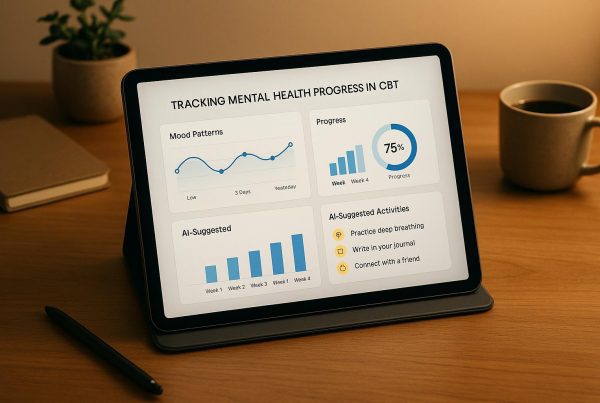


Feeling overwhelmed by endless notifications, tasks, and distractions? AI tools are stepping in to help. By managing repetitive tasks, organizing workflows, and offering personalized mental exercises, AI supports your focus and cognitive abilities. Here’s how it works:
- Focus Support: AI reduces distractions by muting non-essential notifications and scheduling deep work sessions during your peak productivity hours.
- Task Management: AI organizes notes, prioritizes tasks, and creates structured schedules tailored to your energy levels.
- Cognitive Training: AI-driven apps offer exercises to strengthen memory, attention, and task-switching skills, helping you stay sharp.
- Personalized Coaching: Tools like Aidx.ai combine techniques like CBT to reframe negative thoughts, set clear goals, and build better habits.
While AI can significantly lighten your mental load, balance is key. Use it to enhance your workflow, but stay actively engaged to maintain your mental sharpness. Start small: try a 25-minute focus session with an AI assistant and track your progress over time.
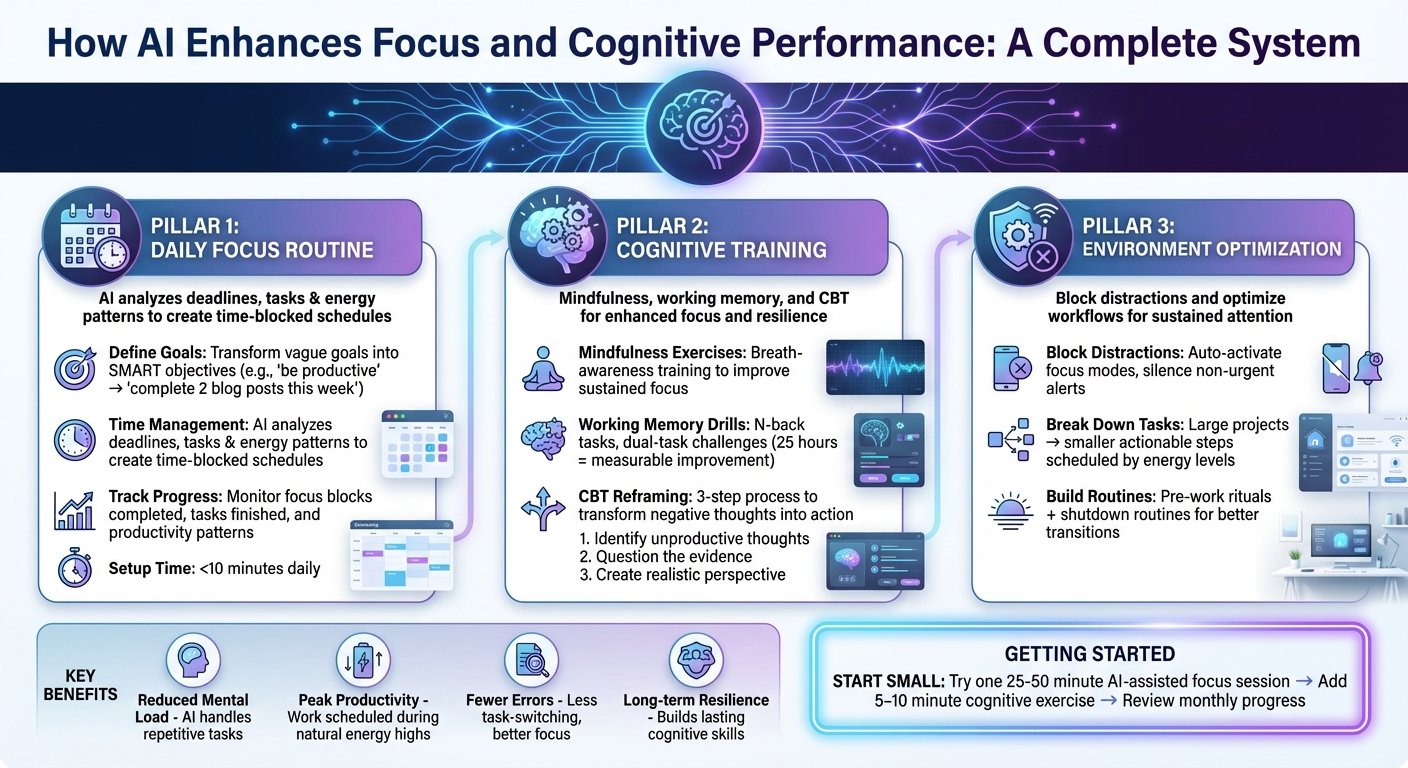
How AI Enhances Focus and Cognitive Performance: A Complete System
7 AI Tools To Reduce Overwhelm and Increase Focus
What Focus and Cognitive Performance Mean
In a world overwhelmed by digital distractions, it’s important to understand what focus and cognitive performance actually mean. Focus is your ability to zero in on a single task – like crafting a report or prepping for an exam – while tuning out distractions such as notifications or background noise. Cognitive performance, on the other hand, is how effectively your brain tackles mental challenges, like recalling information, analyzing data, making decisions, solving problems, or switching between tasks. In typical U.S. workplaces or schools, strong cognitive performance shows up when you can dive into complex work, meet deadlines, minimize errors, and grasp new concepts quickly. This mental efficiency helps you handle demanding tasks with clarity and precision.
But here’s the thing: these abilities aren’t static. They ebb and flow throughout the day, depending on how much mental energy you’ve already spent. If you’re juggling too many tasks or decisions at once, your brain’s limited resources can get stretched thin, leading to slower thinking, more mistakes, and that dreaded mental fatigue. By understanding how focus and cognitive load work, you can spot when it’s time to take a break, simplify your workflow, or even lean on AI tools to lighten the load.
How Focus and Cognitive Load Work
Your brain uses different types of attention to get things done. Focused attention is what happens when you lock in on a single task – like writing a proposal with all distractions turned off. On the flip side, divided attention (aka multitasking) kicks in when you try to juggle multiple things at once, like answering emails during a meeting. Research shows that constantly switching between tasks increases errors and drags out completion times because every switch comes with a mental cost. That’s why uninterrupted focus sessions are so effective – they allow your brain to work at its best.
Another key player here is your working memory. This is the mental space where you temporarily store and manipulate information, like holding a phone number in your head just long enough to dial it or keeping several steps of a process in mind. But when you overload your brain with too many tasks, notifications, and decisions, your working memory can get overwhelmed, leading to fatigue and errors. Over time, chronic multitasking and decision fatigue can weaken your working memory and other high-level cognitive functions. Simplifying your workflows, organizing tasks into batches, and using tools like AI planners or digital note systems can help protect your mental energy, reduce burnout, and keep your brain sharp for the long haul.
How AI Supports Your Cognitive Abilities
AI tools act like a second brain, helping you manage information and stay organized. For instance, AI-powered notetakers can transcribe and summarize meetings, task managers can turn your notes into actionable to-dos, and smart search systems can quickly retrieve important details. By handling these tasks, AI frees up your mental bandwidth for more complex and creative work.
AI can also act as a guardian for your attention. It can mute non-essential notifications during focus sessions, schedule deep work periods when you’re naturally most productive, and prioritize incoming messages. Some tools even recognize when you’re prone to distractions – like during an afternoon slump – and can nudge you back on track or temporarily block distracting apps. This kind of support reduces the number of decisions you need to make about where to focus, easing the strain on your brain.
Beyond organization, AI-driven brain-training apps can help sharpen your mental skills. These tools adapt to your progress, increasing the difficulty of exercises that target working memory, attention control, and task-switching as you improve. Think of it as a personal trainer for your brain – keeping you challenged but not overwhelmed. AI coaches like Aidx.ai take it a step further by combining mental skills training with practical tools. Using evidence-based techniques like CBT (Cognitive Behavioral Therapy) and ACT (Acceptance and Commitment Therapy), they help you reframe unproductive thoughts, set clear goals, and build routines that cut down on decision fatigue. This blend of mental training and practical planning can make a big difference in how you handle cognitive demands day to day.
Creating a Daily Focus Routine with AI
Building a focus routine that works for you means creating a system tailored to your unique daily life. This kind of structure doesn’t just improve productivity; it also aligns tasks with your natural energy levels, helping you perform at your best. With AI tools, you can design a personalized daily schedule that considers your work hours, family commitments, commute, and the times when you’re naturally most alert. Instead of relying on generic advice, AI enables you to turn vague plans into specific, actionable steps that you can tweak and improve over time. The first step? Setting clear focus goals to guide your daily routine.
Defining Focus Goals with AI
General goals like "be more productive" can feel overwhelming and unhelpful. AI coaching tools, such as Aidx.ai, can help refine these broad ambitions into specific, measurable objectives. For example, instead of aiming to "write more", you might set a goal to "complete two blog posts this week." These tools use structured frameworks, like SMART goals, to clarify what success looks like and guide you toward achievable outcomes.
AI also excels at prioritization. Let’s say you have seven tasks vying for your attention. AI can help you decide which two or three are the most critical for the week. Over time, it learns from your habits – like frequently rescheduling tasks or cutting focus sessions short – and suggests adjustments. If a 90-minute work block feels too long, the AI might recommend trying 50-minute sessions instead. This iterative process ensures your routine stays challenging but realistic.
Using AI for Time Management and Planning
AI time-management tools can transform your calendar and to-do list into a balanced, efficient schedule. These tools analyze your deadlines, tasks, and energy patterns to create a time-blocked plan that includes deep work, lighter tasks, and breaks. For example, they might schedule high-focus tasks during your peak energy hours – often mid-morning for many professionals – and group smaller tasks, like checking emails, into short, manageable slots.
Here’s how it works: Open your AI assistant, sync your tasks and meetings, and ask, "What are the top 1–3 priorities for today?" The AI drafts a schedule that includes time blocks for each focus task, factoring in your meals, commute, and breaks. Once you approve the plan, the AI sets reminders for your first deep-work session, and you’re ready to dive in. This process takes less than 10 minutes and provides a structure you can follow consistently throughout the week. With reminders and progress tracking, the AI ensures you stay on track.
Getting Reminders and Tracking Progress
AI tools can send timely, helpful reminders without adding to your distractions. For instance, you might receive a notification like, "It’s 9:25 a.m. – time to start your 60-minute presentation draft. Silence your phone and close your email." You can customize these prompts to appear only on specific devices, like your desktop or smartwatch, and during certain hours to avoid notification overload. Some tools, like Aidx.ai, even offer quick grounding exercises when you’re feeling distracted or stressed.
When it comes to tracking, AI can monitor both objective and subjective data. It might log metrics like the number of focus blocks you complete, the percentage of tasks finished, or how much time you spend on distracting apps. It can also track how focused or mentally drained you feel before and after work sessions. Weekly summaries highlight trends – like getting more done on certain days or noticing a drop in productivity after 3:00 p.m. – so you can make informed adjustments. Instead of just presenting numbers, AI tools translate this data into actionable suggestions, such as aiming for one additional 25-minute work session during your most productive time of day.
sbb-itb-d5e73b4
Training Your Focus and Cognitive Skills with AI
AI can do more than just manage your schedule or remind you of tasks – it can actually help sharpen your mental focus. Think of it as a workout, but for your brain. By tailoring exercises to your current abilities and gradually increasing the challenge, AI tools encourage mental growth and help you strengthen your cognitive skills. These activities require effort, but that effort builds mental resilience and complements the structure provided by scheduling tools.
Mindfulness and Attention Exercises
AI-based tools can take mindfulness practices to the next level by helping you train your attention. For instance, they can guide you through breath-awareness exercises designed to improve sustained focus. Imagine starting with a short breathing session where the AI checks in on your stress and energy levels. It then guides you to follow a breathing pattern, such as inhaling for four seconds and exhaling for six. Throughout the session, the AI gently reminds you to notice when your mind wanders and refocus on your breath. Tools like Aidx.ai make this easy to integrate into your day – you can follow along during a walk or commute, no screen required. Over time, the AI identifies common distractions, like work-related thoughts or frequent phone notifications, helping you become more aware of what pulls your attention away.
Working Memory and Cognitive Control Exercises
AI-powered brain-training apps are designed to keep you in the "sweet spot" of challenge – difficult enough to push you, but not so hard that it’s frustrating. For example, you might start with a simple task like remembering a sequence of five numbers. As you improve, the AI increases the difficulty by adding more numbers or introducing distractions. Research suggests that just 25 hours of focused training can enhance working memory and task-switching abilities [3]. Exercises like n-back tasks, dual-task challenges, and distraction drills are adjusted in real-time to match your progress. Some tools even set up focused work sprints, such as a 25-minute session, while tracking distractions. Later, you can review patterns to understand what breaks your focus. In one study, participants who initially struggled with attention showed notable improvements in sustained focus after personalized AI-guided training, with no serious side effects reported [1].
Reframing Thoughts for Better Focus
Negative thoughts like "I’m terrible at focusing" or "This task is impossible" can derail your concentration before you even start. AI tools using Cognitive Behavioral Therapy (CBT) techniques can help you recognize and reframe these patterns. For example, Aidx.ai walks you through a simple three-step process. First, it helps you identify unproductive thoughts, like "I can’t handle this workload." Next, it encourages you to question those thoughts with prompts like, "What evidence do you have that you can’t manage?" or "Have you handled similar tasks before?" Finally, it guides you to create a more realistic perspective, such as, "This feels overwhelming, but I can start small – maybe with 15 minutes on the introduction." What sets this apart is how Aidx’s Adaptive Therapeutic Intelligence personalizes the approach to match your emotional responses, ensuring the process feels natural. It even turns these reframed thoughts into actionable steps, like a 20-minute focus session, complete with reminders. This approach transforms abstract mental exercises into practical habits you can apply immediately.
Setting Up Your Environment for Better Focus with AI
Your surroundings – both physical and digital – play a huge role in how well you can concentrate. AI can help you fine-tune these spaces to support your focus, acting like guardrails that keep your attention on track without taking over the thinking process. Let’s dive into how AI can minimize distractions and improve your workflow.
Minimizing Digital Distractions
Let’s face it: digital distractions are everywhere. AI tools can monitor your habits – like how often you switch tasks, the time you spend on social media, or how frequently notifications interrupt you. Using that data, these tools can automatically activate focus modes that block distracting websites and silence non-urgent alerts[2]. Some systems are even smart enough to differentiate between what’s important and what’s not. For example, they might allow calls from family while muting marketing emails or app notifications[2]. Platforms like Aidx.ai take it a step further by identifying emotional triggers that lead to compulsive checking and applying techniques from Cognitive Behavioral Therapy (CBT) to help you reshape your digital habits.
Breaking Tasks into Smaller Steps
Big projects can feel overwhelming, often leading to procrastination. That’s where AI planning tools come in. They can break down a large task – like preparing a quarterly budget presentation – into smaller, actionable steps. For instance, they might divide the project into tasks like gathering data, analyzing trends, creating slides, and rehearsing your presentation. These tools also analyze the mental effort required for each step, helping you schedule demanding tasks (like analysis or writing) during your peak energy hours and saving lighter tasks (like formatting or follow-ups) for when your focus naturally dips[2][3].
Aidx.ai uses Adaptive Therapeutic Intelligence to learn your energy patterns, making it easier to plan your day. If you experience an afternoon slump, it can suggest restructuring your schedule or even recommend quick grounding exercises before tackling tough tasks. This way, you conserve mental energy and avoid decision fatigue, ensuring you’re at your best when it matters most.
Building Focus Routines and Cues
Your physical space matters just as much as your digital one. Consistent routines can signal your brain that it’s time to focus. AI can help you establish pre-work rituals – like clearing your desk, silencing your phone, and setting a focus timer – that eventually become second nature[2][3]. These actions make transitioning into deep work much smoother.
At the end of the day, AI can also guide you through a shutdown routine. For example, you might review what you accomplished, plan for tomorrow, and reflect on your day. These habits not only clear your mind but can also lead to better sleep[3]. Tools like Aidx.ai integrate these routines with your planning system, turning your goals into actionable steps. When paired with smart devices, AI can even adjust your environment – dimming lights, playing white noise, or setting a comfortable temperature – to create a multi-sensory "focus mode" that helps you stay on track[2][3].
Conclusion
AI isn’t here to replace your thinking – it’s here to enhance it. By using AI strategically, you can lighten your mental load, sharpen essential skills like attention and memory, and create routines that support long-term focus. Think of it as a partner that refines, challenges, and stretches your ideas, helping you grow over time.
Incorporating AI into your daily focus routine can be straightforward. Start with time blocks, clear goals, and reminders to stay on track. Pair these with cognitive skill training, such as mindfulness exercises, memory drills, or reframing negative thoughts. Finally, optimize your environment by minimizing distractions, breaking tasks into manageable steps, and adding cues to keep your focus sharp. When combined, these elements form a system that fits seamlessly into your life and supports steady progress.
Take tools like Aidx.ai as an example. This platform blends proven methods like CBT, ACT, and DBT with features such as integrated planning and 24/7 voice support. It helps you turn insights into action by tracking metrics like confidence, stress, and focus. You can tweak your routines based on what’s working, get gentle reminders when you lose momentum, and rest assured knowing your conversations remain private and encrypted.
Here’s a simple way to get started: choose one AI tool and commit to a focused 25–50 minute work session. Add a short mindfulness or cognitive exercise – just 5–10 minutes – to your routine this week. At the end of the month, review your progress and make small adjustments. The aim isn’t perfection; it’s about building consistency and momentum.
When you combine your focus with AI’s tailored support, you’ll find yourself concentrating better, strengthening your cognitive skills, and making steady progress toward your goals. AI isn’t about reliance – it’s about unlocking your potential and building mental resilience that lasts.
FAQs
How does AI help create a personalized focus routine?
AI helps you stay focused throughout the day by adapting strategies to fit your specific habits and preferences. Using advanced learning tools, it can deliver personalized coaching, establish tailored goals, and send well-timed reminders to ensure you stay on track. By studying your behavior and preferences, AI provides real-time feedback and practical suggestions, making it easier to boost your productivity and sharpen your mental performance as part of your everyday routine.
How can AI enhance focus and cognitive skills?
AI plays a key role in boosting cognitive development by sharpening skills such as focus, decision-making, and emotional regulation. With tailored tools and strategies, it helps individuals handle stress more effectively, build constructive habits, and achieve mental clarity. By aligning with personal needs, AI offers specific approaches to improve daily productivity and support long-term mental growth.
How does AI use CBT techniques to improve focus and mental clarity?
AI uses principles of Cognitive Behavioral Therapy (CBT) to help individuals sharpen their focus by recognizing and reshaping negative or unproductive thought patterns. Through tailored, research-backed interactions, these tools assist users in building better mental habits and strategies that align with their personal goals.
By promoting self-awareness and providing practical guidance, AI tools empower users to tackle distractions, set achievable objectives, and sustain mental clarity in their everyday routines.