
If you have ever caught yourself thinking “I always mess this up” and wished you could swap that voice for a kinder one, you are not alone — and there is now a whole category of apps built to help. A good positive self-talk app nudges you, day by day, toward talking to yourself the way you would talk to a friend.
But here is the part most roundups skip: the research is clear that how you practise matters more than which app you download. Simply chanting “I am confident” can quietly backfire for the people who need it most. So below you will find ten genuinely useful AI apps for daily positive self-talk — and, just as importantly, what the science says actually works, so you choose a tool that helps rather than one that just sounds nice.
First, what actually works (the part the science is clear on)
“Positive self-talk” gets lumped in with vision boards and manifestation, but parts of it are genuinely well-studied. A few findings are worth knowing before you pick an app:
- Empty mantras can backfire. In a well-known study, psychologist Joanne Wood and colleagues had people repeat “I am a lovable person.” People with high self-esteem felt slightly better — but people with low self-esteem felt worse: lower mood, lower self-regard. The authors titled it bluntly: positive self-statements have “power for some, peril for others” (Wood, Perunovic & Lee, 2009, Psychological Science). If a statement is too far from what you currently believe, your mind tends to argue back.
- Reflecting on your values is different — and better evidenced. The “self-affirmation” that researchers study is not flattering self-talk at all. It is briefly writing about a core value that matters to you (family, creativity, fairness), which can buffer stress and reduce defensiveness (Cohen & Sherman, 2014, Annual Review of Psychology). Reflection beats repetition.
- Coaching-style self-talk helps with performance. A meta-analysis of 32 studies found that self-talk improves task and sport performance with a moderate overall effect (about d = 0.48), and that for precise, fine-motor tasks, instructional cues (“focus,” “smooth”) work better than generic pep-talk (Hatzigeorgiadis et al., 2011, Perspectives on Psychological Science). Note this is athletic, task-focused self-talk — not “I am worthy” affirmations.
- Self-compassion may be the sturdier goal. Treating yourself kindly when you fail — rather than inflating your self-image — is linked to more stable self-worth that doesn’t depend on constant wins or comparisons (Neff & Vonk, 2009, Journal of Personality).
The practical takeaway: the strongest tools don’t just feed you slogans. They help you reframe an unkind thought into one that is both kinder and believable, the way good cognitive behavioural work challenges automatic negative thoughts. That is the lens to keep in mind as you read on.
A quick word on the “AI” in these apps, too. Conversational AI for mood and wellbeing shows real but modest promise: a 2026 synthesis of 39 studies found small-to-moderate reductions in depression symptoms (Hedges’ g ≈ 0.31) and smaller, less consistent effects for anxiety (Sohn et al., 2026, npj Digital Medicine). Helpful for everyday self-talk — not a substitute for therapy when you need it.
The 10 apps at a glance
Prices shift often and vary by platform and region, so treat the figures below as a guide and confirm in the store before you subscribe.
| App | Best for | Free plan | Approx. paid price |
|---|---|---|---|
| aidx.ai | Reflective coaching & therapy that reframes, not just repeats | Yes | $29.99/mo or $288/yr |
| Wysa | Evidence-backed AI chatbot for mood & stress | Yes | ~$74.99/yr or $19.99/mo |
| Clarity | CBT thought records for reframing negative self-talk | Yes | ~$60–70/yr |
| Rosebud | AI journal that reflects your thinking back to you | Yes | $12.99/mo or $107.99/yr |
| I am | Simple curated daily affirmations & widgets | Yes | ~$59.99/yr |
| ThinkUp | Affirmations recorded in your own voice | Yes | ~$7.99/mo or $39.99/yr |
| Innertune | Affirmations paired with music | Yes | from ~$9.99/mo |
| Reflectly | AI-guided journaling & reflection | Yes | ~$9.99/mo or $59.99/yr |
| Selfpause | Own-voice affirmations plus an AI coach | Yes | ~$14.49/mo or $59.99/yr |
| Rocky.ai | Structured AI coaching prompts | Yes | from ~$9.99/mo |
1. aidx.ai
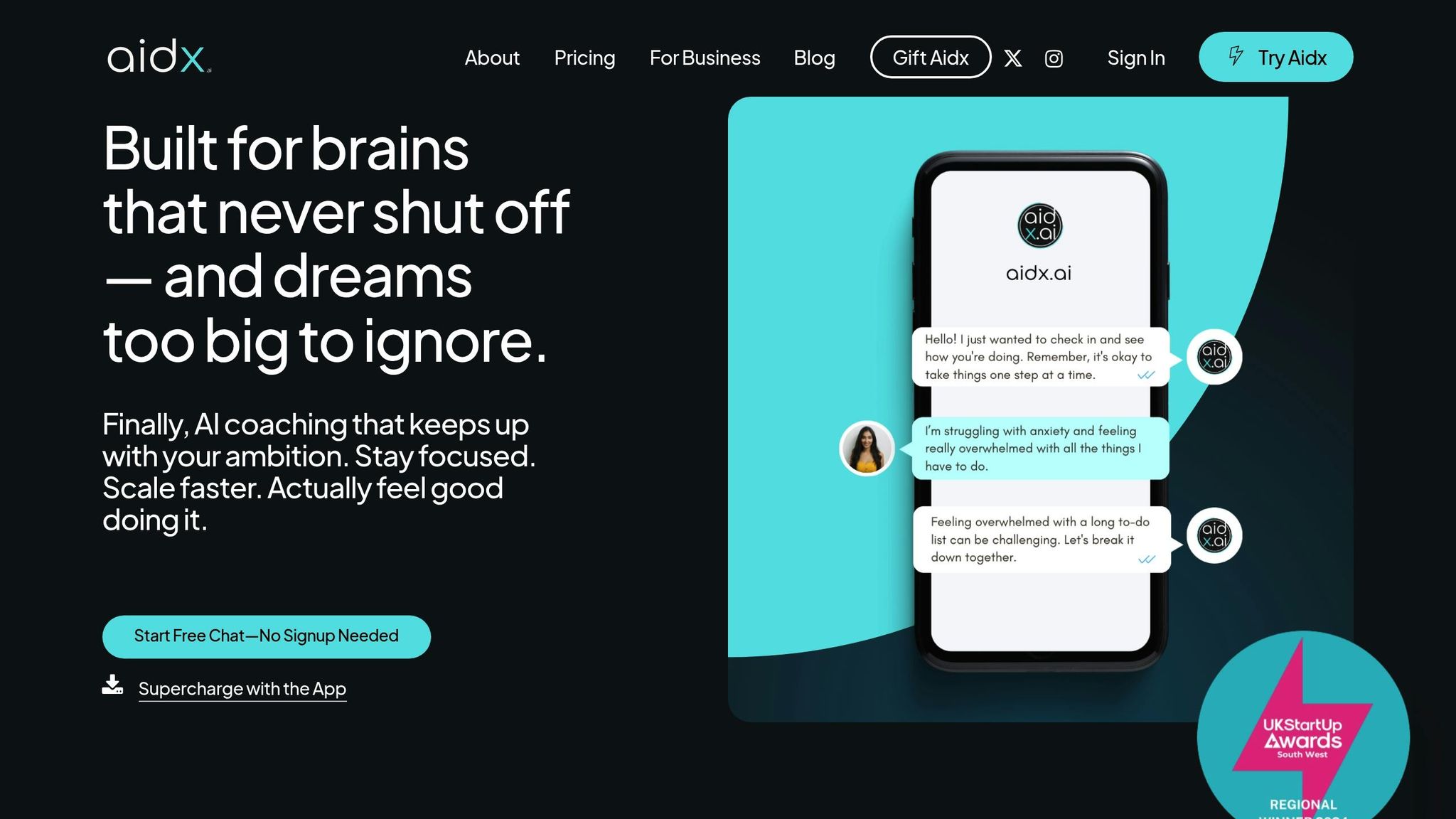
aidx.ai is an award-winning AI coaching and therapy service (chat and voice) for people who want more out of an already functioning life. It earns the top spot here for a simple reason: instead of handing you a slogan to repeat, it has a conversation with you — which is exactly what the research above points toward.
When you say “I always let everyone down,” aidx.ai doesn’t reply with “You’re amazing!” It helps you look at the thought, weigh the evidence, and land on something kinder that you can actually believe. That reframing approach draws on established methods — CBT, ACT, DBT and NLP — rather than generic positivity, which matters given how easily empty affirmations backfire for people who are hard on themselves.
What makes it practical for daily self-talk:
- It’s a dialogue, not a script. Talk through what is actually on your mind, by text or hands-free voice chat.
- Modes for different parts of life — from working through how you feel to planning toward a goal.
- Follow-ups and check-ins that nudge you back, so a good intention becomes a habit rather than a one-off.
- A planner to turn reflections into small, trackable steps.
- An incognito toggle you can switch on within any conversation to keep it out of long-term storage (held in cache only and forgotten after 30 minutes).
There is a genuinely useful free Starter tier (Life mode, with voice, check-ins and the planner). The Elevate plan unlocks unlimited conversations and all modes for $29.99/month (or $288/year, with a 30-day money-back guarantee). It is honest about being an AI, not a human clinician — and for everyday self-talk, that combination of depth and reach is its edge.
Curious how reflective AI compares to a human coach? See our honest take on what an AI life coach can and can’t do.
2. Wysa
Wysa is an AI chatbot (represented by a friendly penguin) that walks you through CBT-style exercises for low mood, worry and stress. It stands out for its evidence focus: in 2022 the US FDA granted Wysa a Breakthrough Device Designation for a version of its conversational agent built for adults with chronic musculoskeletal pain and associated depression and anxiety (a designation for that specific tool, not an approval of the whole app), and the company has published peer-reviewed work. The free tier covers a lot; Premium is about $74.99/year or $19.99/month on the US App Store, with human-guided support sold separately, alongside healthcare and employer plans. A solid choice if you want self-talk support with a clinical backbone.
3. Clarity
Clarity is built around the CBT thought record: you write down an unkind thought, spot the thinking trap behind it (all-or-nothing thinking, catastrophising and the like), and work your way to a more balanced version. That is exactly the reframing work the research favours, which is why it earns a place on a self-talk list. Around that core sit mood tracking, guided journals, short courses, and an AI chatbot trained in CBT for when you want to talk a thought through. The thought-record journal, check-ins and mood tracking are free; Clarity Pro, which adds the AI features and the full library, costs roughly $60–70 a year depending on your country and store.
4. Rosebud
Rosebud is an AI journal that talks back. You write or speak an entry, and it responds with follow-up questions and reflections, remembers what you have shared before, and sends weekly reports on the patterns it notices. For self-talk, that memory is the useful part: it can show you how often the same harsh story about yourself turns up, which is hard to see from inside a single bad day. It is free to use, with a paid Bloom plan at $12.99/month or $107.99/year for deeper features.
5. I am — Daily Affirmations
I am (by Monkey Taps) is the polished, popular end of the simple-affirmations category: curated positive statements across themes like confidence and calm, delivered through notifications and home-screen widgets you can glance at all day. It is light on AI and heavier on gentle, frequent prompts. A good fit if you respond well to a steady drip of reminders — though, per the research, lean toward affirmations you can actually believe rather than ones that feel like a stretch. Free, with a premium subscription (about $59.99/year on the US App Store).
6. ThinkUp
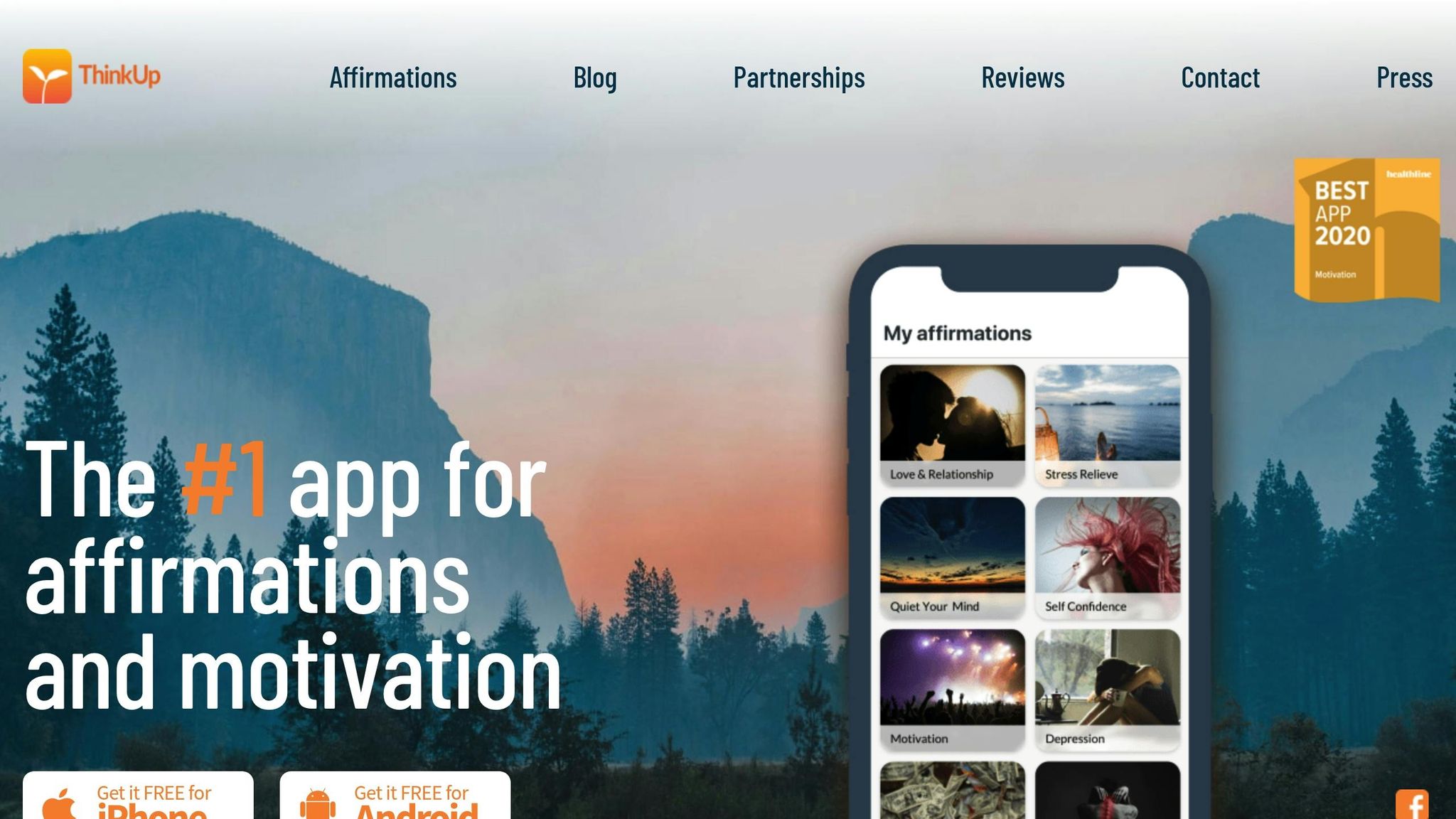
ThinkUp has a clever twist: you record affirmations in your own voice and play them back, optionally over calming music. Hearing a statement in your own voice can make it feel less like marketing and more like a promise to yourself, and writing your own lines helps you keep them believable. You can organise affirmations into themes and schedule playback into your routine. Free to try; premium is about $7.99/month or $39.99/year on the US App Store (Android pricing differs, so check your store).
7. Innertune
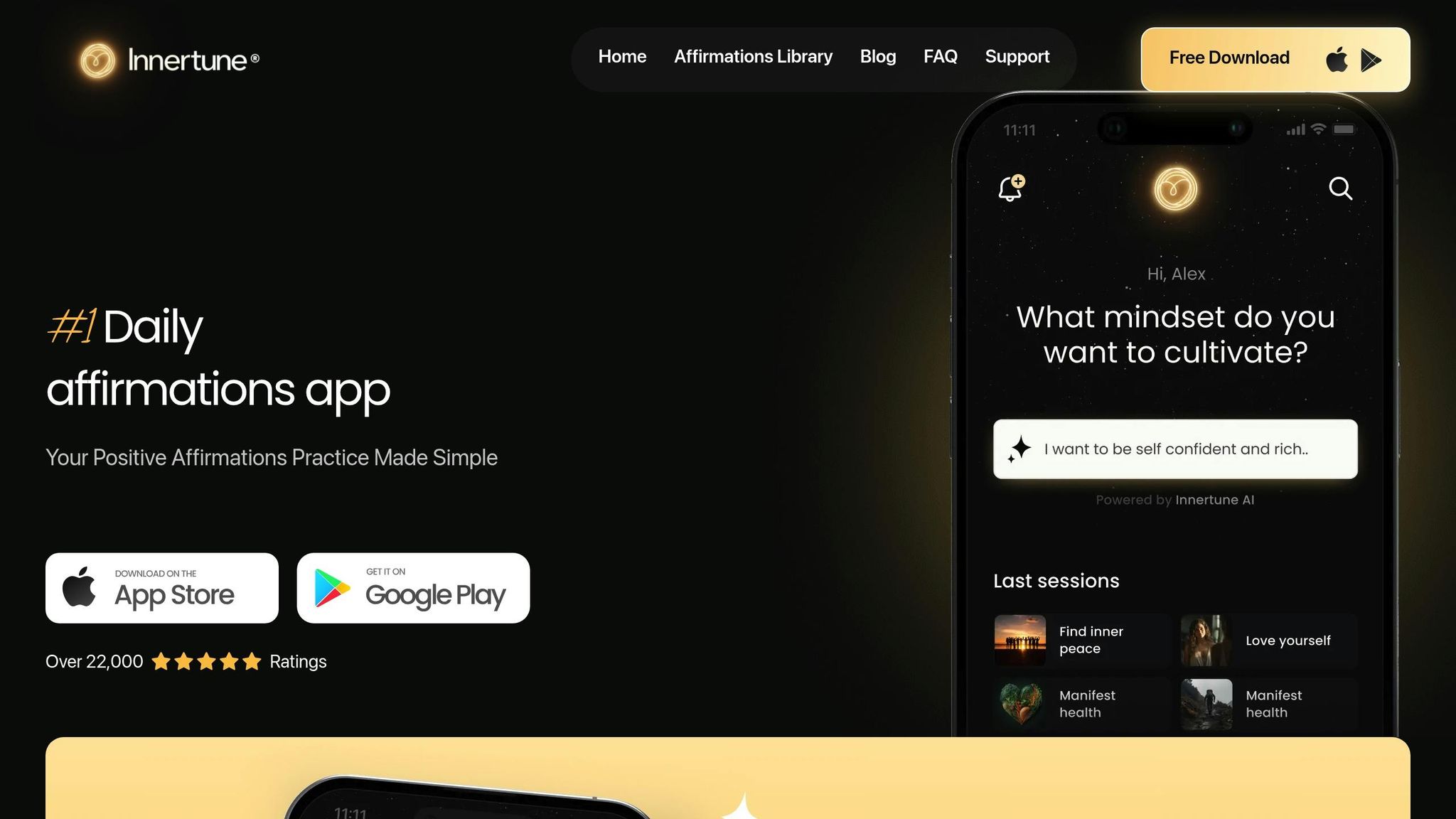
Innertune blends affirmations with mood-matched music and a large affirmation library, so the practice feels more like listening than studying. You can build your own sets or pick from ready-made collections. Premium adds AI-personalised playlists and the option to record affirmations in your own voice. It is a pleasant, low-effort way to keep encouraging messages around you during the day. Free to start; Premium starts at about $9.99/month on the US App Store, with yearly offers that vary.
8. Reflectly
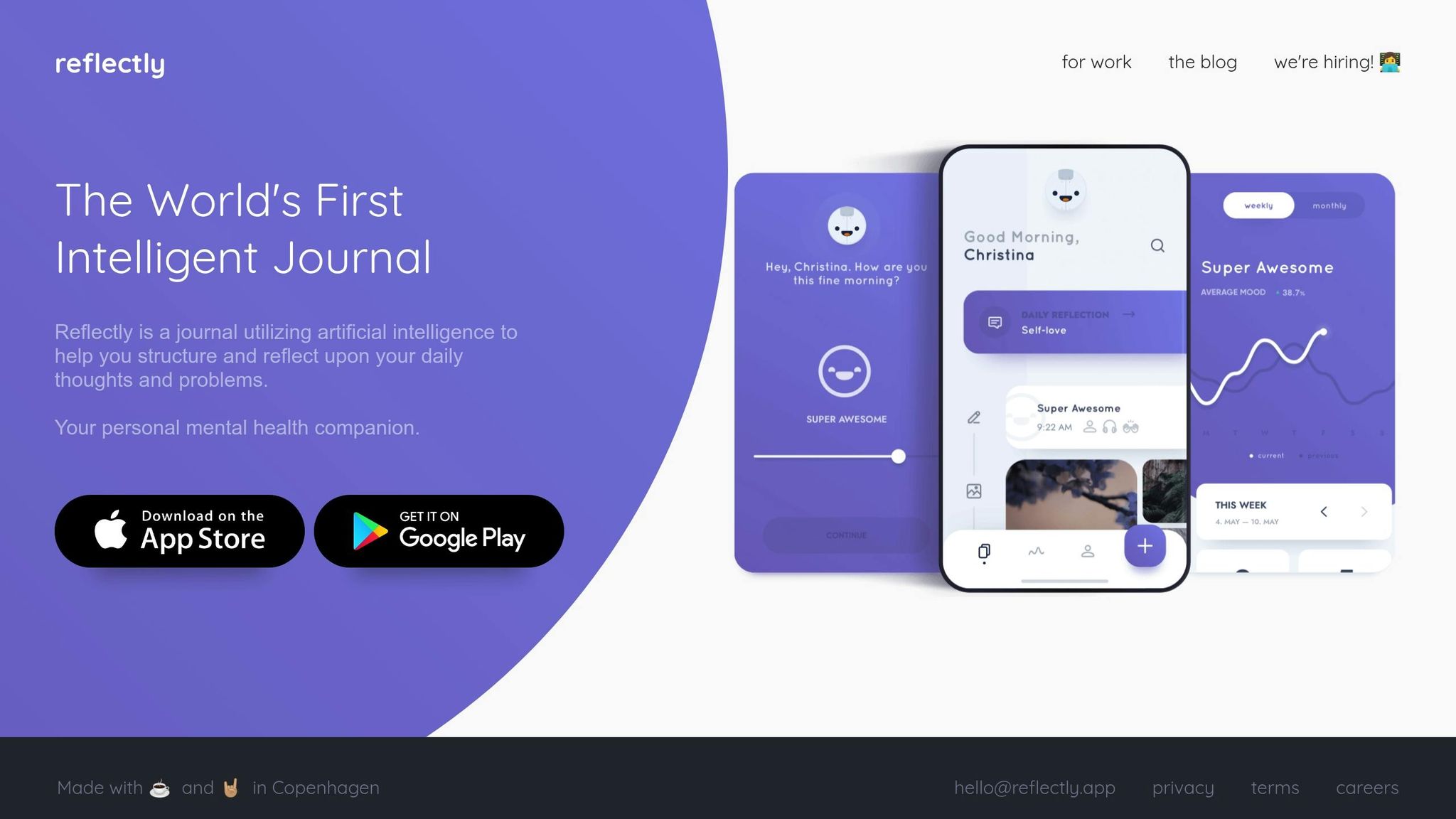
Reflectly is an AI-guided journal that asks thoughtful daily questions and helps you reframe the day’s events more constructively. Because it is built around reflection rather than repetition, it sits closer to what the science endorses — and its mood tracking helps you spot patterns over time. There is a free version; Premium is about $9.99/month or $59.99/year. Worth a look if you would rather write than recite.
9. Selfpause
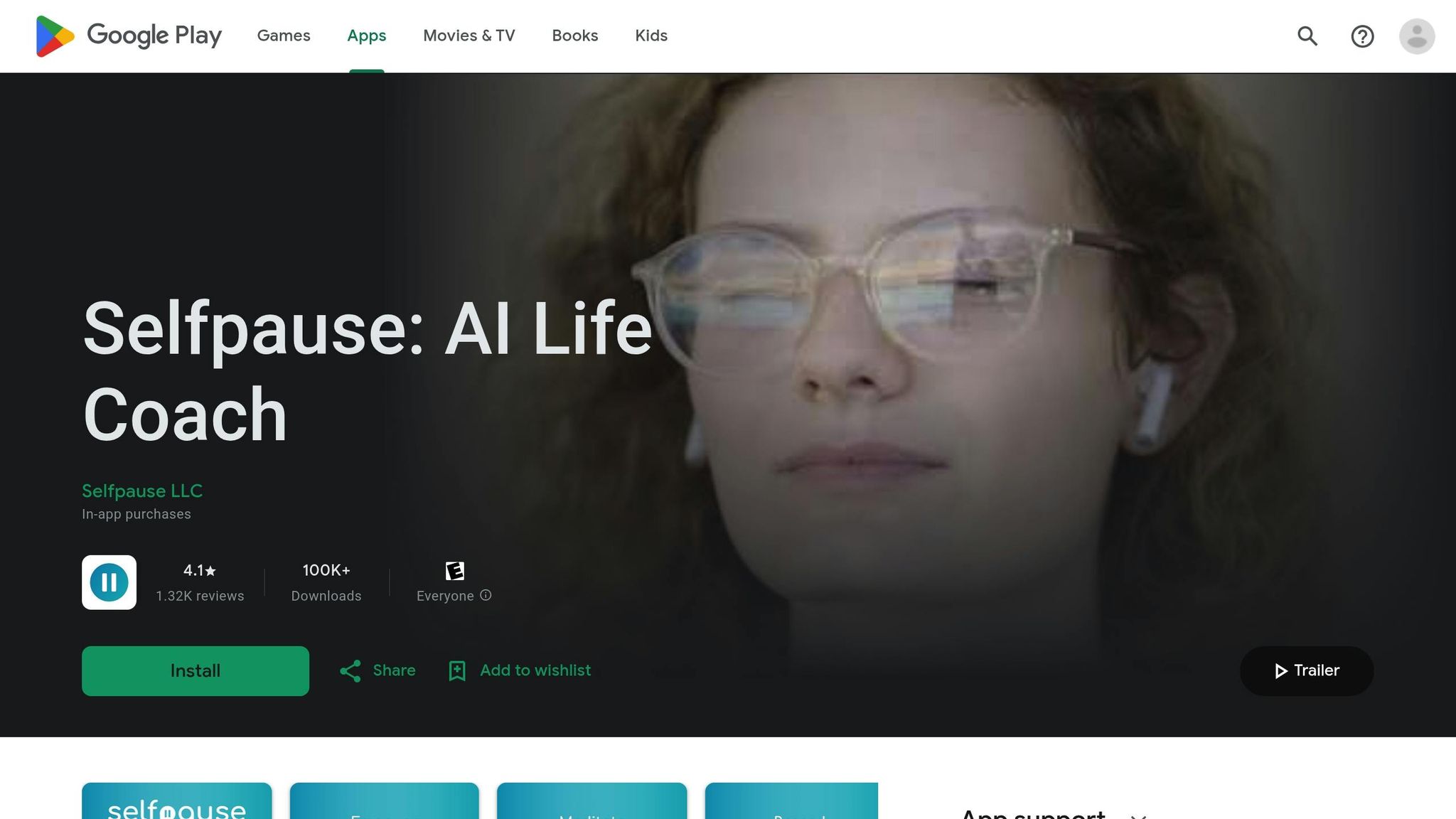
Selfpause lets you write affirmations, record them in your own voice and layer them over calming soundscapes, with a library of more than 1,000 guided affirmations if you would rather start from someone else’s words. Its AI coach is the part that matters most here: you talk through what is on your mind, it helps you spot negative self-talk patterns, and it suggests affirmations built around your goals, which makes it easier to keep them believable. The basics are free; premium is about $14.49/month or $59.99/year on the US App Store.
10. Rocky.ai
Rocky.ai is an AI coaching app that uses short, structured daily reflection prompts grounded in positive psychology and solution-focused coaching to build self-reflection and growth habits. The company now focuses mainly on organisations and coaches who build their own branded AI coaches, and the individual app has shifted toward career and leadership skills. It is still available to individuals, though, with a free plan and paid plans from about $9.99/month. A tidy option if you like a consistent, prompt-led routine.
Apps you may have seen recommended (that have moved on)
Older “best affirmation app” lists, including earlier versions of this one, still point to a few names worth a heads-up, because relying on them today will only frustrate you:
- Youper — the AI CBT app, co-founded by a psychiatrist and backed by its own observational study (Mehta et al., 2021, JMIR; a pre/post study with no control group), says on its website that it discontinued its services on 30 September 2026.
- Sintelly — the CBT chatbot app is no longer listed on the App Store or Google Play (checked October 2026), and its old web address now leads to an unrelated gambling site, so we no longer link to it.
- Shine — the well-loved self-care app was acquired by Headspace in 2022 and the standalone app was retired in 2023, with users moved into Headspace.
- Happify — it rebranded to Happify Health, then Twill, which was acquired by DarioHealth in 2024. The consumer app has since been delisted from the major US app stores; the brand now lives mainly as a B2B “Happify by Twill” offering. Not a standalone option for individuals anymore.
How to make positive self-talk actually stick
The app is only the prompt. These four moves are what turn it into a habit that helps:
1. Pick the style that fits you. If you tend to be hard on yourself, a reflective tool that helps you reframe thoughts (a coaching chatbot or a journaling app) will likely serve you better than one that asks you to repeat statements you don’t yet believe. If you mostly need encouragement and reminders, a simple affirmations app is perfect.
2. Keep it believable. Aim a notch above where you are, not in a different universe. “I’m handling this one step at a time” lands; “I am unstoppable” often doesn’t. Believable beats grand.
3. Anchor it to something you already do. Attach your check-in to your morning coffee or your commute. Two minutes daily beats twenty minutes once a week.
4. Track honestly and adjust. Use the app’s mood tracking to notice what shifts. If a practice leaves you feeling worse or hollow, change the approach — that is information, not failure.
If your inner critic runs deep, it can help to work on the root as well as the daily habit — our guides on quieting a harsh inner critic and building steadier self-esteem go further than any single app can.
When an app isn’t enough
These tools are great for everyday encouragement and gentle reframing. They are not treatment. If low mood, anxiety or self-critical thoughts are persistent, intense, or getting in the way of daily life, that is a sign to talk to a doctor or a qualified therapist — and AI support, including aidx.ai, is honest about being a companion to that care, not a replacement for it.
FAQs
Do positive affirmations actually work?
Sometimes — and it depends on the person and the wording. Affirmations can help people who already feel fairly good about themselves, but repeating statements that feel untrue can make people with low self-esteem feel worse (Wood et al., 2009). Reframing an unkind thought into one that is kinder and believable tends to work better than chanting a slogan, which is why reflective, conversation-based tools often have an edge.
Which type of app is best if I’m very self-critical?
Lean toward tools that help you question and reframe thoughts rather than just repeat affirmations — a coaching or CBT-style tool (such as aidx.ai, Wysa or Clarity) or a guided journal (such as Rosebud or Reflectly). They meet a harsh inner critic with evidence and kindness instead of a slogan it will instantly reject.
Are AI self-talk apps private?
It varies by app, so read each one’s privacy policy and check where your data is stored. Look for clear encryption and data controls; some apps, including aidx.ai, also offer an incognito option that keeps a conversation out of long-term storage. For a deeper look, see our guide to AI therapy and privacy.
References
- Wood, J. V., Perunovic, W. Q. E., & Lee, J. W. (2009). Positive Self-Statements: Power for Some, Peril for Others. Psychological Science, 20(7), 860–866. PubMed
- Cohen, G. L., & Sherman, D. K. (2014). The Psychology of Change: Self-Affirmation and Social Psychological Intervention. Annual Review of Psychology, 65, 333–371. Annual Reviews
- Hatzigeorgiadis, A., et al. (2011). Self-Talk and Sports Performance: A Meta-Analysis. Perspectives on Psychological Science, 6(4), 348–356. PubMed
- Neff, K. D., & Vonk, R. (2009). Self-Compassion Versus Global Self-Esteem. Journal of Personality, 77(1), 23–50. PubMed
- Sohn, J.-S., Ha, B.-G., Park, S., et al. (2026). Systematic review and meta analysis of chatbots in the management of depressive and anxiety symptoms. npj Digital Medicine. npj Digital Medicine
- Mehta, A., et al. (2021). Acceptability and Effectiveness of AI Therapy for Anxiety and Depression (Youper). JMIR, 23(6), e26771. JMIR
Last reviewed: October 2026.
This article is general information about self-help apps and positive self-talk, not medical or psychological advice. If low mood, anxiety, or self-critical thoughts are persistent or affecting your daily life, please speak with a doctor or a qualified mental-health professional. If you are in crisis or thinking about harming yourself, contact your local emergency services or a crisis line right away — in the US call or text 988; in the UK call 116 123 (Samaritans).